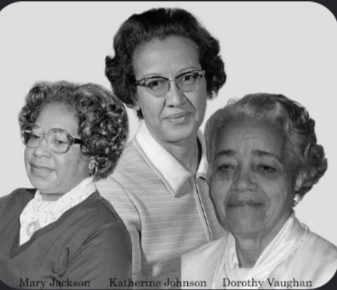


Katherine Johnson, Dorothy Vaughan, and Mary Jackson—were not decorative participants in American space travel. They were central to the mathematical and engineering work that helped make it possible. They calculated. They verified. They solved. They carried the discipline of numbers into one of the most dangerous and ambitious technological projects in human history.
By Ali Dan Ismael Editor-in-chief The Independentist News
Black excellence did not begin on the football field. Football merely made it visible. When Black athletes score goals before millions of people, the world has no choice but to see the result. The scoreboard cannot easily be edited. The goal cannot easily be denied. The performance is public. The evidence is immediate. That is why football has become one of the clearest stages on which Black excellence is seen.
But long before Black footballers carried European teams, A Black genius was already present in classrooms, laboratories, hospitals, factories, workshops, aircraft programs, engineering offices, and space missions. The problem was not absence of talent. The problem was access. The problem was recognition. The problem was gatekeeping.
The world was often told that Black people had not contributed because they lacked capacity. In truth, many were denied the platform, the laboratory, the patent protection, the capital, the school, the archive, the publisher, and the public recognition. When the doors were closed, genius did not disappear. It was simply forced into silence, hidden labor, or another path.
E. R. Braithwaite and the Door Britain Closed
The story of E. R. Braithwaite is a powerful example. Braithwaite, the Guyanese-born writer whose autobiographical novel “To Sir, With Love” later became famous through the film starring Sidney Poitier, was not an uneducated man looking for charity. He was highly trained. He had studied physics. He had served as a Royal Air Force pilot during the Second World War. He had discipline, intelligence, technical preparation, and service to Britain behind him.
Yet in postwar Britain, he struggled to find professional work suited to his qualifications but could not, because of racial discrimination. The world of professional science and engineering did not open its doors easily to a Black man, even one who had served in uniform and possessed serious intellectual ability. He eventually became a teacher in London’s East End. From that exclusion came “To Sir, With Love”.
But we must understand the deeper tragedy. Britain did not merely deny one man employment. It wasted a trained Black physicist and former RAF pilot. It pushed a qualified man away from the technical and professional world he was prepared to enter. It forced brilliance to find another route because the gatekeepers would not open the proper door.
Braithwaite’s later success as a writer and teacher should be honored. But it should not allow us to forget the injustice that redirected his life. His story was not evidence of Black incapacity. It was evidence of British gatekeeping.
Hidden Figures and the Mathematics of Space
The same lesson appears in the history of the American space program. The women later celebrated through Hidden Figures—Katherine Johnson, Dorothy Vaughan, and Mary Jackson—were not decorative participants in American space travel. They were central to the mathematical and engineering work that helped make it possible. They calculated. They verified. They solved. They carried the discipline of numbers into one of the most dangerous and ambitious technological projects in human history.
Rockets rose because mathematics was correct. Astronauts survived because calculations were precise. Space travel advanced because women who were segregated, underestimated, and ignored still performed with brilliance, discipline, and courage. These women were not hidden because they lacked genius. They were hidden because the system did not want to see them.
Their story proves that Black excellence existed inside the machinery of American greatness even when the public face of that greatness remained white and male. America reached toward the heavens while keeping some of its finest minds in segregated rooms. That contradiction tells us everything about the difference between capacity and opportunity. Black women helped America reach space. But history had to fight to bring their names back to Earth.
Charles Drew and the Cruelty of a Segregated Society
The history of medicine gives us another lesson. Dr. Charles Drew was one of the great pioneers of blood plasma research and blood banking. His work helped transform modern medicine and contributed to systems of blood storage and transfusion that saved countless lives.
A long-repeated story claimed that Drew died after an automobile accident because he was denied access to the very lifesaving blood systems his work had helped create. Historians have disputed that account, and the literal version should be treated carefully. But the fact that the story became so widely believed tells us something important. It expressed a deeper truth about segregation. Black genius could save society while Black life remained vulnerable to racial contempt.
Even when the specific story is corrected, the moral lesson remains. A society that benefits from Black invention while degrading Black humanity is morally diseased. A system that uses Black brilliance but denies Black dignity cannot call itself civilized.
Dr. Drew’s legacy therefore stands not only as a medical achievement, but as an indictment of any society that accepts the fruits of Black genius while refusing justice to Black people.
Alexander Miles and the Safety We Forgot
Engineering tells the same story. Modern elevator safety and convenience were strengthened by Black inventors such as Alexander Miles, who patented an automatic elevator door mechanism that improved safety and helped prevent passengers from falling into elevator shafts. This was practical genius. It was not theory floating in the air. It was engineering applied to human safety. It was observation turned into invention. It was a Black mechanical mind seeing a danger and solving it.
Every day, millions of people enter elevators without thinking about the history of safety mechanisms that make vertical movement possible. They press buttons, doors open, doors close, and they rise. Yet how many know the name Alexander Miles? How many children are taught that a Black inventor helped make one of the most common machines in modern life safer? That is how erasure works. The invention remains. The inventor disappears.
The world enjoys the benefit while forgetting the Black mind that contributed to it. Lewis Latimer and the Light Behind the Light The electric light also carries a hidden Black contribution.
Thomas Edison became the public symbol of the light bulb. His name became attached to the mythology of invention, electricity, and modern illumination. But Lewis Howard Latimer, a Black inventor and draftsman, made a major contribution to the practical success of incandescent lighting.
Latimer developed an improved process for producing more durable carbon filaments, helping make electric lighting more practical, longer-lasting, and commercially useful. Edison may have carried the larger mythology, but Latimer helped make the light work better for the world.
So even the light that illuminated the modern age carries the fingerprint of a Black mind. That is a powerful image. The world walked into electric modernity under a light made more practical by a Black inventor, yet many history books gave the public only the familiar white face of invention. The contribution was real. The recognition was limited. The pattern was old. Black genius helped light the world. Then history dimmed the name.
The Pattern of Erasure
These stories are not isolated. E. R. Braithwaite showed what happens when a qualified Black physicist and RAF veteran is denied professional opportunity in Britain.
Katherine Johnson, Dorothy Vaughan, and Mary Jackson showed what happens when Black women perform the mathematics of space travel while remaining hidden behind segregation and gender discrimination.
Dr. Charles Drew showed what happens when Black medical genius saves lives in a society still poisoned by racial hierarchy.
Alexander Miles showed what happens when Black engineering improves everyday safety while the inventor’s name is forgotten.
Lewis Latimer showed what happens when a Black inventor helps make modern light practical while another man receives the larger mythology.
The pattern is unmistakable. Black people did not lack genius. They lacked open gates. They lacked fair recognition. They lacked equal access to institutions that controlled money, archives, patents, publicity, laboratories, universities, and power.
That is why opportunity is the real issue. When doors open, excellence appears. When doors close, excellence is hidden. When gatekeepers control the record, history becomes distorted. Football has made Black excellence visible because the goal cannot be easily erased. But the world must now admit that Black excellence was always there.It was simply denied the field.
The Lie of Inferiority
Racism depends on a lie. It claims that inequality proves inferiority. But inequality often proves exclusion. If a people are denied schools, laboratories, capital, patents, land, publishing platforms, credit, political rights, and professional access, their absence from certain fields cannot be used as evidence of incapacity. It is evidence of a locked door.
Education was once treated as the privilege of the white man. Science was guarded. Engineering was guarded. Medicine was guarded. Finance was guarded. Diplomacy was guarded. Publishing was guarded. Politics was guarded. Then the world looked around and pretended that Black people were absent because they lacked ability. That was the fraud.
The gatekeeper closed the door, then blamed the person outside for not entering. This is why the history of Black invention and scientific contribution must be taught. It corrects the false record. It restores stolen dignity. It reminds the world that genius is not born in one race, one continent, one class, or one empire. Genius appears wherever opportunity allows it to breathe.
What This Means for Ambazonia
For Ambazonia, the lesson is urgent. A future Ambazonian republic must never reproduce the gatekeeping systems that wasted generations of African talent. It must not create a society where opportunity belongs only to those connected to power, party, tribe, family, wealth, region, or foreign sponsorship. The child in Wum must have a path. The child in Mamfe must have a path. The child in Kumba must have a path. The child in Ndop must have a path. The child in Kumbo must have a path. The child in Buea must have a path. The child in Victoria must have a path. The child in every village, town, and city must know that excellence is not reserved for those with access to power.
Ambazonia must build schools that identify talent early. It must build technical institutes that train engineers, technicians, builders, inventors, coders, mechanics, health workers, and entrepreneurs. It must build universities that reward merit. It must build laboratories that welcome curiosity. It must build patent systems that protect invention. It must build capital systems that fund productive ideas. It must build institutions that remember names, preserve archives, and honor those who contribute. A nation that wastes genius cannot become prosperous. A nation that hides talent cannot become strong. A nation that allows gatekeepers to suffocate opportunity cannot become free.
Open the Doors Before Talent Is Lost
The lesson from Braithwaite, Johnson, Vaughan, Jackson, Drew, Miles, and Latimer is simple: talent is not enough if doors remain closed. A brilliant child without access may become invisible. A trained scientist without opportunity may be diverted. An inventor without protection may be forgotten. A mathematician without recognition may be hidden. A people without institutions may be stereotyped. This is why Ambazonia’s future must be built around opportunity by design. The republic must not wait for talent to fight its way through injustice. It must create systems that search for talent, train it, protect it, fund it, and honor it. The door must not merely open after struggle. The door must be built open from the beginning.
Conclusion: The Hidden Field
Football has shown the world what happens when Black talent is given a visible field. But history shows that Black excellence was never limited to sports. It was present in physics, mathematics, engineering, medicine, aviation, safety systems, electric lighting, education, and invention. The problem was never the absence of genius. The problem was the hidden field.
The world saw the goals because the stadium was open. It did not see many inventions because the archive was closed. It did not see many scientists because the laboratory was guarded. It did not see many engineers because the professional door was blocked. It did not see many thinkers because the publisher looked away. That must end.
The future belongs to societies that open the gates of opportunity. The future belongs to nations that recognize talent wherever it appears. The future belongs to people who refuse to let prejudice decide who may rise. Black genius was always there. The world simply refused to see it. Ambazonia must see it, protect it, train it, and release it. That is how a people become great.