






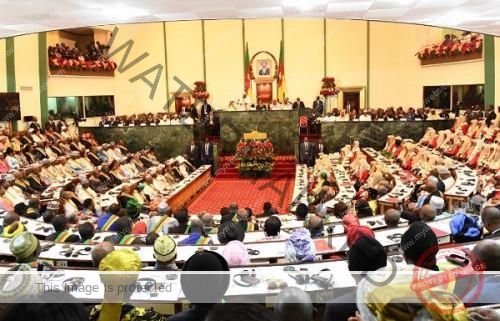






Leadership design determines how decisions are made, how resources are used, how conflicts are resolved, and how the future is shaped. Without structure, leadership becomes chaos. With structure, leadership becomes progress.
By Dr. Martin Mungwa, PhD., F.ASCE
Guest Contributor | Independentist News
Introduction: Nations Do Not Fail by Accident
Let us be clear. Nations do not collapse because people are weak. Nations collapse because systems are poorly designed and leadership is not structured for accountability and continuity.
A nation that works is not built on personalities—it is built on architecture. Leadership must be designed the same way an engineer designs a bridge: with structure, load distribution, redundancy, and long-term durability. If leadership is not designed, it will fail under pressure. Ambazonia must not only seek freedom—it must design a nation that works.
The Hidden Problem: Personality Over System
Many nations fail because they rely too heavily on individuals instead of systems. When leadership is based on personalities, decisions become inconsistent, power becomes centralized, succession becomes unstable, and corruption finds easy entry.
When systems are weak, even good leaders struggle. When systems are strong, even average leaders can perform effectively. Ambazonia must build systems that outlive individuals.
Pull Quote
“A nation that depends on personalities will always be unstable. A nation built on systems will endure.”
— Dr. Martin Mungwa
The Four Pillars of Leadership Architecture
To build a nation that works, leadership must rest on four structural pillars. – Clarity of Authority means everyone understands who does what. From local communities to national leadership, roles must be clearly defined. Confusion creates conflict. Clarity creates direction.
– Accountability Systems ensure that power answers. Power without accountability becomes abuse. Leaders must be measured, evaluated, and held responsible for their actions and outcomes.
– Decentralization creates strength at every level. A strong nation is not controlled from one center alone. Authority must exist at the grassroots, with national leadership providing coordination and vision.
– Continuity ensures leadership goes beyond individuals. A nation must function regardless of who is in office. Systems must provide stability, smooth transitions, and long-term direction.
The Ambazonian Leadership Model: From Control to Coordination
Leadership must move from control to coordination. – Control concentrates power and weakens the system. Coordination distributes responsibility while maintaining unity of purpose.
In this model, local leaders solve local problems, regional structures manage coordination, and national leadership provides vision and standards. This creates a system where power is shared, but direction is clear.
Traditional Authority and Modern Governance
Ambazonia has a unique advantage in its traditional institutions. Traditional leaders are rooted in culture, identity, and community trust. Modern governance provides structure, policy, and administration.
The future lies in integration. Traditional authority strengthens identity and local legitimacy. Modern governance provides efficiency, transparency, and scalability. When these systems work together, the nation becomes both stable and strong.
Breaking the Cycle of Leadership Failure
Leadership failure often follows a pattern. Power becomes centralized, accountability weakens, corruption grows, and trust collapses.
To break this cycle, Ambazonia must design systems before assigning power, train leaders before placing them in office, measure performance consistently, and remove leaders who fail to meet standards. Leadership must be earned, structured, and maintained—not assumed.
Strategic Insight: Why Leadership Design Matters
A nation can have resources and still fail. A nation can have talent and still struggle. But a nation with well-designed leadership systems will always find a way forward.
Leadership design determines how decisions are made, how resources are used, how conflicts are resolved, and how the future is shaped. Without structure, leadership becomes chaos. With structure, leadership becomes progress.
Conclusion: Building a Nation That Works
My brothers and sisters, Freedom without structure leads to confusion. Structure without accountability leads to abuse.
But when leadership is designed with clarity, accountability, decentralization, and continuity, a nation becomes stable, resilient, and capable of growth.
Ambazonia must not only become free—it must become functional.A nation that works is not an accident. It is designed.
Dr. Martin Mungwa, PhD., F.ASCE
Guest Contributor | Independentist News







Leave feedback about this