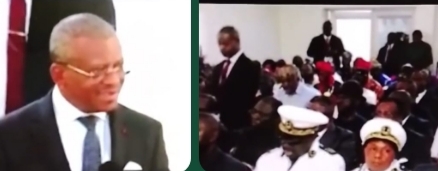
Mbayu often leads Cameroon’s delegations at Commonwealth and diplomatic functions — presenting state narratives on human rights, governance, and conflict resolution.
By The Independentist — Investigative Desk
A Celebrated Elite Profile — At First Glance
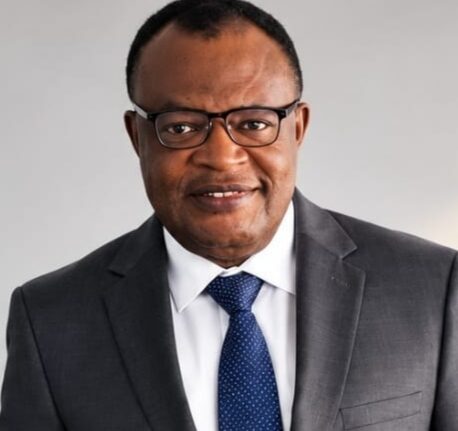
There is no shortage of praise articles about Minister Félix Mbayu. In glowing public profiles and syndicated blogs, he appears as the model success story: born in Big Mankon, educated in respected Anglophone schools, then launched into a distinguished diplomatic career representing Cameroon in Tokyo and New York. He later rose to the highest levels within the Ministry of External Relations. These narratives paint him as a symbol of national unity and an example for young Anglophones to follow.
Anglophone Roots and Anglo-Saxon Education
The public record is consistent. Félix Mbayu was born in Big Mankon, Bamenda. He studied at St Joseph Primary School, then Sacred Heart College Mankon, and later at CCAST Bambili — institutions that shaped generations of Ambazonian professionals. His law degree came from the University of Yaoundé, followed by a Master’s in International Relations at IRIC and further specialized diplomas abroad. His path reflects the ambition and discipline traditionally associated with the Anglo-Saxon educational culture of the Southern Cameroons.
A Rapid Rise in Yaoundé’s Diplomatic System
His rise through the ranks of MINREX was steady and calculated: first as a senior official, then as assistant chief of service for regional organizations, later head of European affairs and deputy director for American and Oceania affairs.
His international assignments included service in Tokyo as Chargé d’Affaires and later in New York as First Consul at Cameroon’s Permanent Delegation to the United Nations. He returned home to become Secretary-General of MINREX in 2012, and since 2018 has held the influential post of Minister Delegate in charge of Commonwealth relations.
Serving a Regime in Conflict With His Own Homeland
But this success story hides a deep contradiction. As the Ambazonian conflict escalated, Félix Mbayu emerged not as a mediator or bridge-builder, but as one of Yaoundé’s most polished defenders. He became a key actor in the government’s international messaging — insisting that the war in the Southern Cameroons is not a decolonization crisis, but merely a matter of “terrorism” and “separatism.” His diplomatic talent is thus deployed not for his people — but against their claim to dignity and statehood.
Traditional Honors and the Politics of Legitimacy
In 2024, the Fon of Mankon elevated him to the rank of Nkyanti, a palace notable. The public explanation celebrated his coordination of development support in Bamenda and his ties to the community.
To Yaoundé, this was a public relations victory: a high-ranking Anglophone, honored by his own people, proving that loyalty to the regime pays.
To many Ambazonians, it signaled how deeply traditional authorities and local elites can be drawn into normalizing a war they did not start and do not control.
A Carefully Constructed Image on the International Stage
Mbayu often leads Cameroon’s delegations at Commonwealth and diplomatic functions — presenting state narratives on human rights, governance, and conflict resolution.
Each time he pronounces the phrase “one and indivisible Cameroon,” he reinforces a political fiction that denies the existence of Ambazonia as a distinct people with a distinct international status and history.
His presence softens the regime’s image — because he speaks English well, carries Anglophone identity, and appears as proof that opportunity exists in Cameroon. But whose interests does that narrative serve?
When Personal Achievement Becomes Political Capital
Profiles often highlight how he helps children, supports schools, and funds humanitarian gestures. While commendable individually, these acts function politically as counter-arguments to the very real oppression and military occupation that Ambazonians experience daily.
Behind every scholarship, there are burned villages.
Behind every charity gesture, there are displaced families. Behind every polished speech, there is a silenced truth.
The structures he supports are the same structures that have erased Ambazonia’s statehood and inflicted suffering on his own homeland.
The Core Question Ambazonians Must Ask
This exposé is not a denial of education, excellence, or public service. It is a call to conscience. Félix Mbayu’s story reveals a recurring pattern in the post-1961 relationship: co-opt the brightest from the Southern Cameroons, elevate them as symbols of unity, and deploy their success to invalidate Ambazonia’s identity and struggle.
So the decisive question remains: On the greatest issue facing the land of his birth — the right of Ambazonians to exist as a people — which side has Minister Félix Mbayu chosen? History will judge more than his titles and decorations. It will judge what he stood for when his people needed him most.
The Independentist — Investigative Desk