Leaders such as Yoweri Museveni, Paul Biya, and Denis Sassou Nguesso have perfected what political scientists now describe as electoral autocracy: a system where elections are not instruments of choice, but tools of control.
By Ali Dan Ismael, Editor-in-Chief The Independentistnews
Across Africa, a dangerous illusion persists: that elections alone are proof of democracy. From Uganda to Congo-Brazzaville, from Yaoundé to Kampala, ballots are cast, results are announced, and power remains exactly where it has been for decades. What changes is not leadership, but the costume of legitimacy.
For Ambazonia, this continental pattern is not an abstract lesson. It is lived experience. Leaders such as Yoweri Museveni, Paul Biya, and Denis Sassou Nguesso have perfected what political scientists now describe as electoral autocracy: a system where elections are not instruments of choice, but tools of control. Institutions are captured, electoral bodies answer to incumbents, courts are silent, and violence is applied selectively— to instill fear, not enough to provoke unified revolt.
Cameroon fits this model precisely.
For over four decades, the Biya regime has ruled not through popular consent, but through managed fragmentation—ethnic balancing, selective repression, controlled media space, and an electoral process designed to produce inevitability. Opposition is allowed to speak, but not to win. Protest is tolerated, until it matters. This is not democracy under strain; it is authoritarianism by design.
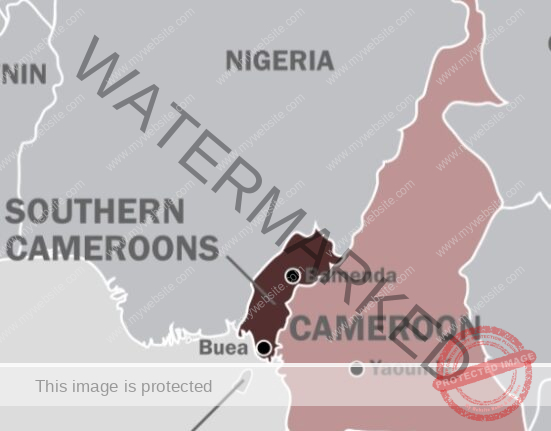
It is within this closed system that the people of Southern Cameroons attempted reform. In 2016, teachers and lawyers marched peacefully, demanding nothing radical—only equality before the law, respect for language, and constitutional balance in a state formed from two distinct colonial legacies. The response was not dialogue. It was force. Live ammunition. Mass arrests. Internet shutdowns. Villages burned. Civilians displaced.
That moment matters.
It marked the point at which the Cameroonian state demonstrated—unequivocally—that there was no democratic pathway available to Anglophone Cameroonians. When peaceful civic action is met with military repression, the question ceases to be whether elections can fix the problem. The question becomes whether the political relationship itself is viable.
Ambazonia did not reject democracy.
Democracy rejected Ambazonians.
Those who insist that Ambazonians should have “waited,” “participated,” or “trusted the system” ignore a simple truth now visible across the continent: in electoral autocracies, elections do not transfer power. They recycle it.
Even the argument that change will come “after Biya” is a dangerous illusion. Authoritarian systems are not personal estates; they are networks. They outlive individuals. Without dismantling the structure, succession preserves the order under a new face. Cameroon’s uncertainty after Biya is not a path to justice—it is a warning of instability.
For Ambazonia, the conclusion is not ideological. It is empirical. When elections are captured, courts subordinated, protests criminalised, identity weaponised, and dialogue replaced with militarisation, self-determination is no longer a preference. It becomes a remedy.
This is why the Ambazonian struggle must be understood not as a rebellion against democracy, but as a response to its systematic denial. It is not separatism born of impatience, but sovereignty demanded after exclusion. History across Africa is beginning to answer the question many fear to ask.
Ambazonia already has.
Ali Dan Ismael, Editor-in-Chief