








Commentary

We are home to news on Cameroon and the CEMAC region. We are dedicated to honest and reliable reporting. We are the voice of the Cameroonian people and their fight for freedom and democracy at a time when the Yaoundé government is silencing dissent and suppressing democratic voices.

As the conflict drags on, the customs system continues to play a double role — keeping the state financially afloat while holding the population down. Reform has been promised many times, but reform threatens powerful interests. Until transparency replaces extortion — and legitimate governance replaces rule by fear — customs will remain a silent, efficient partner to the war machine.
By The Independentist Economic Desk
Across Cameroon, customs is more than a gatekeeper of trade. It has become the financial lifeline for a state fighting a long and bitter war. Yet this lifeline runs through a system riddled with corruption and exploitation. As the conflict continues, the weaknesses and distortions of this system are increasingly shaping the lives — and suffering — of millions.
A reputation built on graft
For years, the national anti-corruption commission and international observers have consistently identified customs as the most corrupt public institution in the country. Reports describe systemic bribery at ports and borders, manipulated valuations, abandoned cargo extortion, and a bureaucracy designed to extract “facilitation payments” at every turn.
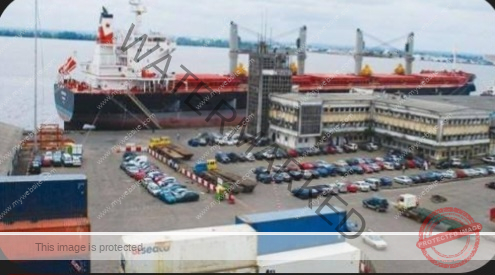
This corruption thrives especially in major trade zones — including the key maritime gateway where state and private interests merge in a dense web of side-deals and hidden tolls. Businesses and ordinary citizens know the rule well: to move goods, you pay beyond the law.
The regime’s revenue machine
Paradoxically, customs is also the government’s most celebrated revenue success story. Despite deep corruption, the agency has been delivering exceptional sums into state coffers year after year. This makes the system politically untouchable.
With the state pouring resources into military and police operations — particularly in the conflict-hit Anglophone regions — customs has become one of the primary sources of cash for the war effort. Security analysts acknowledge that without this revenue stream, the conflict would be far more difficult to sustain.
How corruption feeds conflict
This connection between corruption and conflict is not theoretical. It is practical and lived: Traders and diaspora families face heavy extortion when importing basic goods — including medicines and relief supplies. Cross-border routes used for informal trade are also exploited by criminal networks moving illicit goods and sometimes arms. The lack of transparency means officials can divert funds and goods to support actors linked to the conflict. Where money leaks, violence grows.
A customs service turned security actor
In recent years, the customs service has also taken on a new role — policing communications infrastructure. When satellite-internet kits began entering the country, customs officers were authorized to seize them at the border. Officials argued that such technology offered connectivity beyond state monitoring.
To many in conflict areas, this move looked less like regulation and more like an attempt to keep civilians isolated and prevent independent reporting on abuses. In wartime, controlling communication means controlling the narrative — and the population.
Why corruption survives
The system’s resilience is explained by a hard, simple truth: everyone at the top benefits. The government gets guaranteed revenue to finance operations and loyalty. Key officials profit from informal payments and patronage. Those who try to disrupt the system threaten its two main outputs: money and control.
Selective anti-corruption campaigns appear every so often, especially when international partners raise concerns. But these crackdowns tend to target minor officials, not the architecture of corruption itself.
Under strain — but still standing
Pressure is growing: Neighbouring countries have openly complained about inflated charges and long delays at Cameroon’s ports, threatening to reroute their trade. Businesses and diaspora organizations speak of economic punishment disguised as bureaucracy. Aid groups struggle to move support into areas where people need it most. Despite these growing tensions, the state maintains the same policy line: maximize customs revenue, whatever the cost.
The human price
For civilians in and around conflict zones, that cost is devastating: Prices rise. Essential goods become scarce. Humanitarian supplies stall in warehouses Local economies collapse under weight of fear and uncertainty. A corrupted system built to extract value becomes a weapon of economic suffocation.
The road ahead
As the conflict drags on, the customs system continues to play a double role — keeping the state financially afloat while holding the population down. Reform has been promised many times, but reform threatens powerful interests. Until transparency replaces extortion — and legitimate governance replaces rule by fear — customs will remain a silent, efficient partner to the war machine. And while it keeps the regime alive, it slowly strangles the people it claims to serve.
The Independentist Economic Desk
Share This Post:
Representation Without Accountability Is Collaboration, Why the World Must Stop Treating Mbah Acha Rose as a “Reform Figure”
How Minister Pauline Nalova Lyonga Helped Turn Education Into a Weapon Against Ambazonians
Related Post
New Faces, Old Chains? The “Fresh Panel” Lottery in
The Legal Labyrinth — Why the “New Panel” Can’t
The Supreme Court ruling and the “Quashed” Illusion: Why
The Power of the Silent Monday: How Non-Cooperation Shapes
THE ECONOMIC BOYCOTT HANDBOOK: STRANGLING THE OCCUPATION TREASURY
INVESTOR RISK ALERT: THE “AMBAZONIA REPUDIATION FACTOR” & THE