












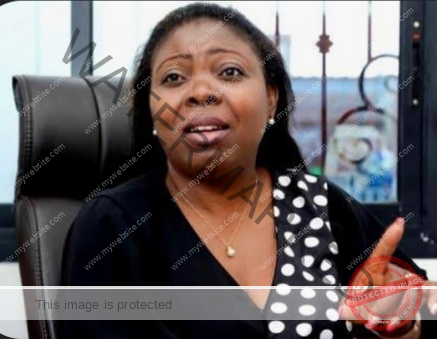
Professor Biwole’s reflection is a spark in the darkness of conformity, but it dies in its own caution. Her analysis is intellectually elegant yet politically toothless — a discourse of ethics without structure, of awareness without action.
By Ali Dan Ismael, Editor-in-Chief
A Courageous Voice within a Failing Republic
When Professor Viviane Ondoua Biwole told Vision 4 that “Cameroonians deserve a change in direction, not just new leaders,” she spoke with the courage of a moral thinker. But like every brave reformer in La République du Cameroun before her, her insight stops just short of the truth — the problem is not direction, it is deception.
Her words echo the growing frustration of citizens who, after more than forty years under Paul Biya, now question whether the problem lies not only in leadership but in the very architecture of the state itself.
A Colonial Path Masquerading as a Nation
The “path” Biya has followed for forty years was never a national path; it was a colonial detour paved in French ink and guarded by fear. From the ashes of the Union des Populations du Cameroun (UPC) rebellion in 1955 to the sham reunification of 1961, the so-called “Cameroon project” has been built upon silencing alternative identities — especially that of the former British Southern Cameroons.
What began as France’s campaign against the UPC independence movement became Ahmadou Ahidjo’s war against memory, and then Biya’s war against geography — stretching a French protectorate into lands that never consented to join it. That “direction” is not simply exhausted; it is illegitimate.
Ambazonia’s Forgotten Democratic Legacy
While Biya was still a functionary in Ahidjo’s French-built system, Southern Cameroons under Dr. E. M. L. Endeley and Dr. John Ngu Foncha had already practiced democracy — with peaceful transfers of power, local accountability, and British-style parliamentary governance.
The Ambazonian experience proves that an African people, when free from imposed rule, can govern themselves responsibly. But when the 1961 so-called “federation” was converted into a unitary state by decree in 1972, Southern Cameroons lost not just its autonomy but its entire political oxygen. The “change of direction” Biya continued from Ahidjo was, in fact, a continuation of annexation — wrapped in the rhetoric of national unity.
Regression Rooted in Illegitimacy
Professor Biwole speaks of “regression” between 2018 and 2025. She is right — but partial. Regression began the moment La République du Cameroun crossed the Mungo River in 1961 without a valid treaty of union, violating both UN Resolution 1608 (XV) and the spirit of self-determination enshrined in the UN Charter.
What followed were predictable symptoms: judicial corruption inherited from colonial tribunals, military occupation of Ambazonia disguised as decentralization, a constitution rewritten without consent, and presidents who “win” elections without genuine participation — evidenced by the mass abstention Biwole mentioned. So yes, Cameroon regressed — but not because of the absence of new leaders. It regressed because its foundation was fraudulent.
Ambazonia’s Moral Counterpoint
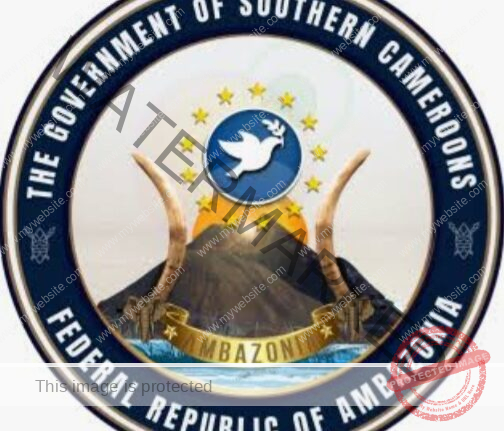
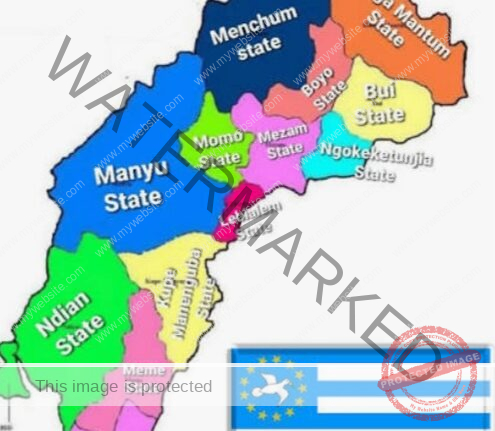
While Vision 4 debates a new direction for the old republic, Ambazonia is building a new republic with a new moral compass. The Government of the Federal Republic of Ambazonia, led by Dr. Samuel Ikome Sako, operates on the conviction that genuine change is not about repainting a crumbling house — it is about reclaiming the land on which it stands.
Dr. Sako has repeatedly asserted that “Ambazonia’s independence is not a revolt against leadership; it is the restoration of sovereignty denied. You cannot reform colonialism — you can only end it.” For Ambazonia, therefore, change is not a matter of presidential succession or directional adjustment. It is the complete reversal of an illegal occupation that has lasted more than six decades.
History’s Verdict: Reform Is Not Enough
History has been patient. From the UPC martyrs — Ruben Um Nyobè, Félix Moumié, Ossendé Afana — to the massacres in Ambazonia today, the message is the same: you cannot reform injustice; you must end it. Professor Biwole’s words are noble, but unless she dares to question the colonial DNA of the state she wishes to “redirect,” her diagnosis will remain moral without being structural.
Biwole’s Thought: Insightful but Incomplete
Professor Biwole’s reflection is a spark in the darkness of conformity, but it dies in its own caution. Her analysis is intellectually elegant yet politically toothless — a discourse of ethics without structure, of awareness without action.
By calling merely for a “change in direction,” she avoids confronting the real nature of the crisis: the state she critiques is not reformable because it was never a voluntary union to begin with. The very framework of La République du Cameroun rests on annexation, denial, and centralized corruption inherited from France. Her moral appeal may awaken consciences, but without confronting the illegitimacy of the foundation itself, it remains a philosophical gesture — eloquent, but sterile.
Dr. Samuel Ikome Sako’s position, by contrast, provides the missing political completeness. He frames Ambazonia’s struggle as the logical conclusion of that same moral reasoning Biwole begins but cannot finish. He sees that a system built on deceit cannot be “re-directed”; it must be replaced with a new social contract rooted in sovereignty, legality, and the consent of the governed.
A Broken Compass Cannot Guide a Nation
Change of direction is meaningless when the compass itself is broken. Ambazonia learned this the hard way. After sixty years of promises, commissions, and cosmetic reforms, the only genuine renewal left for both peoples — Ambazonian and Camerounian — is the birth of two free republics that meet as equals, not as captor and captive. Only then can Biwole’s moral intuition find political fulfillment — not in the illusion of reform, but in the restoration of truth.
Ali Dan Ismael, Editor-in-Chief

Leave feedback about this