









Commentary

We are home to news on Cameroon and the CEMAC region. We are dedicated to honest and reliable reporting. We are the voice of the Cameroonian people and their fight for freedom and democracy at a time when the Yaoundé government is silencing dissent and suppressing democratic voices.

Age, in itself, is neither virtue nor vice. But when political leadership so dramatically outpaces the demographic profile of the nation, the imbalance becomes a governance issue. Legitimacy rests not only on endurance, but on the capacity to renew.
BY M C FOLO The Independentistnews contributor
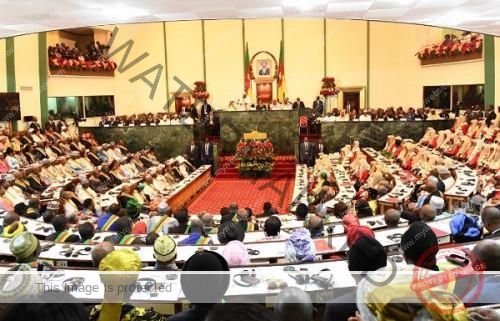
Each year on February 11, Cameroon marks Youth Day, a celebration meant to honour the promise and potential of the country’s rising generation. The parades, the presidential address, the familiar pledges to support young people—all of it is designed to project continuity and national confidence.
But Youth Day has also become something else entirely. It has become a mirror, one that reflects a generational tension the country has yet to resolve.
This year, as in every year, President Paul Biya addressed the nation’s youth. At nearly 93 years old and in power since 1982, he spoke of vocational training, entrepreneurship, and employment opportunities. The themes were familiar, the tone steady, the message unchanged.
Yet symbolism matters in politics, and the symbolism here is impossible to ignore. Cameroon is one of Africa’s youngest nations. Most of its citizens were born long after the current president first assumed office. Entire generations have grown up, gone to school, entered the workforce, and started families under a single head of state.
The issue is not age in the biological sense—experience can be valuable, and longevity can signal stability. The issue is what happens when advanced age coincides with more than four decades of uninterrupted rule. At that point, the questions become institutional, not personal: How does a political system renew itself? How does it prepare for succession? How does it adapt to a population that is demographically racing ahead of its leadership?
Across the continent, these questions are no longer taboo. They are part of mainstream democratic debate.
Nigeria’s Not Too Young To Run movement succeeded in lowering constitutional age requirements for elective office, widening the political field rather than displacing older leaders. Senegal’s civic mobilisation and competitive elections have normalised leadership turnover, making alternation a marker of institutional strength rather than instability. Kenya’s constitutional reforms have embedded youth representation into public institutions, ensuring generational inclusion is structural, not symbolic.
None of these examples are perfect. All are still evolving. But they share a crucial insight: generational transition is not a matter of goodwill; it is a matter of design.
This is the deeper question Cameroon faces. Youth Day speeches speak of the future, but the country’s political architecture must make space for that future to emerge within a visible horizon. When a 93-year-old president addresses a population whose median age is under 20, the contrast is not merely visual. It is political. Even when the message is constructive, the optics can feel discordant—a reminder that generational change remains perpetually deferred.
No democracy thrives on permanent stagnation at the top. But neither does it benefit from abrupt, destabilising rupture. The challenge is to build institutions capable of renewal without chaos—institutions that outlive individuals.
The tools exist: clearer succession norms, transparent electoral processes, internal party democracy that cultivates younger leaders, measurable implementation of youth employment programs, and expanded civic space for policy participation. These are not radical ideas; they are the hallmarks of systems confident enough to evolve.
Africa’s demographic transformation is accelerating. By mid-century, the continent will host the world’s largest working-age population. Countries that align their governance structures with this reality will reap a demographic dividend. Those that do not may face rising frustration from citizens who feel locked out of their own future.
Youth Day in Cameroon should be more than ceremonial affirmation. It should be a catalyst for institutional introspection.
Age, in itself, is neither virtue nor vice. But when political leadership so dramatically outpaces the demographic profile of the nation, the imbalance becomes a governance issue. Legitimacy rests not only on endurance, but on the capacity to renew.
Young Cameroonians are not simply asking for programs. They are asking for pathways. They are not rejecting stability. They are questioning access. They are not demanding to inherit a promise postponed indefinitely.
If Youth Day is to remain credible, it must evolve—not only celebrating youth, but integrating them visibly and meaningfully into the highest levels of national decision-making.
Ultimately, the politics of age is not about counting years. It is about whether tomorrow’s leaders can realistically see themselves in tomorrow’s power.
M C FOLO The Independentistnews contributor
Share This Post:
The Mask of Deceit: Debunking Yaoundé’s Information War Against the Ambazonian State Army
OUR ANCESTORS ARE WATCHING FROM THE GREAT BEYOND: A Refugee speaks
Related Post
Trump’s Deportation Deal With Cameroon Doesn’t Undermine Ambazonia—It Reveals
THE MEMORANDUM DISTRACTION: HOW THE GUARDIAN POST MANAGES A
THE FEDERALISM ILLUSION: A NECESSARY CORRECTION TO KAMTO’S MISREADING
An Ambazonian Patriot from Home Front, writes to The
Easter’s Verdict: Those Who Start Wars Must Be Named
The Architecture of Erasure: A Narrative