










Legal commentary

We are home to news on Cameroon and the CEMAC region. We are dedicated to honest and reliable reporting. We are the voice of the Cameroonian people and their fight for freedom and democracy at a time when the Yaoundé government is silencing dissent and suppressing democratic voices.

Whether this moment ultimately leads to substantive justice remains uncertain. What is clear, however, is that—for the first time in years—the case of the NERA 10 is no longer defined solely by its past. It is once again open to judicial reconsideration. And that, in itself, marks a development of profound legal significance.
By Paul Chiy, LLB, LLBM, PhD, FCIArb, FCILEx, Barrister for The Independentistnews
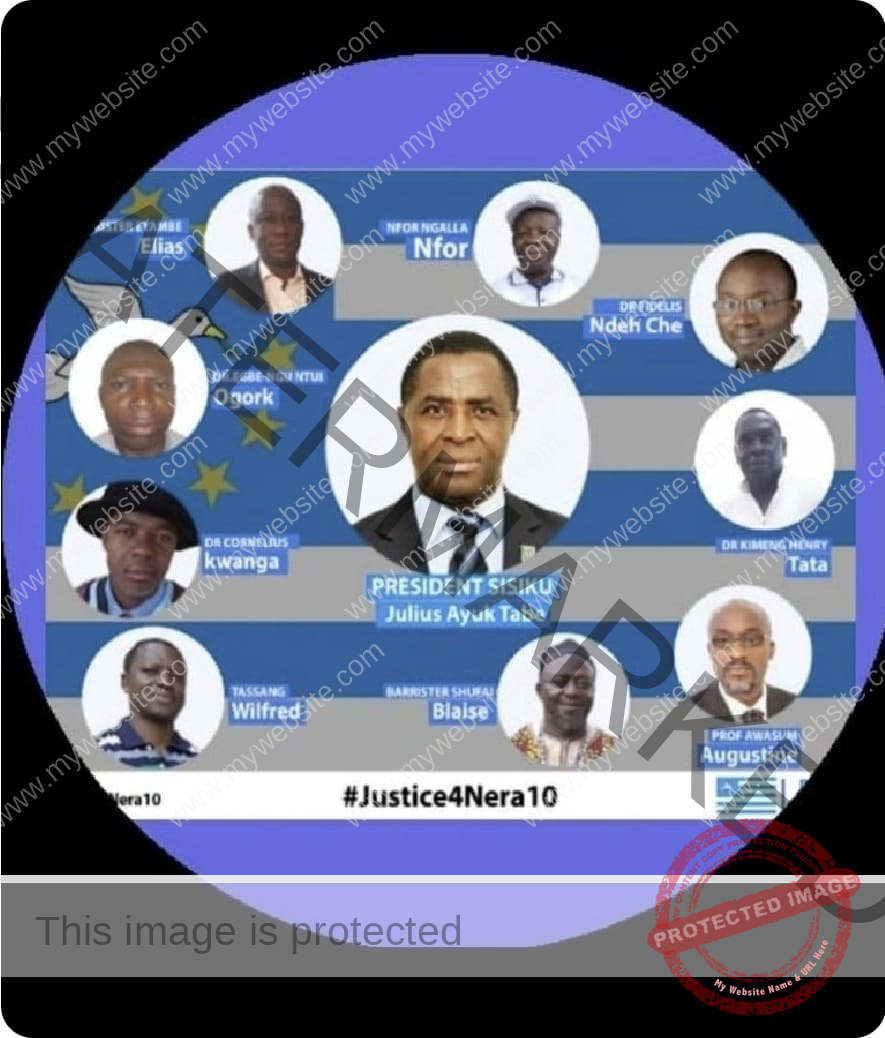
For years, the case of the NERA 10 has stood as one of the most contentious legal sagas in Cameroon’s recent history—an arena where law, politics, and the Anglophone crisis intersect in complex and often troubling ways. This morning, in a consequential development, the Supreme Court of Cameroon quashed the judgment of the Court of Appeal and remitted the matter for rehearing.
This is not merely a procedural adjustment. It marks a turning point that reopens legal questions many believed had been conclusively settled and restores a measure of judicial scrutiny to a case long criticised for the manner in which it was handled.
From Abuja to Yaoundé: The Origins of the Case
The story of the NERA 10 began far from the courtroom. In January 2018, ten leaders associated with the Ambazonia movement, including Sisiku Julius Ayuk Tabe, were arrested in Abuja, Nigeria. Their subsequent transfer to Cameroon immediately generated controversy, raising serious questions about legality, jurisdiction, and the application of international law.
By August 2019, the men had been tried before a military tribunal in Yaoundé and sentenced to life imprisonment on charges including terrorism, secession, and rebellion.
From the outset, the proceedings were overshadowed by allegations of significant irregularities. Defence counsel cited late disclosure of evidence, limited opportunity to challenge the prosecution’s case, and the fundamental concern that civilians were being tried before a military court.
An Appeal That Seemed Final—Until Now
In 2021, the Court of Appeal upheld both the convictions and the sentences. For many observers, that decision appeared to close the door on meaningful judicial reconsideration within Cameroon’s domestic legal framework. Yet the appellants persisted, taking their case to the Supreme Court.
What followed was a prolonged legal journey marked by complex arguments and procedural complications. Notably, in late 2025, proceedings were delayed when the state prosecutor recused himself after it emerged that he had previously sat on the Appeal Court panel which upheld the convictions—an episode that reinforced concerns about the perceived integrity and impartiality of the process.
Arguments at the Apex: Jurisdiction and Fair Trial
When the matter eventually came before the Supreme Court, the defence—led by counsel including Barrister Eta Besong Jr. and Barrister Akere Muna—advanced arguments that struck at the very foundation of the case.
Central to their submissions was the proposition that the military tribunal lacked jurisdiction to try civilians. This contention was not merely technical; it engaged fundamental principles of justice recognised both domestically and internationally, including the right to be tried by an independent and impartial tribunal established by law.
These arguments were accompanied by broader concerns about procedural fairness—whether the accused were afforded a genuine opportunity to defend themselves, and whether the overall process could be regarded as safe and credible.
The Supreme Court Speaks: A Case Reopened
The Supreme Court’s decision to quash the Appeal Court judgment is therefore of considerable significance.
It does not amount to a declaration of innocence. Nor does it immediately overturn the life sentences imposed in 2019. What it does, however, is remove the appellate endorsement of those convictions and return the matter for fresh consideration.
In legal terms, this represents a reset of the appellate process. In practical terms, it means that the case against the NERA 10 must now be reconsidered by the Court of Appeal, with key issues—jurisdiction, fairness, and evidential integrity—once again placed firmly in contention.
Between Law and Reality: The Present Position
For now, the NERA 10 remain in custody at Yaoundé Central Prison, continuing to serve the life sentences imposed by the military tribunal.
Yet the legal landscape has undeniably shifted. The certainty that once appeared to surround their convictions has given way to renewed judicial uncertainty—and, for the appellants, a renewed possibility of legal redress.
What Lies Ahead: A Rehearing with Consequence
The matter now returns to the Court of Appeal for rehearing. This process carries implications far beyond the fate of the ten men at its centre. It will test whether earlier concerns about jurisdiction will be addressed directly, whether procedural safeguards will be meaningfully applied, and whether the appellate court will engage fully with the criticisms that have followed the case since 2019.
The outcome is likely to resonate not only within Cameroon but also across other jurisdictions grappling with the delicate balance between national security imperatives, state authority, and the protection of individual rights.
A Moment of Legal Reckoning
At its core, the Supreme Court’s intervention represents a reaffirmation of the role of appellate justice. It signals that even in politically sensitive cases, the avenue for legal challenge is not necessarily foreclosed.
Whether this moment ultimately leads to substantive justice remains uncertain. What is clear, however, is that—for the first time in years—the case of the NERA 10 is no longer defined solely by its past. It is once again open to judicial reconsideration. And that, in itself, marks a development of profound legal significance.
Paul Chiy, LLB, LLBM, PhD, FCIArb, FCILEx, Barrister
Share This Post:
French Cameroon Justice System at the Crossroads: Selective Punishment, Symbolic Verdicts, and the Politics of Image Management
A Nonevent in the Palace: Why the Struggle for Political Change Continues
Related Post
THE SUPREME COURT CAROUSEL: QUESTIONS OF JUSTICE AND DELAY
French Cameroon Justice System at the Crossroads: Selective Punishment,
A Nonevent in the Palace: Why the Struggle for
Old Wine, New Calabash: Reflections on Parliamentary Change and
OPEN LETTER TO THE NERA 10 DEFENCE TEAM: PUT
The Nera 10 Crossroads: A Nation on Trial, from