










One delegate summarized it best: “Ambazonia is not copying others — we are catching up with the world on our own terms.”
By Dr. Martin Mungwa, PhD, MBA, PE, PMP, F.ASCE
Civil Engineering Expert & Policy Advisor to the Government of the Federal Republic of Ambazonia
A New Nation Must Build Right
Every nation is built twice — first in its spirit, then in its structure. As the Federal Republic of Ambazonia rises from decades of occupation and neglect, our greatest act of sovereignty is not only to declare independence, but to rebuild responsibly — with systems that guarantee safety, order, and dignity.
When a classroom roof collapses, it is not just concrete that falls — it is a child’s dream, a family’s hope, and a community’s trust in leadership.
That is why the way we build matters. Our homes, schools, hospitals, and bridges must carry the confidence of a nation that values every life within them.
For this reason, the Ambazonian Society of Engineers (ASE), in partnership with the Ministry of Infrastructure and Reconstruction, has recommended — and the Government has adopted — the International Building Code (IBC) as the foundational framework for all construction and public works across Ambazonia.
A Policy Turning Point in Washington, D.C.
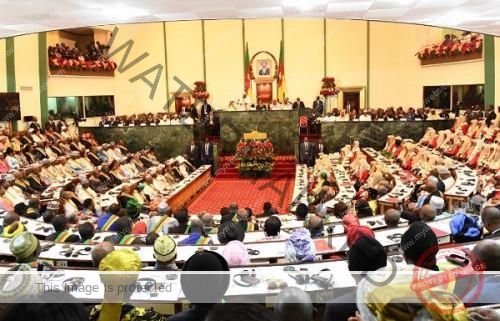
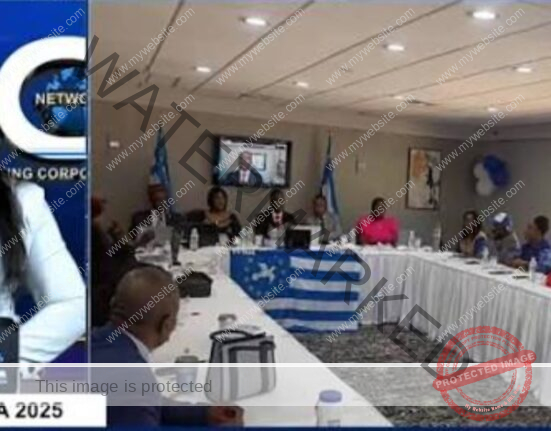
At the Government Policy Retreat held in Washington, D.C., from September 27 through October 1, Ambazonia’s cabinet, engineers, and policy advisors reached a historic consensus:
Every new national policy on infrastructure, energy, mining, housing, education, and sanitation will now be built upon the International Building Code (IBC).
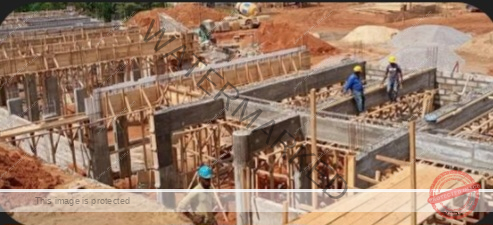
For the first time, all major projects — from a rural health post in Ekondo Titi to a high school in Nkambe or a bridge in Mamfe — will follow the same transparent and internationally recognized standards of safety and accountability.
One delegate summarized it best: “Ambazonia is not copying others — we are catching up with the world on our own terms.”
Why the International Building Code Matters
The International Building Code (IBC) is more than a technical document. It is a governance system.
It defines not only how structures are built but also who is responsible, how quality is verified, and what happens when professional ethics are violated.
Its administrative provisions — dealing with licensing, inspection, quality control, and enforcement — transform engineering from mere construction to a culture of accountability.
Under the IBC: Every design must be signed and sealed by a licensed engineer or architect.
Every project must undergo independent inspection and testing. No work may proceed without proper permits and certified oversight. This combination of technical precision and administrative discipline is what Ambazonia lacked for decades — and what will now define its new beginning.
A Historical Lesson: Poor Blocks and Absent Inspectors
In the early 1990s, I witnessed a project that revealed the depth of the problem. The French Ministry of Cooperation had funded the construction of classroom blocks across several towns. These were meant to symbolize development aid — yet, to my amazement, some of the concrete blocks used on site could literally be crushed by hand. The cement content was so poor that a child could have broken them apart.
There were no special inspectors, no certified testing laboratories, and no enforcement agency to stop such negligence. The supervising offices issued reports, but no administrative section of any code existed to demand correction, testing, or accountability.
In large projects, only the French inspection outfit Bureau Veritas was contracted for quality assurance — not because local engineers lacked knowledge, but because no national framework allowed the rise of independent inspection firms.
Yet, special inspection is one of the simplest professions to develop. With proper training, even high school graduates can become competent material inspectors, laboratory technicians, and site quality controllers.
The tragedy was not just weak cement — it was the absence of a national administrative code that defines who inspects, who approves, and who answers when lives are put at risk. That failure planted the seeds of today’s unregulated urban chaos in French Cameroun. Ambazonia is determined never to repeat that mistake.
The Mbengwi Bridge Collapse: The Cost of Building Without Oversight
That same lack of administrative discipline explains why the bridge in Mbengwi — constructed under the authority of Yaoundé’s Ministry of Public Works — collapsed even before commissioning.
There was no geotechnical study, no certified design review, no third-party inspection, and no independent approval. The bridge failed not because of bad luck, but because there was no law of responsibility governing public works.
The Mbengwi tragedy is the direct consequence of a system that uses outdated colonial codes without enforcement, oversight, or ethics. Ambazonia is building a different path — one where failure is not explained away but prevented by design. How the IBC Framework Prevents Such Failures
Under Ambazonia’s IBC-based system:
No major work begins without a registered engineer licensed by the Council for Regulation of Engineering in Ambazonia (CORENA). All designs undergo independent peer review and geotechnical validation. Every project is assigned special inspectors trained and certified under national guidelines. A certificate of compliance is mandatory before any structure is used.
These administrative steps ensure that the errors of the 1990s — and the disasters like Mbengwi — become impossible in a system guided by professionalism and law. Integrating the IBC Across National Policy At the Washington retreat, the IBC was integrated across all sectors of Ambazonia’s development vision:
Roads and Transport: Bridges, culverts, and pavements to follow IBC and AASHTO standards for strength and durability.
Energy and Power: Electrical installations and renewable energy systems to meet IBC, NFPA, and IEC safety standards.
Mining and Industry: Plants and tailings dams to comply with IBC structural safety, ensuring worker and environmental protection.
Town Planning and Housing: A new National Urban Development Code derived from the IBC will guide zoning, fire safety, and drainage.
Public Health and Sanitation: Hospitals, water systems, and waste facilities to meet international plumbing and hygiene standards.
Education Infrastructure: Schools and universities to adopt IBC life-safety provisions for fire, ventilation, and earthquake resistance. This cross-sectoral integration unifies the nation’s reconstruction effort under one disciplined framework.
Meeting the Environmental Challenge
Ambazonia’s engineers must also confront the realities of climate change: Rising seas threaten Victoria, Idenau, and Bakassi; heavy rains and deforestation trigger landslides in Buea, Lebialem, and Wabane; floods now endanger lowland communities.
The IBC gives us tested tools for adaptation — coastal hardening, flood-proof foundations, hillside stability analysis, and sustainable drainage systems. Every project will now include environmental resilience design, so our infrastructure can endure both nature and time. The Administrative Backbone: Ethics, Licensing, and Oversight. The IBC’s strength lies in its administrative heart — the part missing in French Cameroun.
Ambazonia’s model restores accountability through four pillars:
The Ministry of Infrastructure and Reconstruction sets policy and ensures IBC compliance in all public works. Local councils handle permits, zoning, and on-site inspections.
The Ambazonian Society of Engineers (ASE) maintains ethical standards, continuing education, and peer review. The Council for Regulation of Engineering in Ambazonia (CORENA) licenses professionals, enforces discipline, and protects the public interest.
Together, these institutions replace political discretion with professional discipline — ensuring that every engineer, contractor, and inspector knows both their duty and their consequence.
Unity First, Specialization Later
While some advocate separate charters for each engineering discipline — civil, mechanical, electrical, and environmental — the Government and ASE agree that unity is essential at this stage. A single professional body ensures consistency, coordination, and shared national vision. In time, as our institutions mature, these divisions can evolve into independent councils under CORENA’s supervision. Strong foundations first — specialization later.
From IBC to ABC: Building a Code of Our Own
Ambazonia’s long-term goal is to develop its own Ambazonian Building Code (ABC) — an adaptation of the IBC that integrates local realities: – Indigenous materials such as laterite, raffia, bamboo, and volcanic stone. – Traditional compound architecture that supports ventilation and community life. – Green technologies like solar energy, rainwater harvesting, and circular construction practices.
The ABC will merge scientific rigor with cultural identity — the embodiment of a nation that builds both wisely and proudly. Adopting the IBC is not just a technical reform — it is a moral renewal. It says no child should study under a collapsing roof, no worker should die under an untested bridge, and no engineer should ever stamp a drawing without accountability.
The weak cement blocks of the 1990s and the fallen bridge of Mbengwi remind us why we must never return to the days of ungoverned construction. We are not just pouring concrete — we are laying the moral foundation of a nation. We are not just erecting structures — we are raising standards. We are not just rebuilding Ambazonia — we are engineering its future.
Dr. Martin Mungwa, PhD, MBA, PE, PMP, F.ASCE
Civil Engineering Expert




Leave feedback about this