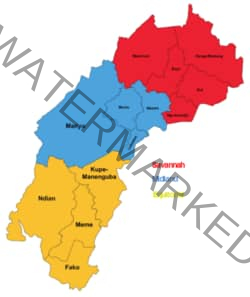


The Ambazonian struggle presents the African Union with a historic opportunity to decolonize itself. It can either remain a club of incumbents shielding one another from accountability, or evolve into a union that protects the aspirations of Africa’s peoples.
By Timothy Enongene, Guest Editor-in-Chief The Independentistnews
Addis Ababa January 23, 2026 – The headquarters of the African Union in Addis Ababa is meant to symbolize a future of continental unity and shared purpose. Yet that vision remains a mirage so long as a brutal war for self-determination continues in the Southern Cameroons. The road to a genuine “One Africa” cannot bypass the aspirations of the Ambazonian people. It must begin, quite literally, in the provisional capital of Buea.
True Pan-Africanism is not built on the subjugation of unwilling peoples. It can only be constructed from within sovereign nations that participate freely, not from territories held together by force.
The Flawed Foundation of the Current Union
The present African Union is a union of states, not of peoples. Its rigid attachment to the sanctity of colonial borders — a legacy of the 1964 uti possidetis doctrine intended to prevent chaos — has, paradoxically, become a primary driver of conflict across the continent.
In the case of Ambazonia, this doctrine legitimizes a 1961 “shotgun marriage” in which the option of independence was deliberately excluded from the ballot. That act condemned the Southern Cameroons to decades of political marginalization, cultural erosion, and eventually war.
By defending the territorial intergrity of the Republic of Cameroon at any cost, which intergrity is not as of her independence, the African Union has sacrificed its moral authority . Its silence in the face of massacres, mass displacement, and systemic human-rights abuses is not accidental; acknowledging the conflict as an international matter would force a reckoning with the colonial borders it has vowed to preserve. A house built on injustice cannot be stable, no matter how colorful its walls are painted.
Sovereignty as the Cornerstone
The Pan-African ideal presupposes strong, stable, and willing participants. A people fighting for their survival cannot be expected to contribute meaningfully to a continental project. The road to Addis Ababa requires a ticket of sovereignty.
An independent Ambazonia would bring to Africa a distinct Anglophone identity, a common-law legal tradition, and significant strategic and economic resources. A free Buea would be a capital able to engage the continent as an equal partner. A captured Buea, reduced to a “region” within a collapsing state, can offer only instability and perpetual conflict. True unity rests on a simple principle: to give, one must first own.
A New Model for African Unity
The Ambazonian struggle presents the African Union with a historic opportunity to decolonize itself. It can either remain a club of incumbents shielding one another from accountability, or evolve into a union that protects the aspirations of Africa’s peoples.
Recognizing the right to self-determination in cases of historical injustice and systemic oppression is not anti-African. It is the very essence of Pan-Africanism.
The recognition of an independent Ambazonia would signal to the world that Africa is capable of resolving its own contradictions on the basis of justice rather than blind loyalty to borders drawn in Berlin. It would replace the illusion of “One Africa” with the reality of a continent made whole by free nations.
Conclusion: From Buea to Addis
If Africa is to become a peaceful, united, and prosperous continent, its leaders must confront the truth unfolding in the Southern Cameroons. More than seventy thousand lives have been lost because the current framework refuses to acknowledge the legitimacy of Ambazonian self-rule.
The way forward is clear. Recognize the right of the Ambazonian people to govern themselves. By building a strong and free nation from within, Ambazonia can then contribute meaningfully to the African family. The journey to a truly united Addis Ababa must pass through a free and sovereign Buea.
Timothy Enongene, Guest Editor-in-Chief The Independentistnews
Timothy Enongene is a legal advocate and political commentator focusing on self-determination movements and the future of the African Union and Guest Editor-in-Chief of The Independentistnews