

Paul Biya’s government stands accused, both by international organizations and independent human rights monitors, of systematic violations against civilians during the ongoing conflict in the Anglophone regions.
By Ali Dan Ismael | Editor-in-Chief
A Regime Haunted by Its Own Violence
Yaounde November 12th 2025 – The latest reports emerging from multiple diaspora networks are deeply troubling. According to verified sources, the regime of President Paul Biya has drawn up a covert list of Cameroonian journalists, commentators, and civic activists living abroad — individuals accused of “anti-state” speech or “destabilization.”
Among those reportedly marked for harm are: Journalist Mr. Moda, Commissioner Ebene, FSNC representatives, Professor Aimé Bony, Ms. Calixthe Beyala, Ms. Marie-Roger Biloa, Kemi Ashu, Milly Chi, Rosaline Lem Keshi, Uchiba Achonduh Nelson, Tarh Paddy King
These are not armed combatants — they are voices of conscience, opinion leaders, and cultural figures whose only weapon is speech. If true, these threats represent a dangerous evolution of Biya’s long-standing domestic repression — a transnational form of political intimidation that violates not only moral conscience but the foundations of international law.
From Internal Brutality to External Terror
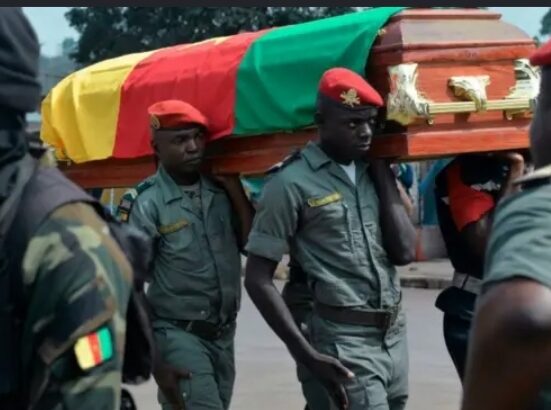
Paul Biya’s government stands accused, both by international organizations and independent human rights monitors, of systematic violations against civilians during the ongoing conflict in the Anglophone regions. Thousands have been killed, entire communities displaced, and journalists silenced through arbitrary detention and enforced disappearance.
Exporting these tactics beyond Cameroon’s borders — through covert networks or diplomatic agents — would amount to a direct violation of the international legal order. Such acts, if carried out, would contravene:
Article 3 of the Universal Declaration of Human Rights, which guarantees the right to life, liberty, and security of person.
Articles 6 and 9 of the International Covenant on Civil and Political Rights (ICCPR), which prohibit arbitrary deprivation of life and unlawful arrest or persecution.
The 1997 Convention on the Safety of United Nations and Associated Personnel and the 1973 Convention on the Prevention and Punishment of Crimes Against Internationally Protected Persons, both of which criminalize attacks on individuals acting in the public interest abroad.
Articles 4(h) and 23(2) of the African Union Constitutive Act, which condemn war crimes, genocide, and crimes against humanity — and call for the protection of African citizens, including those in the diaspora.
By plotting or attempting to harm citizens abroad, the Biya regime would not simply be oppressing dissent — it would be committing state-sponsored transnational crime.
A Call for Responsibility and Restraint
The global Ambazonian and Cameroonian diaspora must respond not with fear, but with organization and legality. We must demonstrate that even in the face of threats, our movement is rooted in law, evidence, and ethics, not vengeance or rumor.
Document Every Threat: Every credible threat or act of intimidation should be logged, timestamped, and reported to host country law enforcement and human rights bodies.
Engage Legal Mechanisms: File formal complaints with the UN Special Rapporteur on Extrajudicial, Summary or Arbitrary Executions, the Office of the High Commissioner for Human Rights (OHCHR), and the African Commission on Human and Peoples’ Rights (ACHPR).
Invoke Host Country Protections: Nations such as the United States, Canada, France, Germany, and the UK have laws criminalizing foreign-sponsored intimidation and assassination attempts on their soil. Diplomatic immunity does not cover criminal conduct.
Appeal to International Justice: Any confirmed attempt to target diaspora citizens abroad can fall under Article 7 of the Rome Statute of the International Criminal Court (ICC), which defines “persecution against any identifiable group” as a crime against humanity.
Beyond Blame: The Deeper Fear Driving the Regime
It is easy to denounce Paul Biya’s brutality, but harder to understand what drives it. This campaign — if indeed orchestrated from within the state apparatus — reflects not strength, but profound fear. The regime knows that control through fear is collapsing; that narratives once hidden behind state media walls are now exposed to the world.
The diaspora represents not an enemy, but a mirror — one reflecting the conscience of a nation long denied its freedom to speak. Killing those voices will not save Yaoundé’s crumbling legitimacy; it will only hasten the moral and diplomatic isolation of its architects.
A Measured Warning
To the Biya regime and its operatives: The age of impunity is ending. The world has evolved beyond the reach of your threats. Every message, every movement, every meeting leaves a digital footprint that can be traced, archived, and presented before an international tribunal. The pen may be soft, but it endures longer than bullets.
Conclusion: Law Must Defeat Fear
In the end, this is not a war between Biya and his critics — it is a contest between tyranny and legality. Between state power and human conscience.
We call on all democratic governments, media institutions, and international legal bodies to watch Cameroon closely. If the allegations are confirmed, the international community must treat them not as isolated acts, but as part of a pattern of state-directed persecution — the same pattern that has already led to massacres in Bamenda, Buea, and Kumbo.
No journalist or dissident should ever have to die in Paris, Washington, or Berlin for telling the truth about Yaoundé. Justice — not vengeance — must be our weapon.
Ali Dan Ismael editor in chief