










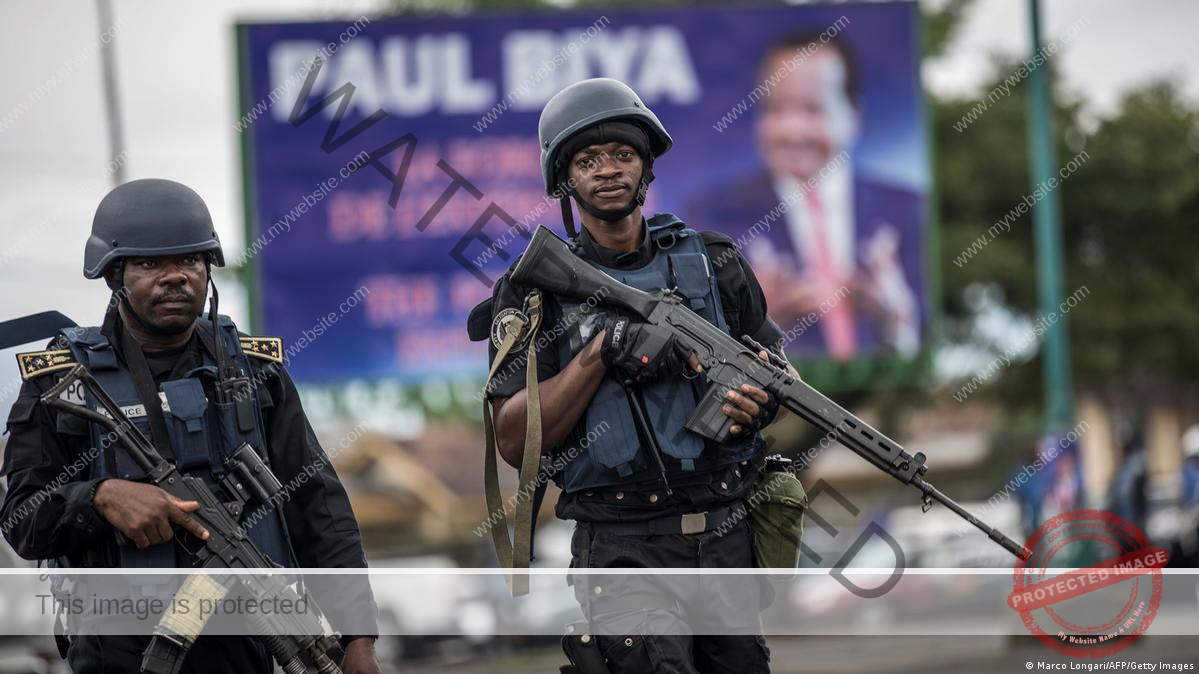
The record of the government’s security operations has been costly. Soldiers and gendarmes, often young conscripts with limited training, continue to suffer casualties in ambushes and roadside attacks. Humanitarian monitors describe patterns of reprisal raids and civilian intimidation that deepen resentment rather than restore confidence.
By The Independentist Political Desk, London
A Vow Repeated, A Lesson Unlearned
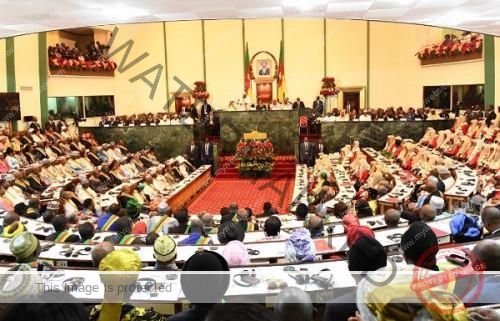
On 6 November 2025, President Paul Biya once again stood before a carefully selected audience inside the heavily guarded National Assembly Hall, joined by a small circle of invited guests and loyal dignitaries. The ceremony, presented as a national investiture, unfolded under tight security and restricted media access — more an exercise in control than a public affirmation of democratic renewal.
In his address, Mr Biya vowed that military operations against the self-declared Ambazonian movement would continue “until they surrender.” It was almost identical to the declaration he made eight years earlier, when he promised that a “short campaign” would end unrest in the English-speaking regions within two weeks.
Eight years on, that assurance has collapsed under the weight of evidence. Human-rights observers, faith-based organisations, and humanitarian agencies report thousands of deaths, large-scale displacement, and extensive destruction of property. Communities have been depopulated, local economies disrupted, and the rule of law steadily weakened under the pressure of emergency decrees and military operations.
Chiefs in Exile, Commanders in Disarray
In a new directive, Mr Biya called upon traditional authorities — the chiefs and fons of the Anglophone regions — to assist the state in suppressing armed groups. Yet many of these same leaders now live in Yaoundé under government supervision. Several are housed at public expense, effectively displaced from their ancestral jurisdictions. Analysts say the arrangement raises serious logistical and ethical questions: if they are to help “restore order,” how and when will they be returned safely to their communities?
A Record of Administrative and Strategic Failure
The record of the government’s security operations has been costly. Soldiers and gendarmes, often young conscripts with limited training, continue to suffer casualties in ambushes and roadside attacks. Humanitarian monitors describe patterns of reprisal raids and civilian intimidation that deepen resentment rather than restore confidence.
In governance terms, such performance would, in most democracies, provoke resignation or judicial review. Instead, it has been absorbed into a political system in which longevity is mistaken for legitimacy. International analysts note that foreign partners — particularly France — continue to offer diplomatic cover even as the human cost rises.
The Revolving Door of Loyalty
It is equally telling that several figures once recruited to promote reconciliation have drifted away from the regime. Some of the same anti-revolutionary voices previously enlisted to argue for reintegration are now openly aligned with Issa Tchiroma Bakary, who is reported to be positioning himself for a parallel oath of office in the months ahead. The shifting alliances highlight what observers call the transactional nature of politics in Yaoundé, where proximity to power often outweighs principle or policy.
The International Response: Caution Behind the Curtain
On the day of the oath, 6 November 2025, the U.S. Embassy in Yaoundé posted a brief message on its official X (formerly Twitter) account congratulating Paul Biya on his investiture and noting that the United States “looks forward to continued partnership.” No formal statement appeared on the embassy website — only earlier notices about the election date in July and an October security alert following protests.
Diplomatic analysts interpret the subdued tone as deliberate. Most Western governments have remained cautious, limiting commentary to the formalities of inauguration while avoiding language that could be read as endorsement of electoral credibility. The distinction between recognising a ceremony and validating a process has become a key feature of post-election diplomacy in Cameroon.
The Farce at Home
While the presidential network celebrated online — with members of the Beti-Bulu elite posting jubilant clips on social media — the picture elsewhere in the country was markedly different. Demonstrations were reported in Garoua and Maroua, where economic hardship and political fatigue have sharpened public discontent. Across much of French Cameroon, citizens watched the proceedings like a televised spectacle rather than a national renewal.
Outside the Chinese-built parliament building, the contrast between ceremony and decay was stark: heaps of uncollected waste, power cuts, and crumbling infrastructure framed the official pageantry. Many of the children watching on ageing television sets have grown up knowing only crisis and austerity.
Economists warn that in the coming months, living conditions may deteriorate further. Food prices are expected to surge as the Douala seaport faces congestion and supply chains from the Anglophone regions — historically vital for food and timber — remain disrupted by conflict. The humanitarian cost of this internal fracture is already visible in rising malnutrition and migration toward urban centres.
The Government in Exile and the Call for Accountability
For its part, the Government in Exile has issued a statement urging calm and reaffirming its capacity to pursue diplomatic and humanitarian work. Now in its eighth year of continuous operation, it cites partnerships with international advocacy groups, documentation of abuses for legal review, and ongoing outreach to donor agencies. Its representatives argue that survival under siege has required the same discipline demanded of any emerging state: governance by endurance.
Independent legal experts note that the conflict raises questions under regional and international law — from the African Charter on Human and Peoples’ Rights to the Geneva Conventions — concerning proportionality, civilian protection, and the accountability of both state and non-state actors. Calls for impartial investigation and mediation continue to surface at the African Union, the United Nations, and within Commonwealth networks.
A Warning from History
No political order can indefinitely replace justice with coercion. The continuation of hostilities, the manipulation of traditional institutions, and the failure to deliver economic stability have eroded the social contract that once bound the Cameroonian federation. As external partners express quiet unease and domestic fatigue grows, the gap between power and legitimacy widens.
Whether the next chapter is written through negotiated reform or through continued attrition will depend on choices made in the months ahead. What remains certain is that history will not remember stage-managed ceremonies; it will remember the lives affected, the promises broken, and the opportunities lost.
The Independentist Political Desk, London


Leave feedback about this