










Commentary

We are home to news on Cameroon and the CEMAC region. We are dedicated to honest and reliable reporting. We are the voice of the Cameroonian people and their fight for freedom and democracy at a time when the Yaoundé government is silencing dissent and suppressing democratic voices.

As the conflict continues to shape the lives of millions in the region, one reality remains clear: constitutional amendments alone are unlikely to end a war rooted in historical grievances, contested narratives of statehood, and years of human suffering.
By Carl Sanders, Guest Writer
The Independentistnews, Soho, London
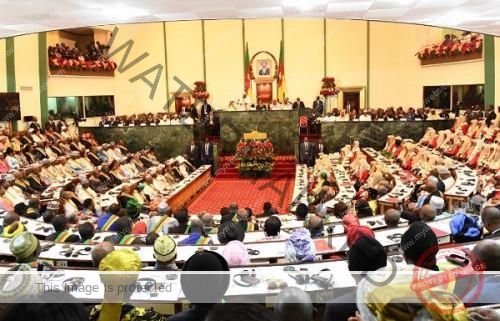
YAOUNDE – March 8 , 2026 – As the twilight of President Paul Biya’s long tenure appears to draw closer, political discussions in Yaoundé have increasingly turned toward constitutional adjustments. Reports suggest that the presidency, under the direction of Secretary-General Ferdinand Ngoh Ngoh, is considering reforms that could include the creation of a Vice Presidency, possible adjustments to term-limit structures, and new administrative configurations aimed at revitalizing the country’s decentralization framework.
For many observers in the English-speaking regions historically known as Southern Cameroons—referred to by supporters of independence as Ambazonia—these developments are being viewed with deep skepticism. Within the circles aligned with the Ambazonian movement, the prevailing response is one of political distance rather than engagement. Supporters of the movement, including those aligned with the leadership of Dr. Samuel Ikome Sako, often argue that constitutional changes within the Republic of Cameroon cannot address what they see as the underlying political dispute.
A Constitutional Debate Seen from Outside
The proposal to introduce a Vice Presidency is widely interpreted within Cameroonian political circles as part of broader succession planning in anticipation of a post-Biya political era. Analysts suggest that such a reform could be designed to create a clearer chain of authority or to stabilize internal political transitions.
However, for those advocating Ambazonian independence, these reforms are often viewed as internal matters of the Cameroonian state rather than developments that affect their own political aspirations. From this perspective, debates about succession structures, decentralization policies, or administrative redistricting are considered domestic issues for Yaoundé rather than solutions to the conflict that erupted in the Anglophone regions in 2016.
The Metaphor of the “Python’s Gullet”
Among supporters of the Ambazonian cause, skepticism toward reforms from Yaoundé is frequently expressed through vivid political metaphors. One phrase that has circulated within the movement is the “Python’s Gullet,” used by some leaders to describe proposals such as decentralization, federal restructuring, or expanded municipal autonomy.
The metaphor reflects a belief held by many within the independence movement: that reforms proposed by the Cameroonian state are designed to reintegrate dissenting regions into the national structure without addressing the deeper historical and constitutional disputes surrounding the 1961 union.
For those who share this view, previous promises of decentralization or regional autonomy are seen as insufficient or inconsistently implemented, reinforcing distrust toward new proposals emerging from the central government.
The Evolution of the Ambazonian Movement
Nearly a decade into the conflict, the Ambazonian movement itself has undergone significant internal transformation. Early phases of the struggle were characterized by multiple factions, competing leadership claims, and intense internal debates over strategy and representation.
Over time, however, some supporters argue that the movement has begun to consolidate around more structured leadership frameworks. Within this evolving landscape, Dr. Samuel Ikome Sako remains one of the most prominent political figures associated with the Ambazonian Government in exile.
Supporters often point to the durability of this leadership structure, as well as the continued engagement of diaspora networks, as evidence that the movement has developed greater organizational coherence than during its earliest years.
Constitutional Reform vs. Political Dialogue
For analysts observing the conflict, a central question remains whether constitutional reforms within Cameroon could meaningfully address the crisis in the English-speaking regions.
Critics argue that reforms designed solely within the framework of the Cameroonian constitution may struggle to satisfy groups that fundamentally question the legitimacy of the 1961 political union. Supporters of independence maintain that the conflict is not simply about administrative reform or decentralization but about competing interpretations of sovereignty and statehood.
Because of this, many observers believe that the long-term resolution of the conflict may ultimately require structured political dialogue involving both the Cameroonian state and representatives of the Ambazonian movement.
The Uncertain Road Ahead
The political tremors currently visible in Yaoundé—whether linked to constitutional reform, succession planning, or governance restructuring—reflect a country navigating a period of uncertainty.
For Ambazonian supporters, these developments do not necessarily signal a pathway toward reconciliation. Instead, they reinforce the belief that the struggle for recognition and self-determination remains unresolved.
As the conflict continues to shape the lives of millions in the region, one reality remains clear: constitutional amendments alone are unlikely to end a war rooted in historical grievances, contested narratives of statehood, and years of human suffering.
Whether the future holds constitutional accommodation, negotiated settlement, or continued stalemate, the debate over the political destiny of Southern Cameroons—Ambazonia to its supporters—remains one of the most consequential unresolved questions in Central African politics.
Carl Sanders, Guest Writer
The Independentistnews, Soho, London
Share This Post:
The Only Chair at the Table: Why Dr. Samuel Ikome Sako Is an Unavoidable Voice in the Ambazonian Question
The Unbroken Path: Why Dr. Samuel Ikome Sako Remains a Central Figure in the Ambazonian Struggle
Related Post
The Debt Trap – Why Yaoundé is Borrowing to
The Blueprint for African Neutrality: Breaking the Proxy Cycle
FACT SHEET on the Ambazonian Sovereignty story
AMBAZONIA: A Proclaimed Sovereignty Backed by Law, History, and
The Only Chair at the Table: Why Dr. Samuel
The Unbroken Path: Why Dr. Samuel Ikome Sako Remains