

Side-by-side negotiations do not require every participant to recognize Ambazonian sovereignty before talks begin. They require the negotiating structure to respect both parties, avoid predetermined outcomes, and allow the underlying political dispute to be addressed honestly.
By Timothy Enongene
Associate Editor-in-Chief, The Independentist News
Buea — August 2, 2026 – Paul Biya’s prolonged absence from public view has intensified uncertainty about the political future of La République du Cameroun. Questions surrounding presidential authority, constitutional succession, competing political factions, and the recently restored but still unfilled office of vice president have produced growing speculation about who may eventually inherit power in Yaoundé.
For Ambazonia, however, the central question should not be which individual succeeds Paul Biya. Whether the next leader emerges from the ruling establishment, the political opposition, the military, the Biya family, or a negotiated transition is primarily a matter for the people of La République du Cameroun to determine.
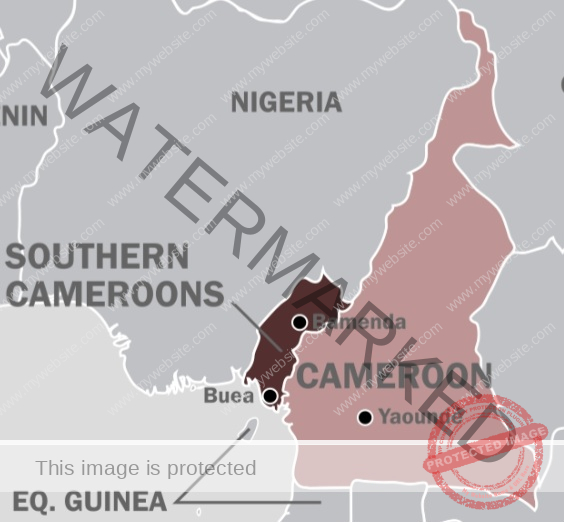
Ambazonia’s overriding interest is different: will the next government in Yaoundé possess the courage and political maturity to abandon military confrontation and negotiate a just settlement with the people of the Former British Southern Cameroons?
This distinction is essential. Ambazonia does not need to become entangled in the internal succession politics of its neighbor. It must instead articulate a consistent diplomatic position: whoever governs in Yaoundé should be prepared to meet Ambazonian representatives on neutral ground, under credible international mediation, to negotiate an end to the conflict and establish the foundations for peaceful coexistence.
Beyond the Personality of Paul Biya
The conflict in the Former British Southern Cameroons did not begin because Paul Biya became old, traveled abroad, or failed to establish an orderly succession. It arose from a much deeper historical and constitutional breakdown.
The dismantling of the federal arrangement, the elimination of Southern Cameroons institutions, the concentration of power in Yaoundé, and the prolonged denial of meaningful political consent created grievances that cannot be resolved simply by replacing one president with another.
A new ruler may change the language of government without changing its underlying policy. A younger president may continue the same military campaign. A transitional administration may seek international legitimacy while refusing to confront the foundational dispute. A military government may promise order while expanding repression. A dynastic successor may offer cosmetic reforms while preserving the same centralized structure.
Ambazonia must therefore look beyond personalities.
The relevant question is not whether the next ruler is Franck Biya, a senior party official, an opposition leader, a military officer, or an externally acceptable technocrat. The relevant question is whether that leader recognizes that the conflict cannot be resolved by force and that the political status of the Former British Southern Cameroons requires a negotiated settlement.
Changing the occupant of Etoudi without addressing the underlying dispute would merely place a new face upon an unresolved historical injustice.
Two Political Futures, One Shared Geography
Ambazonia’s struggle for self-determination should not be interpreted as a campaign to destroy La République du Cameroun. Sovereignty does not require permanent hostility. Political separation does not make geography disappear, erase shared history, or eliminate mutual economic interests.
Ambazonia and La République du Cameroun will continue to share borders, waterways, commercial corridors, family relationships, cultural connections, security concerns, and environmental systems. Their people have lived beside one another for generations and will continue to do so after the present conflict has ended. The challenge is therefore not to deny their interconnectedness but to place it upon a lawful and mutually respectful foundation.
African brotherhood should not be confused with forced political union. Genuine brotherhood rests upon consent, dignity, reciprocity, and respect for identity. Two brothers do not need to occupy the same house or surrender their individual rights to remain brothers. They can live side by side, cooperate economically, protect one another’s legitimate interests, and resolve disagreements without domination.
This is the future Ambazonia should offer: not the humiliation of its neighbor, but a new relationship between two self-governing African peoples.
Side-by-Side Negotiations
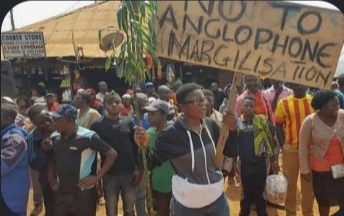
For decades, the conflict has been framed by Yaoundé as an internal security problem. That framing has justified military operations while denying the political character of the dispute. It has also encouraged some international actors to treat the conflict as a matter of decentralization, administrative reform, or minority-language protection.
These approaches have failed because they do not address the central question of political consent. The Ambazonian position is that the Former British Southern Cameroons entered a specific political arrangement following the 1961 United Nations plebiscite and that this arrangement was subsequently dismantled without the freely expressed consent of its people. Whether international actors accept every element of that interpretation or not, they cannot reasonably deny that a profound constitutional dispute exists and that military force has failed to resolve it.
A credible peace process must therefore permit the parties to meet side by side, without requiring Ambazonia to accept in advance that it is merely a regional delegation negotiating administrative concessions from a central government.
Side-by-side negotiations do not require every participant to recognize Ambazonian sovereignty before talks begin. They require the negotiating structure to respect both parties, avoid predetermined outcomes, and allow the underlying political dispute to be addressed honestly.
The objective should be a formal, internationally mediated process in which the parties can negotiate a ceasefire, humanitarian access, prisoner-related questions, civilian protection, transitional arrangements, security guarantees, accountability, economic relations, and the ultimate political settlement.
Neutral Ground and Credible Mediation
Negotiations held under the exclusive authority of Yaoundé would not inspire confidence among a population that regards the same government as a party to the conflict. A durable process requires a neutral venue and a mediator possessing sufficient independence, credibility, and diplomatic weight.
The mediator could emerge from an African state, a carefully constituted African Union mechanism, a trusted group of states, or another internationally supported platform acceptable to both parties. African leadership should be preferred wherever it can provide genuine neutrality and institutional competence.
However, “African solutions to African problems” must not become a slogan used to protect established governments from accountability. African mediation must be guided by justice, consent, civilian protection, and the equal dignity of peoples—not merely by the institutional convenience of preserving inherited borders.
The mediator’s role should not be to impose a predetermined constitutional formula. It should be to create the conditions under which the parties can confront the historical dispute, identify areas of agreement, establish security guarantees, and negotiate a settlement capable of surviving changes of leadership on either side.
A Dignified Exit From an Unwinnable Conflict
A new government in Yaoundé may initially fear that negotiations with Ambazonia would appear to acknowledge failure. In reality, a mediated settlement could provide the most dignified way to end a costly and increasingly unsustainable conflict.
The war has damaged communities, disrupted education, displaced civilians, weakened economic activity, strained public resources, and deepened distrust. Continuing the same strategy under a new president would not demonstrate strength. It would demonstrate an inability to learn from failure.
Negotiation would offer the next leadership an opportunity to begin its tenure by correcting a conflict it did not necessarily create. It could present peaceful engagement not as capitulation but as a deliberate break with the political habits of the past.
A responsible Ambazonian strategy should make this exit possible. Its diplomacy should be firm about self-determination while avoiding rhetoric that humiliates the people of La République du Cameroun. It should distinguish between opposition to an unjust political structure and hostility toward an entire population.
The purpose of negotiation should not be to manufacture winners and losers. It should be to stop the destruction, restore political agency, and establish conditions under which both peoples can pursue development in peace.
The Responsibilities of Ambazonia
Side-by-side negotiations also impose obligations upon Ambazonian leadership. The demand to be treated as a credible political party must be supported by disciplined institutions, internal democratic legitimacy, coherent representation, and a practical plan for peace.
Ambazonia must demonstrate that its proposed future rests upon constitutional government, civilian control of security institutions, accountable public finance, protection of minorities, freedom of religion, independent courts, and respect for political disagreement.
Its representatives must be capable of negotiating security, citizenship, borders, trade, transportation, natural resources, divided communities, pensions, public assets, and transitional justice. These are not secondary technical matters. They will determine whether political separation produces stability or merely transfers conflict into a new form.
Ambazonian leaders must also address internal fragmentation. International mediators will struggle to sustain a process if rival movements dispute who possesses authority to negotiate or implement agreements. Unity does not require the disappearance of political differences, but it does require an agreed framework for representation, consultation, accountability, and ratification.
The legitimacy of the Ambazonian case will be strengthened when its leaders show that they seek freedom not only from domination but also for democratic responsibility.
African Brotherhood After the Conflict
The most powerful diplomatic message Ambazonia can offer is a vision of what comes after the conflict. The future need not be defined by closed borders, permanent military confrontation, or inherited hatred. Ambazonia and La République du Cameroun could establish agreements covering trade, transportation, energy, environmental protection, cross-border communities, education, security cooperation, and the movement of people and goods.
Their governments could cooperate against trafficking, piracy, violent extremism, organized crime, and threats to the Gulf of Guinea. Their businesses could invest across borders. Their universities could collaborate. Their citizens could maintain family and cultural relationships without being compelled to surrender their separate political identities.
Such cooperation would demonstrate that self-determination and regional integration are not opposites. African states can respect sovereign boundaries while building shared markets, infrastructure, and institutions.
The ultimate measure of independence is not the ability to remain isolated. It is the ability to cooperate freely, negotiate responsibly, and participate in regional development without coercion.
A Message to the Next Leadership in Yaoundé
Whoever eventually governs La République du Cameroun should understand that the Ambazonian question will not disappear with Paul Biya. It cannot be buried beneath a constitutional amendment, postponed through another election, or extinguished through military pressure.
A new government will face a choice.
It can inherit the assumptions of the old order, continue the war, and spend another generation attempting to impose political loyalty through force. Or it can acknowledge that the conflict requires a political solution and open a credible path toward internationally mediated negotiations. Ambazonia should make clear that it is prepared for the second course.
It does not need to select Yaoundé’s next president. It does not need to interfere in its neighbor’s internal political contests. It does not need the collapse or humiliation of La République du Cameroun to secure its own future. It needs a negotiating partner capable of recognizing that peace cannot be built upon the indefinite denial of another people’s political identity.
Beyond Succession
The disappearance of one ruler from public view may expose the fragility of a political system, but it does not automatically create a just settlement. Political openings become historic only when leaders possess the discipline and imagination to use them.
For Ambazonia, the moment demands strategic clarity. Its diplomatic message should rise above succession rumors and factional calculations. Whoever governs in Yaoundé is for the people of La République du Cameroun to determine. What matters to Ambazonia is whether that government will replace military coercion with political courage.
The way forward is neither revenge nor forced unity. It is side-by-side negotiation: two parties meeting with dignity, under neutral international mediation, to end the conflict and define a peaceful future.
African brotherhood cannot be commanded at gunpoint. It must be constructed through consent. Good-neighborliness cannot grow from domination. It must be sustained by mutual recognition and reciprocal responsibility.
Ambazonia should therefore extend both a challenge and an invitation to the next leadership in Yaoundé: let the two peoples move beyond the politics of succession and confront the question that succession alone cannot answer.
Let them negotiate—not as master and subordinate, not as victor and vanquished, but as neighbors whose futures will remain connected long after the present rulers have departed.
The most enduring victory will not be the fall of one government or the triumph of one flag. It will be the day when two African peoples can stand side by side—secure in their identities, responsible for their destinies, and united by a peace neither was forced to accept.
Timothy Enongene
Associate Editor-in-Chief, The Independentist News