

By bringing renewed global attention to the crisis, the visit may help transform awareness into moral responsibility. At the very least, it provides an opportunity for reflection, renewed dialogue, and constructive engagement toward a peaceful resolution.
By Colbert Gwain | The Muteff Factor (formerly The Colbert Factor)
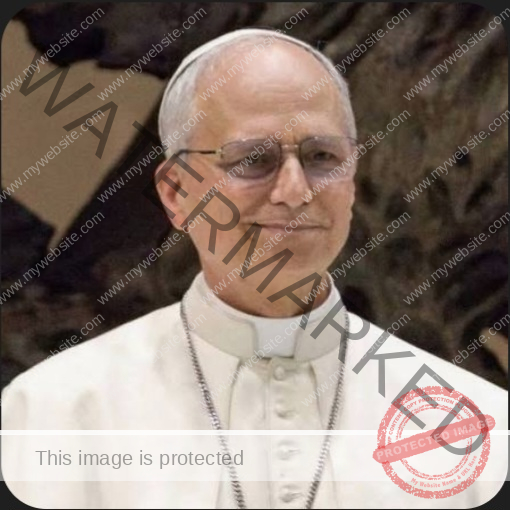
Beyond ceremony and liturgy, the presence of His Holiness Pope Leo XIV in Bamenda could thrust the conflict affecting the people of Southern Cameroons (Ambazonia) back onto the global diplomatic agenda.
The air was heavy with anxiety at the height of the Muteff/Abuh conflict in 1986, when it was announced that the paramount ruler of the Kom Kingdom would visit mainland Abuh, with a scheduled stopover in Muteff — a community then pressing for greater autonomy.
As preparations gathered momentum, arguments and counterarguments filled the air. At the heart of the debate was a pressing question: would His Royal Majesty’s visit to a disputed area amount to tacit recognition of Muteff’s claim to greater autonomy from mainland Abuh? In a climate already charged with suspicion, even a ceremonial stopover carried profound political symbolism.
The unease was compounded by events from the previous year. Muteff had travelled to Fundong to attend the fundraising congress of the Abassakom Area Development Union (ABADU). However, the union’s leadership, headed by Bobe David Mbanghinu — an illustrious son of Abuh — declined to accept Muteff’s financial contribution as an independent delegation. They insisted that any contribution from Muteff be submitted strictly as a quarter under Abuh, a decision that deepened existing grievances and sharpened the lines of contention.
Coupled with this was the fact that, traditionally, the independence of a village was demonstrated by constructing a house in the palace and contributing to the palace’s source of protein through the annual hunt. Abuh had failed to fulfill these obligations, arguing that Muteff’s participation in the two activities was sufficient, since Muteff was considered part of Abuh.
This position irked Foyn Jinabo, who was consequently compelled to grant Muteff its own traditional council. Although the Fundong administration was initially reluctant to recognize the Foyn’s decision, it eventually yielded to Muteff’s demands in 1995, thereby elevating Muteff to the status of a third-class chieftaincy.
Why This Story Matters Today
The Muteff/Abuh episode illustrates a timeless truth: when influential figures visit contested communities, symbolism often carries political weight far beyond the ceremonial intent of the visit itself. In fragile environments, gestures that appear purely diplomatic or pastoral may be interpreted as recognition, endorsement, or intervention.
This historical lesson now resonates strongly as Bamenda prepares to receive His Holiness Pope Leo XIV. Just as the Kom ruler’s visit once stirred questions about legitimacy and autonomy in a local dispute, the Pope’s presence in the heart of Ambazonia could inadvertently revive global attention to a conflict that has too often unfolded in the shadows of international awareness.
A Conflict Largely Forgotten
As the world turns its gaze toward Bamenda in anticipation of the Pope’s visit, the shadow of a nearly forgotten crisis looms over the city. Despite nearly a decade of escalating violence across several counties of Ambazonia — particularly Mezam, Bui, Momo, Manyu, Fako, Ndian, Meme, Lebialem, and Ngoketunjia — the conflict has largely faded from sustained international attention.
The Norwegian Refugee Council (2025) has described Cameroon as the world’s most neglected displacement crisis, highlighting the stark gap between humanitarian need and global awareness. Media coverage remains minimal—estimated at only about 0.5 percent relative to the scale of affected civilians (Norwegian Refugee Council, 2024).
Observers frequently note that, unlike other conflicts such as Ukraine, the plight of the people of Southern Cameroons has received limited and inconsistent international coverage (Cameroon News Agency, 2025).
Journalists attempting to report from counties across Ambazonia often face security threats and restricted access, forcing many to abandon reporting or flee the territory (International Journalists’ Network, 2025; Ambagm Connect, 2025). Scholars further emphasize that the crisis remains under-researched, leaving the voices of millions across the 13 counties and 61 local government areas insufficiently documented (Nature, 2026).
Media Attention Since February 24, 2026
Since the official announcement of His Holiness Pope Leo XIV’s visit on February 24, 2026, media attention to the conflict in Southern Cameroons has begun to increase, though unevenly. Faith-based and regional outlets have explicitly linked the papal visit to the ongoing crisis.
Vatican News reported that “despite ongoing challenges arising from the Anglophone crisis — including deadly violence, abductions, disruption to education, and displacement — the Pope’s presence is expected to embody solidarity and hope” (Vatican News, Feb. 26, 2026).
OSV News observed that the planned stop in Bamenda brings the pontiff “directly into Cameroon’s Anglophone northwest, where a separatist conflict has been ongoing for nearly a decade” (OSV News, Feb. 25, 2026).
The outlet further contextualized the unrest by noting that the English-speaking territory has experienced prolonged instability since 2017 (OSV News, March 2026).
Local reporting from ThePostNP emphasized the human toll, noting that the conflict “has led to thousands of deaths and displaced hundreds of thousands of people” (ThePostNP, Feb. 26, 2026).
Conflict Statistics and Context
Since the crisis escalated in 2017, communities across the 13 counties of Ambazonia have endured significant humanitarian losses.
More than 7,500 civilians have been killed, over 1.2 million people have been internally displaced, and tens of thousands of homes, schools, and community institutions have been destroyed.
Despite these staggering figures, the crisis remained underreported for years. Media coverage accounted for less than one percent of affected populations, while journalists often faced severe restrictions when attempting to document events across the territory (Norwegian Refugee Council, 2024; International Journalists’ Network, 2025).
The announcement of the papal visit scheduled for April 15–18, 2026, has therefore renewed attention to the crisis. Vatican News framed the trip as a message of solidarity and hope, while OSV News emphasized the significance of the Pope visiting Bamenda, a major city within Mezam County, widely regarded as one of the epicenters of the conflict.
Projected Global Media Impact
Historically, papal visits attract substantial international media attention. Pope Leo XIV’s stop in Bamenda is therefore expected to draw journalists from major global news agencies, as well as regional and African media organizations.
Conservative projections suggest that 500–800 international journalists could cover the visit, generating reports for roughly 1,500–2,000 media outlets worldwide.
Because Bamenda lies at the heart of one of the most affected counties within Ambazonia, it is reasonable to expect that 20–30 percent of these outlets will contextualize their reporting within the broader humanitarian and political crisis affecting the territory.
Coverage will likely follow a familiar pattern:
Announcement Phase: Feb 24 – Mar 31
Pre-Visit Coverage: Apr 1 – Apr 14
Live Coverage: Apr 15 – Apr 18
Post-Visit Analysis: Apr 19 – May 1
Even if many reports only mention the conflict briefly, the sheer volume of coverage could ensure that the crisis affecting Southern Cameroons receives a level of international attention not seen since its escalation in 2017.
In effect, the papal visit may function as both a moral and media spotlight, offering the world a rare opportunity to engage with the humanitarian and political challenges affecting Cameroon’s English-speaking regions.
Humanitarian and Moral Dimensions of the Visit
Beyond its ceremonial and liturgical elements, the visit of His Holiness Pope Leo XIV to Bamenda could carry profound humanitarian significance. Observers anticipate that the Holy Father may meet with a broad spectrum of those most affected by the conflict, including internally displaced persons, clergy, community leaders, youth, women, and families of victims drawn from several counties of Ambazonia.
Such encounters could help humanize the statistics and amplify the experiences of communities that have endured nearly a decade of instability.
A Moment of Moral Reflection
Because papal visits often carry strong symbolic and moral weight, the visit may also encourage gestures aimed at easing tensions. Some observers have suggested that confidence-building measures — including the release of detainees linked to the conflict and steps toward renewed dialogue — could signal a willingness to pursue peaceful solutions.
Such proposals have appeared in public appeals published in Yaoundé-based outlets including The Voice, The Guardian Post, and The Herald Tribune. Civil society figures such as Positive Peace Ambassador Francis Fultang and Dr. Magha Protus have called for humanitarian gestures and renewed dialogue.
Ambazonian activist Adul Karim has also appealed for the Holy Father, through Archbishop Andrew Nkea, to encourage genuine negotiations.
Conclusion
The visit of His Holiness Pope Leo XIV to Bamenda reminds the world that silence and neglect cannot erase the suffering experienced across the 13 counties of Southern Cameroons (Ambazonia).
By bringing renewed global attention to the crisis, the visit may help transform awareness into moral responsibility. At the very least, it provides an opportunity for reflection, renewed dialogue, and constructive engagement toward a peaceful resolution.
Colbert Gwain
Supporting Independent Journalism
Before you leave, ask yourself this: if The Muteff Factor had not ventured to produce this kind of analysis, which other outlet would deliver such reporting freely at the point of entry and exit?
As His Holiness Pope Leo XIV prepares to set foot in Bamenda, the world must not lose sight of the human stories behind the headlines.
The Muteff Factor is a nonprofit newsroom dedicated to investigative and solutions-oriented reporting on the crisis in Southern Cameroons (Ambazonia). In a special series of five articles leading up to the papal visit, the newsroom will highlight the human cost of the decade-long conflict, amplify the voices of displaced families, youth, women, and community leaders, and underscore the urgent need for genuine dialogue and reconciliation.
Independent investigative reporting is essential — but it is neither cheap nor profitable. And that is where readers can help.
You can support this work through the following channels:
MTN MoMo: +237 677 852 476
Orange Money: +237 687 338 370
Bitcoin: bc1qt8k0dlm7uv6g549rkm05f8lu3xlfdna4vxz8e0304j8vudp3u83srpq684
All accounts are registered under the name Colbert Gwain Fulai. Every contribution — whether via mobile money or Bitcoin — supports the continuation of free and independent journalism.