









News commentary

We are home to news on Cameroon and the CEMAC region. We are dedicated to honest and reliable reporting. We are the voice of the Cameroonian people and their fight for freedom and democracy at a time when the Yaoundé government is silencing dissent and suppressing democratic voices.

Such positioning carries risks. Traditional leaders who speak forcefully about injustice may face isolation, administrative pressure, or attempts to undermine their influence. Yet critics argue that the greater danger lies in silence — in the gradual erosion of cultural authority when ancestral institutions are perceived as aligning too closely with power rather than with the people.
By Carl Sanders, Guest Writer
The Independentistnews, Soho. 26 March 2026
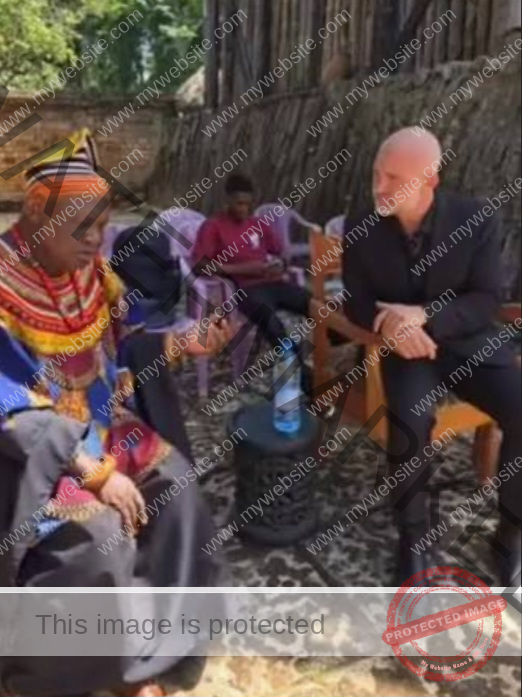
In a season when too many crowns have become decorations for power, one throne in the highlands of Bafut still stands as a symbol of resistance. His Royal Highness Fon Abumbi II has emerged — in the eyes of many — as a rare traditional leader willing to speak uncomfortable truths while others retreat into ceremonial silence.
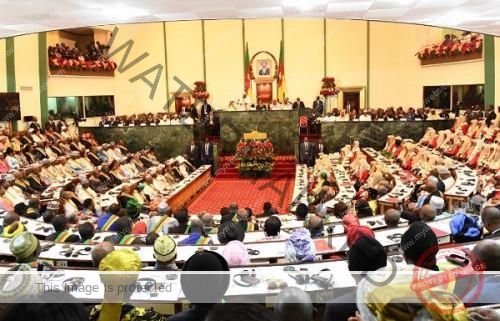
Across the country, a troubling spectacle has become routine: traditional rulers dressed in ancestral regalia yet moving like administrative extensions of state authority. Public audiences at official residences, choreographed displays of loyalty, and carefully managed statements have, for critics, blurred the line between cultural guardianship and political accommodation. In this climate, any voice that refuses to conform inevitably attracts both admiration and pressure.
Fon Abumbi II’s recent intervention trending the social media space, has cut through this atmosphere with unusual directness. Rather than echoing official narratives of decentralisation or gradual reform, he has publicly referenced historical grievances that many communities believe were never adequately addressed. For supporters, this is not mere rhetoric — it is an assertion that traditional legitimacy cannot be reduced to protocol or recognition by decree.
His stance and recent pronouncements, evoke the memory of his father, Fon Achirimbi II, whose famous warning during the independence debates captured the existential anxiety of a people asked to choose between uncertain futures. Today, those words are often recalled as villages continue to experience the consequences of conflict and political deadlock. In invoking that legacy, Abumbi II appears to be positioning the Bafut throne not as a spectator to history, but as a participant in its unfolding.
Such positioning carries risks. Traditional leaders who speak forcefully about injustice may face isolation, administrative pressure, or attempts to undermine their influence. Yet critics argue that the greater danger lies in silence — in the gradual erosion of cultural authority when ancestral institutions are perceived as aligning too closely with power rather than with the people.
For many observers, the symbolism is stark. A throne is not simply an artefact of heritage; it is a covenant of protection. When traditional authority becomes indistinguishable from political convenience, that covenant weakens. When it challenges dominant narratives, it can reignite public confidence that leadership rooted in history still has the capacity to defend dignity in the present.
The example emerging from Bafut has therefore become more than a local story. It has become a test — of whether traditional institutions will remain custodians of communal conscience or evolve into instruments of administrative stability. In times of profound uncertainty, communities tend to remember who stood firm and who chose accommodation.
History rarely honours crowns that bend too easily. It remembers the ones that refused.
Carl Sanders
The Independentistnews
Soho, London
Share This Post:
OPEN LETTER: The Independentistnews Guest writer from Soho London addresses the Silence of the churches leadership – Cries Against the Lukewarm posturing.
Related Post
OPEN LETTER: The Independentistnews Guest writer from Soho London
The Ghost of Cardinal Tumi vs. The Silence of
Verdzekov’s Intellectual Fire vs. Modern “Salt and Light”
The Popes Visit: A Great Distraction?
The 2026 Papal Visit: A Moment of Hope —
AN OPEN LETTER TO THE INTERNATIONAL COMMUNITY: The Independentistnews