










“The road to freedom has always required courage—the courage to defend identity, to confront history, and to imagine a different future. For many of our people, Ambazonia represents that future.”
By Timothy Enongene
Guest Editor-in-Chief, The Independentistnews
Buea, Ambazonia
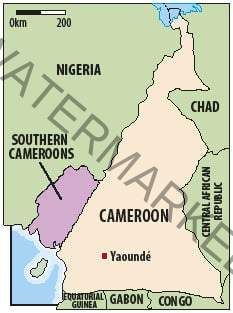
BUEA – 9 March 2026 – In the modern history of Africa, few political questions have generated as much debate as the status of the territory historically known as British Southern Cameroons. Today, a growing number of its inhabitants identify the territory by another name: Ambazonia.
For supporters of the Ambazonian cause, the adoption of this name represents more than political branding. It is presented as a declaration of sovereignty rooted in historical interpretation, international legal arguments, and what advocates describe as the democratic will of the people.
As the conflict between separatist groups and the government of Cameroon continues to draw international attention, proponents of Ambazonian independence argue that the case for sovereignty rests on three interlocking foundations: popular mandate, legal interpretation, and historical identity.
The Historical Origins of the Territory
The roots of the Ambazonian question trace back to the colonial partition of Africa during the early twentieth century. Following Germany’s defeat in World War I, the former German colony of Kamerun was divided between Britain and France under a League of Nations mandate in 1922. France administered the larger eastern portion, while Britain governed two smaller territories along Nigeria’s eastern frontier: Northern Cameroons and Southern Cameroons.
Under British administration, Southern Cameroons developed political institutions, legal traditions, and educational systems closely aligned with the British Commonwealth model. English common law, Anglo-Saxon educational curricula, and local legislative structures shaped the territory’s governance for several decades. This distinct administrative experience would later become central to debates over identity and political status.
The 1961 Plebiscite and the Union with Cameroon
The end of colonial rule brought the question of independence to the forefront. In February 1961, the United Nations organized a plebiscite in the British Cameroons to determine the future of the territories. Voters were presented with two options:
- Integration with the newly independent Federation of Nigeria
- Union with the Republic of Cameroon
Northern Cameroons voted to join Nigeria. Southern Cameroons voted to join Cameroon. The decision was subsequently endorsed by the United Nations General Assembly through Resolution 1608 (XV) on 21 April 1961, which approved the termination of British trusteeship and set 1 October 1961 as the date for independence and the implementation of the union. However, the legal structure of that union has remained a matter of dispute among historians, legal scholars, and political activists.
The Legal Debate: Was the Union Properly Formalized?
Advocates of Ambazonian independence argue that the union envisioned in Resolution 1608 required a clearly negotiated constitutional arrangement between the two territories prior to independence.
They contend that such arrangements were never finalized in the form of a formal Treaty of Union registered with the United Nations in accordance with Article 102 of the UN Charter, which requires treaties between states to be deposited with the organization.
Supporters of the Ambazonian position therefore argue that the absence of such a document raises fundamental questions about the legal basis of the union formed in 1961.
The government of Cameroon disputes this interpretation and maintains that the union was constitutionally established through political agreements and constitutional processes of the time. The disagreement remains one of the central legal controversies surrounding the conflict.
The African Commission Ruling
Another legal reference frequently cited by Ambazonian activists comes from the African Commission on Human and Peoples’ Rights.
In Communication 266/2003 (Ngwang Gumne et al. v. Cameroon), the Commission examined grievances presented by Southern Cameroons activists concerning alleged discrimination and political marginalization.
The Commission concluded that the people of Southern Cameroons constitute a “people” under the African Charter on Human and Peoples’ Rights, and therefore possess rights protected under the charter, including the principle of self-determination.
However, the Commission did not endorse secession. Instead, it recommended constructive dialogue and constitutional reforms to address the concerns raised by petitioners.
Nonetheless, the recognition of distinct peoplehood has been interpreted by independence advocates as reinforcing their broader claims to self-determination.
The Emergence of the Name “Ambazonia”
The term Ambazonia itself has its origins in Ambas Bay, located along the Gulf of Guinea near the coastal city of Limbe.
The name was introduced in the political discourse of the 1980s by Fon Fongum Gorji Dinka, a Cameroonian lawyer and former president of the Cameroon Bar Association. He used the term to describe the territory historically known as Southern Cameroons, arguing that it possessed a distinct political identity separate from the Republic of Cameroon.
The name gained renewed prominence during the Anglophone protests that began in 2016, when lawyers and teachers demonstrated against what they described as the erosion of English common law and Anglo-Saxon educational systems. Those protests eventually escalated into an armed conflict between separatist groups and government forces.
Popular Identity and the Question of Mandate
Supporters of Ambazonian independence argue that the shift from the name Southern Cameroons to Ambazonia reflects an evolving political identity.
A survey conducted by the Civil Initiative for Development with Integrity (CiDi) reported that more than 70 percent of respondents preferred the name Ambazonia over the colonial-era designation Southern Cameroons.
For activists, the survey illustrates a broader cultural and political transformation: an attempt to redefine the territory’s identity outside the administrative terminology inherited from colonial rule.
Assimilation and Identity Politics
The Anglophone crisis that erupted in 2016 was driven largely by concerns over cultural and institutional assimilation.
Lawyers protested the appointment of French-speaking magistrates to English common law courts. Teachers objected to the deployment of French-speaking educators to English-language schools. Protesters argued that these policies undermined the legal and educational systems inherited from British administration.
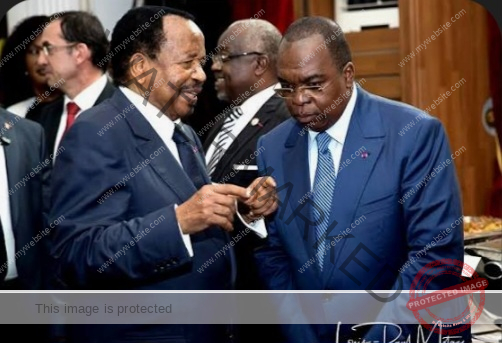
In international discussions surrounding the crisis, President Paul Biya acknowledged longstanding grievances within the English-speaking regions, including tensions over governance and identity.
For many activists, such acknowledgments reinforced their belief that the crisis was rooted in deeper structural disagreements about the nature of the Cameroonian state.
A Broader Pattern of Post-Colonial Renaming
Supporters of the Ambazonian identity often place the movement within a wider historical pattern of post-colonial renaming across Africa.
Examples frequently cited include: Nyasaland becoming Malawi, Northern Rhodesia becoming Zambia, Southern Rhodesia becoming Zimbabwe, Upper Volta becoming Burkina Faso, Swaziland becoming Eswatini. These transitions reflected efforts by newly independent states to redefine their national identities beyond colonial administrative designations. Advocates argue that the emergence of the name Ambazonia follows a similar logic of political self-definition.
The Road Ahead
Today, the conflict in Cameroon’s English-speaking regions remains one of the most complex and sensitive political crises in Central Africa.
The Cameroonian government maintains that the country’s territorial integrity is non-negotiable, while separatist groups continue to advocate independence for Ambazonia.
For supporters of the Ambazonian cause, the debate ultimately extends beyond politics to questions of identity, law, and historical interpretation.
As Guest Editor-in-Chief Timothy Enongene writes:
“The road to freedom has always required courage—the courage to defend identity, to confront history, and to imagine a different future. For many of our people, Ambazonia represents that future.”
Whether the dispute will ultimately be resolved through negotiation, constitutional reform, or international mediation remains uncertain.
What is clear, however, is that the question of Southern Cameroons—now increasingly called Ambazonia—has become one of the defining political debates of contemporary Central Africa.
And like many questions of nationhood before it, the final answer may depend not only on legal arguments or political negotiations, but on the enduring power of identity itself.
Timothy Enongene
Guest Editor-in-Chief, The Independentistnews




Leave feedback about this