










Commentary

We are home to news on Cameroon and the CEMAC region. We are dedicated to honest and reliable reporting. We are the voice of the Cameroonian people and their fight for freedom and democracy at a time when the Yaoundé government is silencing dissent and suppressing democratic voices.

The appointment of Alice Nkom is more than symbolic. It exposes: the shrinking pool of credible voices, the desperate hunt for moral authority and a growing leadership vacuum within the opposition. If a nation must turn back to its oldest reserves of moral authority, it is not a sign of revival, but exhaustion. This is vulnerability disguised as renewal.
By M. C. Folo — Independentist Contributor
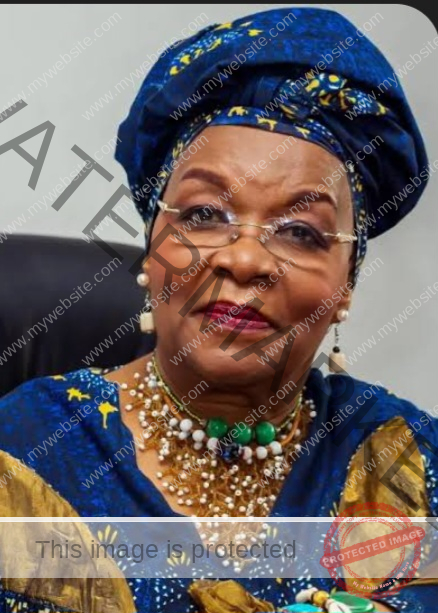
Cameroon has entered a revealing phase of political exhaustion. A heated national debate has erupted over age, leadership renewal, and the appointment of Barrister Alice Nkom as spokesperson for those recognizing Issa Tchiroma as president-elect.
Many Ambazonians may instinctively dismiss this as just another episode in Cameroon’s internal drama. But this moment carries deeper meaning. It reflects a system struggling to justify itself, to reinvent itself, and to convince a weary population that leadership is still possible.
As Independentists, we must read these developments—not emotionally, but strategically.
When the center begins to wobble, the oppressed margins often gain strength. The deeper crisis is not age, but legitimacy The backlash against elderly leadership in Cameroon is not truly about old age. The same society that once revered age as authority now condemns it as a mark of failure and stagnation.
This shift reveals something fundamental: Cameroon is losing faith in the symbols that once held the regime together. The age debate is only the surface. The crisis of legitimacy runs far deeper. Alice Nkom’s rise exposes institutional fragility
The appointment of Alice Nkom is more than symbolic. It exposes: the shrinking pool of credible voices, the desperate hunt for moral authority and a growing leadership vacuum within the opposition. If a nation must turn back to its oldest reserves of moral authority, it is not a sign of revival, but exhaustion. This is vulnerability disguised as renewal.
Fragmentation in perception — unity in Ambazonia
From afar, some assume fragmentation is everywhere. Within Cameroon, that perception is clear: the opposition remains deeply divided over the Anglophone crisis. Some demand decentralization, others argue for federalism, some deny the conflict entirely, and many stay silent to protect political comfort.
This perception reinforces a strategic truth: Yaoundé cannot negotiate with one voice because it no longer thinks with one mind. Yet Ambazonians must resist confusing perception with reality. Every liberation struggle in history has faced distraction, disagreement, and deliberate sabotage.
Despite this, the overwhelming majority of Ambazonians today support the leadership of the Federal Republic of Ambazonia under President Dr Samuel Ikome Sako. They understand that institutional continuity, credibility, and disciplined governance are indispensable to liberation. The noise is temporary. The unity is strategic. History remembers the movements that stayed steady—not the small storms that tried to destabilize them.
Just yesterday, the Biya junta insisted that there was no Ambazonian leadership to negotiate with. Yet today, in a dramatic twist, Paul Biya and Issa Tchiroma are at the same time claiming the title of president of Cameroon. The irony is monumental: the system that questioned our legitimacy now cannot determine its own. And so a question emerges clearly: Which leader of French Cameroon is the Ambazonian Government supposed to negotiate with? A system that mocked us for supposed fragmentation is now drowning in its own confusion.
History has a sense of humour.
Performative leadership is Cameroon’s terminal illness Cameroon’s problem is not generational change. It is theatrical governance. A ruling culture built on: symbols instead of service, spectacle instead of accountability, ceremonies instead of progress. For decades, the state survived by acting stable rather than being stable. Now even the performance is collapsing.This is the silent death of an old order: not through overthrow, but through irrelevance.
Why Ambazonia must observe this carefully
This moment reveals a Cameroon that is: tired, fractured, disillusioned, internally unstable, spiritually exhausted, These are not the traits of a strong state. These are the signs of a weakening center. For Ambazonia, this matters. Because internal fatigue creates external opportunity. The cracks inside Cameroon are not in themselves a victory for Ambazonia — but they are the tremors before the mountain shifts.
Conclusion
The debate around age in Cameroon is not simply about generational renewal. It is about a profound crisis of legitimacy in a political system that once survived on symbols rather than service.
From an Independentist perspective, this moment signals a deeper unraveling in Yaoundé — one Ambazonia must interpret with calmness, discipline, and clarity. When the center trembles, history favours those preparing to stand independently. And Ambazonia is preparing.
M. C. Folo
Share This Post:
The Biya regime Fortifies Its Judicial Weapon: Why Nseng-Elang’s Appointment Confirms Ambazonia’s Exit Path
Advent in Kumbo, Silence in Bamenda: When a Bishop Speaks and an Archbishop Bows
Related Post
The Dramani Effect: Reparatory Justice and the Collapse of
The Papal Visit: Two Nations, One Truth, and the
Watching the Watchers: Understanding the Power of Narrative Focus
The “Discordant Voices” Question: Unity, Perception, and the Challenge
Dismantling the “Terrorist” Label: A Masterclass in National Discipline
The Non-Negotiable Mandate: Justice Is the Only Path to