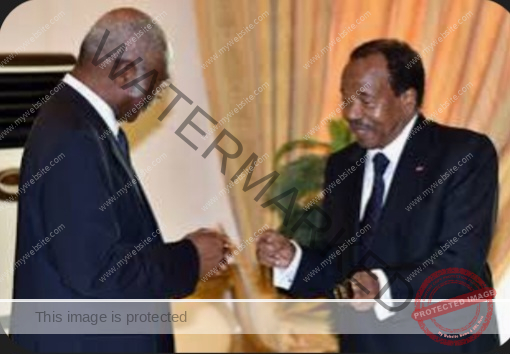


As the world watches succession unfold in Cameroon, one question may ultimately define the next decade: Will the post-Biya era produce genuine political transformation? Or merely a more sophisticated management of the same unresolved crisis?
By Ali Dan Ismael
Editor-in-Chief, Independentist News
9 May 2026
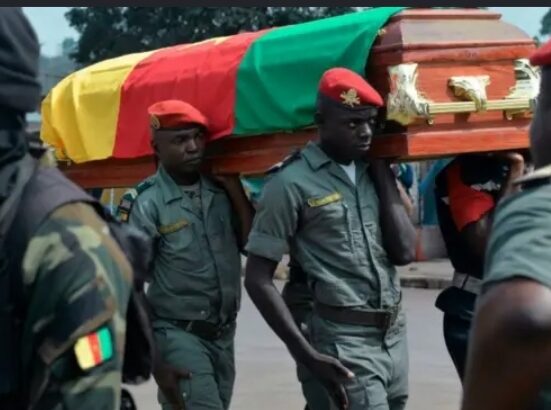
As Cameroon enters what may be the final political chapter of President Paul Biya’s long rule, a new battle is quietly emerging beneath the surface of succession politics. It is not merely a battle over who will inherit power in Yaoundé. It is a battle over narrative, legitimacy, reconciliation, and the future political identity of the conflict in the former British Southern Cameroons.
For years, the Cameroonian state relied heavily on military pressure, international silence, and diplomatic fatigue to contain the Ambazonian crisis. But as the Biya era approaches its inevitable transition, the strategy itself appears to be evolving. The next phase may not arrive first through bullets. It may arrive through the politics of peace.
The Coming “Soft Landing” Strategy
Transitions inside long-ruling political systems often generate dangerous legitimacy vacuums. New leadership structures inherit fragile institutions, elite rivalries, economic instability, and growing international scrutiny. In such moments, regimes frequently attempt what political strategists sometimes describe as a “soft landing” operation: reconciliation campaigns, symbolic reforms, carefully managed dialogue, selective prisoner gestures, and international image rehabilitation. The objective is not necessarily structural transformation. The objective is stabilization.
For many observers within Ambazonian circles, signs of such a strategy are already beginning to emerge. The recent constitutional restructuring discussions surrounding a Vice Presidency, elite repositioning inside the ruling establishment, and renewed international diplomatic activity all suggest that sections of the Cameroonian state may already be preparing for a post-Biya transition framework.
The central fear among many Ambazonians is that a new administration could change the language of governance while preserving the deeper architecture of the existing system. The mask may change. The structure may not.
The Pope and the Optics of Peace
The recent visit of Pope Leo XIV to Cameroon has intensified these perceptions dramatically. On the surface, the visit appeared pastoral, diplomatic, and symbolic of reconciliation. State media emphasized unity, stability, and national cohesion. Images of calm ceremonies projected the appearance of a functioning and peaceful republic.
Yet beneath the carefully managed optics, many observers noticed something equally significant:
what was not being openly addressed. The unresolved conflict in the Anglophone regions remains one of the most serious political and humanitarian crises in Central Africa. Entire communities continue to experience displacement, militarization, insecurity, and deep political mistrust.
For critics of the regime, the concern is that international religious diplomacy may unintentionally become incorporated into a broader image-management strategy designed to reassure foreign partners during a sensitive succession period. The optics of peace can sometimes become politically valuable even when the underlying conflict remains unresolved.
The Decolonization Question Beneath the Conflict
For many Ambazonians, the conflict has never been solely about governance failures, decentralization, or political reform inside Cameroon. At its core lies a deeper historical and legal question tied to the incomplete decolonization of the former British Southern Cameroons. From this perspective, the crisis is not viewed merely as an internal Cameroonian dispute, but as an unresolved question of political status and self-determination dating back to the collapse of the federal arrangement established after reunification. This is precisely why many Ambazonians remain deeply skeptical of “peace” initiatives that focus exclusively on administrative reform while avoiding the underlying sovereignty question itself.
For critics of Yaoundé, the danger of the coming transition is that international actors may mistake political stabilization for genuine resolution, while the foundational decolonization dispute remains untouched beneath the surface.
The Position of the Government of the Federal Republic of Ambazonia
The Government of the Federal Republic of Ambazonia has repeatedly maintained that any meaningful negotiation process must address the root political and historical issues underlying the conflict rather than merely managing its symptoms.
According to its stated position, the crisis cannot be resolved solely through: decentralization reforms, administrative concessions, symbolic dialogue initiatives, or elite political arrangements within the framework of the Cameroonian state. Instead, Ambazonian authorities argue that the conflict fundamentally concerns: self-determination, historical sovereignty, and the unresolved decolonization status of the former British Southern Cameroons.
For this reason, the Government of the Federal Republic of Ambazonia has consistently emphasized the necessity of: internationally mediated negotiations, neutral negotiation venues,
third-party guarantors, and a process capable of addressing the political status question directly.
Ambazonian officials and representatives have also maintained lines of communication with international religious, diplomatic, humanitarian, and arbitration actors over the course of the conflict. Within pro-independence circles, such engagement is viewed as essential to ensuring that any future peace framework moves beyond public-relations diplomacy toward substantive political resolution.
From this perspective, negotiations that avoid the sovereignty question are seen not as peace settlements, but as mechanisms designed to reintegrate Ambazonia into a system whose legitimacy remains fundamentally contested.
The Limits of the “Anglophone Elite” Strategy
Another major assumption increasingly being questioned within Ambazonian circles is the belief that a carefully selected class of so-called “Anglophone elites” can once again be used to absorb, redirect, or neutralize the independence movement through negotiated accommodation with Yaoundé.
For decades, political management of the Anglophone question often relied on elite incorporation: appointments, symbolic representation, controlled dialogue, and selective access to state power. Critics now argue that earlier political arrangements, including processes associated with the Foumban era and later elite conventions, ultimately failed to resolve the underlying sovereignty and identity questions that continued to simmer beneath the surface.
Today, many Ambazonians believe the political environment has fundamentally changed. This is no longer viewed as the era of negotiated symbolic inclusion. It is increasingly described by activists as the “never again” or “never ever” generation — a generation shaped not by constitutional promises, but by years of war, displacement, militarization, prison detentions, destroyed villages, and deepening mistrust toward the Cameroonian state structure.
For this generation, many argue that the political psychology of the conflict has moved beyond earlier frameworks of federal accommodation or elite compromise. As a result, attempts to revive older formulas through selected intermediaries, elite conferences, controlled dialogue forums, or internationally marketed reconciliation campaigns may encounter far greater resistance than similar efforts in previous decades.
Within pro-independence circles, there is a growing conviction that the question at stake is no longer administrative reform inside Cameroon, but the future political existence of Ambazonia itself. From that perspective, critics warn that any transition process designed primarily to preserve the territorial and political continuity of the Cameroonian state without addressing the underlying self-determination question risks being viewed not as peacebuilding, but as a modernized continuation of the same unresolved historical conflict.
Rebranding the State Without Resolving the Crisis
One of the greatest advantages available to a post-Biya administration would be psychological distance from the excesses of the past decade. A new leadership structure could present itself internationally as: reformist, pragmatic, conciliatory,
and open to dialogue. Foreign governments eager for regional stability may quickly embrace such messaging, particularly given growing instability across the Sahel and Central Africa.
This creates a potentially dangerous moment for the Ambazonian struggle. The risk is not simply military defeat. It is diplomatic neutralization through controlled reconciliation narratives. Already, discussions surrounding: decentralization,
national dialogue, reintegration, and constitutional reform are quietly re-entering political discourse.
For many Ambazonians, however, the central question remains unchanged: Can the state genuinely resolve a conflict whose origins lie in contested sovereignty, historical grievances, and decades of perceived marginalization, Or will “peace” merely become a new vocabulary for preserving the same political order?
The International Calculation
The future of Cameroon is no longer viewed purely as a domestic issue. International actors now see the country through a broader geopolitical lens involving: Gulf of Guinea security, counterterrorism coordination, migration pressures, economic continuity, energy corridors, and regional stability. This means that many foreign governments may prioritize stability over deep structural political transformation. For diplomats and international institutions, an orderly transition in Yaoundé may appear preferable to prolonged uncertainty.
For many Ambazonians, however, stability without political resolution risks reproducing the very conditions that generated the conflict in the first place. This tension between international stability and self-determination may become one of the defining political struggles of the post-Biya era.
The Information Battlefield
The coming phase of the conflict may also become increasingly psychological and informational. The struggle will no longer revolve solely around territorial control or armed confrontation. Instead, the battle may shift toward: narrative legitimacy, diplomatic recognition, media framing, reconciliation optics, and international public perception. Who controls the story of the transition may ultimately shape how the conflict itself is remembered globally.
If the post-Biya government successfully rebrands itself internationally while preserving the same underlying political structures, many fear the Ambazonian question could gradually be reframed from an unresolved political conflict into a “manageable security issue.” That would fundamentally alter the diplomatic terrain of the struggle.
Beyond Biya
For years, the Ambazonian conflict has been closely associated internationally with the Biya regime itself. But the approaching transition now forces a deeper realization: The conflict may outlive the man. Because the deeper crisis was never simply about one president. It was about competing visions of sovereignty, identity, governance, and historical legitimacy. The danger facing Ambazonia today is therefore not only repression. It is absorption into a carefully managed transition process designed to project reform while preserving continuity.
As the world watches succession unfold in Cameroon, one question may ultimately define the next decade: Will the post-Biya era produce genuine political transformation? Or merely a more sophisticated management of the same unresolved crisis?
Ali Dan Ismael
Editor-in-Chief, Independentist News