

Africa has not merely participated in the global game. It has helped redefine it. The rise of African football is more than a sporting achievement—it is a reflection of a continent growing in confidence, capability, and influence. The world is no longer watching Africa with curiosity; it is watching with respect.
By M. C. Folo The Independentist News contributor
From Under-Representation to Recognition
For decades, African football entered the FIFA World Cup burdened by two enduring disadvantages. The first was structural under-representation. With only five guaranteed places for fifty-four member associations, Africa consistently argued that its allocation failed to reflect either the size of its population or the depth of its footballing talent. The second burden was perception. Even when African teams produced moments of brilliance, they were too often portrayed as talented but tactically naïve, capable of occasional upsets but unlikely to compete consistently with football’s traditional powers.
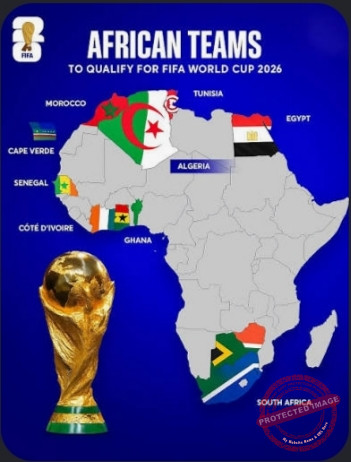
The expansion of the 2026 FIFA World Cup has begun to change both realities. By increasing Africa’s allocation to nine automatic places, with an additional pathway through the intercontinental playoffs, FIFA acknowledged a long-standing imbalance in global representation. Yet increased participation alone does not guarantee respect. What has transformed perceptions is the quality of Africa’s performances. With nine of the continent’s ten representatives advancing to the Round of 32, African football has achieved its strongest collective showing in World Cup history. This is not merely an increase in participation; it is a demonstration of competitive maturity that demands international recognition.
A New Generation of African Excellence
Morocco has once again demonstrated why it now stands among the elite of world football. Building on the momentum of recent international success, the Atlas Lions combined tactical intelligence, defensive discipline, and technical quality to hold Brazil to a draw before recording composed victories over Scotland and Haiti. These performances no longer resemble the surprise achievements once associated with African football. They reflect the consistency of an established footballing nation competing confidently against the world’s best.
Cape Verde has provided perhaps the tournament’s most inspiring story. One of the smallest countries ever to compete on football’s biggest stage, the Blue Sharks earned admiration through disciplined defending, intelligent organisation, and remarkable resilience. A goalless draw against Spain and an entertaining draw with Uruguay reminded the football world that success is measured not only by population or economic size but by preparation, belief, and collective discipline. Cape Verde has become a symbol of what determined small nations can accomplish when talent is matched by sound organisation.
Senegal likewise announced its ambitions with authority, becoming the first African nation to score five goals in a World Cup match by defeating Iraq 5–0. It was more than a convincing victory; it reflected the confidence, tactical sophistication, and attacking quality that increasingly define African football. South Africa added another compelling chapter to the tournament, recovering from early adversity to secure qualification in one of the competition’s most resilient campaigns.
Elsewhere, Egypt, Côte d’Ivoire, the Democratic Republic of Congo, Algeria, Ghana, and other African representatives demonstrated that the continent’s progress is no longer confined to one or two exceptional teams. Competitive performances across multiple nations suggest that African football has entered a new era in which success is becoming broader and more sustainable.
Football as Africa’s Soft Power
The significance of these achievements extends well beyond football. International sport has long served as an instrument of soft power through which nations project confidence, identity, and excellence. Africa’s influence on global culture has expanded dramatically over the past two decades. African footballers have become indispensable to Europe’s leading clubs. African music, fashion, art, and youth culture increasingly shape global trends. Diaspora communities fill stadiums across Europe and North America, carrying African colours and cultures onto the world’s largest sporting stages. The World Cup is increasingly reflecting a broader geopolitical reality: Africa has become a far more influential global actor than outdated stereotypes once suggested.
The Tactical Revolution
Equally striking has been the tactical evolution of African football. The outdated narrative that African teams relied solely on athleticism and individual brilliance has been replaced by disciplined defensive structures, sophisticated pressing systems, flexible tactical approaches, and highly qualified coaching staffs. Morocco’s organisation, Senegal’s attacking cohesion, and Cape Verde’s defensive resilience illustrate a continental transformation rooted in planning, preparation, and modern football intelligence rather than improvisation alone.
The Politics of Representation
These performances also carry important implications for debates about global representation. Some questioned whether expanding the World Cup would dilute the quality of the tournament. Africa’s performances have offered a compelling response. The additional places did not lower standards; they revealed a level of competitiveness that had previously been constrained by limited access. Representation was not an act of generosity but a recognition of footballing reality.
Football has always reflected broader social and political currents. For Africa, every successful campaign challenges inherited assumptions about the continent’s capabilities. Every upset reshapes international perceptions. Every qualification demonstrates that excellence is not confined to traditional centres of power. The performances of Morocco, Cape Verde, Senegal, South Africa, Egypt, Côte d’Ivoire, Ghana, the Democratic Republic of Congo, and others represent more than sporting success. They embody confidence, resilience, preparation, and ambition—qualities increasingly visible across many sectors of African society.
Lessons Beyond the Pitch
The lessons extend beyond football. When institutions invest in talent, when opportunities become more equitable, and when preparation replaces excuses, performance follows. Africa’s achievements at the 2026 World Cup illustrate that global respect is earned through sustained excellence rather than requested through rhetoric. The tournament has become more balanced not because Africa was given special treatment, but because African football was finally afforded an opportunity more consistent with its contribution to the global game.
Sport alone cannot transform a continent. It cannot solve economic challenges or resolve political disputes. Yet it possesses the unique ability to reshape confidence, alter perceptions, and inspire generations. Confidence encourages ambition. Ambition stimulates investment. Investment produces excellence. In that sense, Africa’s World Cup success is about far more than football. It is a reminder that when barriers are reduced and opportunity is expanded, talent flourishes.
A New Chapter in African Football
The 2026 FIFA World Cup will be remembered not simply as the tournament in which Africa sent more teams than ever before. It may well be remembered as the tournament in which the world finally accepted what African football had been demonstrating for years: the continent is no longer knocking on the door of global football. It has entered the room, and it intends to remain there.
Africa has not merely participated in the global game. It has helped redefine it. The rise of African football is more than a sporting achievement—it is a reflection of a continent growing in confidence, capability, and influence. The world is no longer watching Africa with curiosity; it is watching with respect.
M. C. Folo The Independentist News contributor