









News commentary

We are home to news on Cameroon and the CEMAC region. We are dedicated to honest and reliable reporting. We are the voice of the Cameroonian people and their fight for freedom and democracy at a time when the Yaoundé government is silencing dissent and suppressing democratic voices.

The danger in the present controversy is not simply that Atanga Nji and Tambe Tiku may disagree over a meeting. It is that the public discussion could shift attention from the underlying conflict to the supposed rivalry between two administrative regions. That would be a serious political distraction.
By Carl Sanders
Guest Writer, The Independentist News
Soho, London
As Amazon associate this site earns from qualifying purchases
Buy your copies of publications on the Ambazonian revolution By Martin Mungwa on Amazon
https://www.amazon.com/s?k=Martin+mungwa&crid=2VVLXEC4N2U8S&sprefix=trump+and+the+gov+martin+mungwa%2Caps%2C1837&linkCode=ll2&tag=njokings-20&linkId=98a67bd4c31c7c61412b60bc32dba26f&language=en_US&ref_=as_li_ss_tl
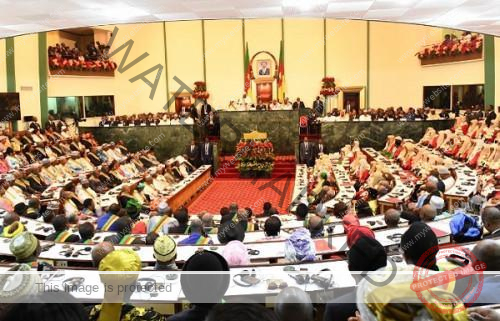
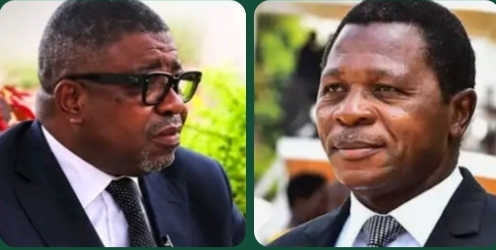
BUEA – 6 November 2026 – What exactly are Christopher Tambe Tiku and Paul Atanga Nji offering the people of Ambazonia? A genuine initiative to end violence and restore peace, or another political exercise that risks reducing the question of Southern Cameroons’ sovereignty to a dispute between the North West and South West administrative regions of La République du Cameroun (LRC)?
That distinction matters. It goes to the heart of a conflict whose historical and constitutional dimensions cannot be resolved through regional bargaining alone. According to an interview with Bony Mua of GBDP Media, Christopher Tambe Tiku, identified as a South West human rights official and member of the Elections Cameroon (ELECAM) board, stated that he had approached the presidency with a peace proposal following discussions with separatist fighters.
He reportedly explained that he was referred to Territorial Administration Minister Paul Atanga Nji, who indicated that he would receive him after returning from Douala. According to Tiku’s account, the anticipated meeting did not materialise, and subsequent telephone calls went unanswered.
Tiku then raised the possibility that his South West origin might have influenced the minister’s response, suggesting that Atanga Nji might be unwilling to see peace restored in the South West while the North West remained unsettled.
If accurately reported, this explanation raises questions. Yet the most important question is not whether one official has ignored another. It is whether the proposed approach addresses the underlying political conflict or reinforces the administrative divisions through which that conflict has long been managed.
Since when did the question of Ambazonian sovereignty become a competition between the North West and South West? Who authorised the transformation of a national political grievance into a regional contest for ministerial attention? More importantly, who benefits when communities sharing a common historical experience are encouraged to regard one another as competitors rather than partners in the search for a durable settlement? These are questions that deserve serious public examination.
ATANGA NJI’S MINISTERIAL OFFICE IS NOT A NATIONAL MANDATE
Paul Atanga Nji holds a ministerial appointment within the government of La République du Cameroun. That appointment gives him responsibilities under the political and constitutional arrangements of the state he serves. It does not, by itself, establish that he possesses a representative mandate from the people who identify with the Ambazonian cause.
No electoral mandate from Midland, Savannah or Atlantic has been demonstrated that would authorise him to determine their collective political future. Neither his geographical origin nor his official position should be confused with popular legitimacy.
A minister’s authority within a government and his legitimacy as a representative of a population are two different questions. The same principle applies to Christopher Tambe Tiku. His South West origin does not automatically make him the representative of Atlantic, nor does membership in a state institution confer authority to negotiate the political destiny of an entire people.
If Tiku has developed a serious peace proposal, the public deserves to know its objectives, its intended participants and the political framework within which it would operate. Would it address the historical dispute over Southern Cameroons’ status? Would it provide meaningful protection for civilians? Would it include independent mediation and public accountability? Or would it simply seek to restore administrative calm without confronting the grievances that produced the conflict?
These questions are not an objection to peace. They are essential tests of whether a proposed peace initiative has the legitimacy and substance necessary to succeed.
AMBAZONIA IS NOT TWO REGIONS COMPETING FOR PEACE
The Ambazonian national vision advanced by its supporters encompasses Midland, Savannah and Atlantic as constituent zones of one political community. These geographical distinctions must not become instruments of political rivalry.
The people of Midland are not strangers to those of Atlantic. The Savannah does not possess a destiny isolated from the communities of the other zones. Their experiences, local concerns and political perspectives may differ, but such differences do not extinguish the shared historical questions arising from British administration, the 1961 plebiscite, the federal settlement and subsequent constitutional changes.
The movement’s claim to self-determination cannot be adequately examined through the administrative boundaries of the North West and South West alone. Those boundaries belong to an existing system of territorial administration. They do not settle the historical question of Southern Cameroons’ political status.
Divide-and-rule politics becomes especially dangerous when administrative distinctions are used to encourage competing claims to legitimacy, resources, recognition or peace. A proposal directed toward one region is not necessarily illegitimate. Communities experiencing violence have an immediate right to seek safety and humanitarian relief.
But a regional initiative becomes politically problematic when it is presented as a substitute for resolving the wider conflict, or when its advocates suggest that peace in one area depends upon the continued suffering or political isolation of another.
Peace in Atlantic must not be purchased at the political expense of Savannah or Midland. Nor should peace anywhere be treated as a betrayal of the rights of people elsewhere. The restoration of security and the resolution of the underlying political dispute must be pursued together.
THE AMBAZONIAN STATE ARMY AND THE QUESTION OF ACCOUNTABLE LEADERSHIP
The reported initiative also raises broader questions concerning political authority, armed groups and the conduct of negotiations. The Ambazonian State Army (ASA), like any armed organisation claiming to act in the name of a people, must be subject to legitimate leadership, accountability and the requirements of international humanitarian law.
A movement cannot credibly demand political legitimacy while tolerating confusion over representation, competing claims of authority or arrangements that lack public scrutiny. Legitimate civilian oversight, respect for human life and protection of non-combatants must remain fundamental principles.
Accounts concerning the reported killing of Sagat and the capture of Shaggy have circulated in discussions surrounding the conflict. Their circumstances, however, require independent verification before conclusions about responsibility, betrayal or political involvement can responsibly be drawn.
Such incidents should prompt demands for credible investigation rather than become instruments of speculation or internal accusation. Equally, dialogue with government representatives should not automatically be regarded as surrender or disloyalty.
Negotiation can be an instrument of conflict resolution. Its legitimacy depends upon its objectives, the authority of its participants, safeguards for civilians and the transparency of the process. Any meaningful political dialogue must therefore operate within a credible, inclusive and accountable framework.
The immediate protection of civilians must never be subordinated to disputes over command, personal authority or institutional recognition.
ATANGA NJI AND TAMBE TIKU: THE QUESTION BEYOND PERSONAL RIVALRY
There is an important irony in this controversy. Atanga Nji serves in the government of La République du Cameroun. Tambe Tiku is identified in the reported interview as a human rights official and ELECAM board member.
Both are associated, in different capacities, with institutions operating within Cameroon’s existing political framework. That fact does not necessarily invalidate their participation in a peace process. It does, however, make questions of independence, authority and public confidence especially important.
The central question is not who telephoned whom, who failed to return a call or which official originates from which region. The question is whether the proposed engagement can meaningfully confront the political grievances associated with Southern Cameroons’ history and the present conflict.
– Can it acknowledge competing interpretations of the 1961 political settlement? – Can it address concerns surrounding the abolition of the federal system in 1972 and subsequent constitutional developments? – Can it confront allegations of serious human rights violations and establish credible mechanisms for investigation, accountability and redress? – Above all, can it create conditions in which the people affected by the conflict can participate meaningfully in determining their political future?
Without answers to these questions, ministerial consultations risk becoming exercises in administrative management rather than steps toward a durable political settlement. Political legitimacy cannot be inherited through birthplace, language, family association or appointment to public office. It must be demonstrated through mandate, accountability, conduct and respect for the people whose future is at stake.
AMBAZONIA MUST NOT BE DIVIDED TO BE DEFEATED
Let there be no misunderstanding: advocating a comprehensive political settlement does not mean opposing peace. The people of Midland, Savannah and Atlantic all deserve peace. They deserve functioning schools, accessible healthcare, economic security, freedom from arbitrary violence and the opportunity to rebuild communities devastated by years of conflict.
Displaced families deserve the possibility of returning home safely. Children deserve an education unshadowed by fear. Civilians deserve protection regardless of their political beliefs or geographical origins. These are not concessions to be postponed until the resolution of every constitutional disagreement. They are immediate human obligations.
Yet sustainable peace requires more than the disappearance of gunfire. It requires political legitimacy, public trust, the protection of fundamental rights and a credible process for addressing the grievances that continue to divide the parties.
An arrangement that provides temporary administrative stability while leaving fundamental questions unresolved may reduce tensions, but it cannot automatically be described as a lasting settlement.
The Ambazonian movement must also recognise that unity cannot be sustained merely through slogans. Unity requires accountable leadership, internal dialogue, respect for differing political views and a commitment to the welfare of the entire population.
Those who claim to represent the people must demonstrate that they are prepared to answer to them. Regional identity must never become a test of political loyalty. Nor should disagreement over negotiation strategies become a justification for intimidation or violence. An enduring national cause should be strong enough to accommodate debate without surrendering its central principles.
ONE PEOPLE, ONE SHARED POLITICAL QUESTION
The danger in the present controversy is not simply that Atanga Nji and Tambe Tiku may disagree over a meeting. It is that the public discussion could shift attention from the underlying conflict to the supposed rivalry between two administrative regions. That would be a serious political distraction.
Those advocating Ambazonian sovereignty understand the dispute as a historical question of self-determination, constitutional legitimacy and the future political status of Southern Cameroons. Whether one agrees with that claim or challenges it, the issue deserves a serious political response rather than reduction to regional competition.
No official, intermediary or armed organisation should presume that it alone possesses the unquestionable authority to determine the future of the population. Any legitimate settlement must take account of the rights, security and political aspirations of the people themselves.
Let Midland remember Atlantic. Let Atlantic remember Savannah. Let Savannah remember Midland. Let differences of geography never obscure the obligations of shared humanity or the demands of accountable political leadership.
The greatest danger of divide-and-rule politics is that communities may eventually come to see their neighbours, rather than the unresolved political conflict, as the principal obstacle to their future. That danger must be resisted. Ambazonia is one in the national vision of its supporters. Its political future cannot be responsibly reduced to competing regional bargains.
Peace must be genuine. Representation must be legitimate. Negotiations must be accountable. And the fundamental political questions must not be buried beneath disputes over ministerial access.
A PEOPLE DIVIDED BY REGIONAL RIVALRY WEAKENS ITS OWN CAUSE. A PEOPLE UNITED BY PRINCIPLE, ACCOUNTABILITY AND RESPECT FOR HUMAN LIFE STRENGTHENS ITS CLAIM TO A JUST AND DURABLE PEACE.
As Amazon associate this site earns from qualifying purchases
Buy your copies of publications on the Ambazonian revolution By Martin Mungwa on Amazon
https://www.amazon.com/s?k=Martin+mungwa&crid=2VVLXEC4N2U8S&sprefix=trump+and+the+gov+martin+mungwa%2Caps%2C1837&linkCode=ll2&tag=njokings-20&linkId=98a67bd4c31c7c61412b60bc32dba26f&language=en_US&ref_=as_li_ss_tl
Carl Sanders
Guest Writer, The Independentist News
Soho, London
Share This Post:
DR. CHO AYABA’S PROSECUTION: NOT AN INDICTMENT OF THE AMBAZONIAN LIBERATION MOVEMENT, but a Question of Individual Criminal Responsibility, International Humanitarian Law, and Political Legitimacy
GROW YOUR BUSINESS WITH DIASPORA PROSPERITY NETWORK (DPN)! Put Your Business Where the World Can Find It.
Related Post
DR. CHO AYABA’S PROSECUTION: NOT AN INDICTMENT OF THE
GROW YOUR BUSINESS WITH DIASPORA PROSPERITY NETWORK (DPN)! Put
THE NEW DEAL EXPIRED! 44 YEARS OF BIYA: A
DAVID MAKONGO, AGBOR GILBERT AND THE POLITICS OF PRISON
A patriot from home front, writes to the Independentist
Barrister Charles Achaleke Taku writes to The Independentist News