








Editorial commentary

We are home to news on Cameroon and the CEMAC region. We are dedicated to honest and reliable reporting. We are the voice of the Cameroonian people and their fight for freedom and democracy at a time when the Yaoundé government is silencing dissent and suppressing democratic voices.

The people of Southern Cameroons (Ambazonia) deserve to know what was declared in their name in 2017, what is being proposed in their name in 2026, and who has the legitimate authority to determine the difference. That is not a demand for disunity. It is a demand for constitutional clarity, democratic accountability, and political responsibility. And it is a question that Sisiku Ayuk Tabe, Dabney Yerima, and every leadership institution claiming to represent the people should be prepared to answer.
An examination of the 2017 independence proclamation, the crisis of revolutionary leadership, and the constitutional questions raised by APLA
By Ali Dan Ismael, Senior Editor-in-chief The Independentist News | 3 November 2026
As Amazon associate this site earns from qualifying purchases
Get your copies of the many publications on the Ambazonian revolution By Martin Mungwa on Amazon
https://www.amazon.com/s?k=Martin+mungwa&crid=2VVLXEC4N2U8S&sprefix=trump+and+the+gov+martin+mungwa%2Caps%2C1837&linkCode=ll2&tag=njokings-20&linkId=87631a240fe54f491827791a0e1d8548&language=en_US&ref_=as_li_ss_tl
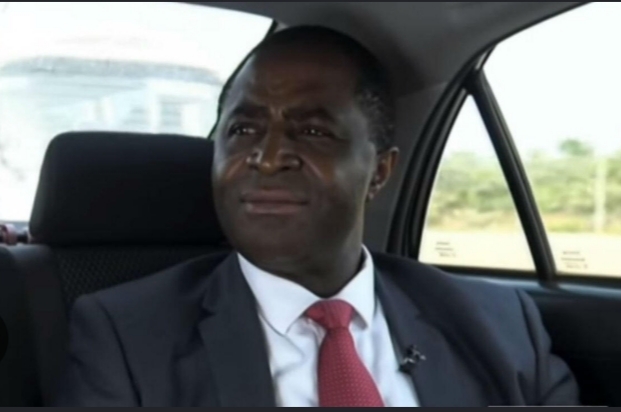
A Declaration That Demands an Explanation. On October 1, 2017, Sisiku Julius Ayuk Tabe, then chairman of the Southern Cameroons Ambazonia Consortium United Front (SCACUF), became the central public figure in the proclamation restoring the independence of Southern Cameroons as the Federal Republic of Ambazonia.
The declaration was presented as the recovery of a sovereignty allegedly compromised by the political arrangements of 1961 and subsequent constitutional developments. It was not presented merely as a request for greater autonomy within La République du Cameroun.
Nine years later, the political organization associated with the imprisoned leader has undergone another transformation. On September 22, 2026, the Interim Government announced its proposed reconstitution as the Ambazonia People’s Liberation Authority (APLA). Its subsequent policy document introduced a three-year roadmap that includes a negotiated settlement and a proposed referendum on the political future of Southern Cameroons under United Nations supervision. This development raises a fundamental question.
If independence was restored in 2017, what precisely remains to be determined in 2026?
The question is neither an attack on Sisiku’s personal sacrifice nor a denial of the historical grievances underlying the Southern Cameroons conflict. It concerns political consistency, constitutional authority, democratic legitimacy, and accountability. The people deserve to understand whether APLA represents continuity, strategic adjustment, or a substantive reconsideration of the independence proclamation.
What Exactly Was Declared in 2017? The October 2017 proclamation attributed to the SCACUF Governing Council offers a starting point for answering the question. Its historical argument rested on the former British Southern Cameroons’ separate colonial administration, the 1961 plebiscite, the terms under which Southern Cameroons joined the Republic of Cameroun, and the later dismantling of the federal arrangement.
The document also alleged that the constitutional framework established in 1961 failed to give effect to an agreement between two political entities on terms of equality. It identified the abolition of the federation in 1972 and the constitutional changes of 1984 as further evidence supporting the claim that the original political compact had been fundamentally altered.
These were not incidental grievances. They formed the constitutional justification offered for the declaration itself. In an October 2019 interview reported by Jeune Afrique, Sisiku summarized his position: “We are not seceding. We are restoring our nationhood.” That distinction was the foundation of his political argument. Yet a declaration of restored sovereignty raises two separate questions: whether the underlying historical and legal claim is sustainable, and whether those making the declaration possessed a sufficient mandate to act in the name of the population.
The first requires legal and documentary evidence. The second requires democratic and institutional accountability. Neither can be settled simply by the sincerity of the leadership.
Resolution 1608: Historical Evidence or Conclusive Legal Authority?
The legal significance of United Nations General Assembly Resolution 1608 (XV) deserves particular scrutiny. Adopted on April 21, 1961, the resolution endorsed the plebiscite results under which Southern Cameroons chose to achieve independence by joining the Republic of Cameroun. It provided for the termination of trusteeship on October 1, 1961, and invited urgent discussions among Britain, the Government of Southern Cameroons, and the Republic of Cameroun to finalize the arrangements implementing the agreed policies.
Supporters of the restoration argument maintain that the contemplated relationship was subsequently compromised by unilateral constitutional decisions and the erosion of the federal protections. There are serious historical questions here. The 1961 arrangements, the constitution adopted that year, the 1972 referendum, and the consequences of the 1984 constitutional changes merit rigorous examination.
But intellectual integrity requires acknowledging an equally important distinction: Resolution 1608 did not expressly proclaim Southern Cameroons an internationally independent state separate from Cameroun. It endorsed independence through joining. Whether subsequent violations of the terms of that relationship could legally justify renewed separate statehood is a further question requiring international-law analysis.
Consequently, the restoration argument cannot rest solely on repeated references to Resolution 1608. It must explain the relationship between the original plebiscite mandate, the subsequent constitutional record, the right of self-determination, and the legal consequences alleged to follow from breaches of the political compact.
If the independence declaration was constitutionally justified, its documentary and legal foundation should be sufficiently clear to withstand independent scholarly scrutiny.
From Revolutionary Leadership to IG-CARE
The subsequent history of the Interim Government raises another troubling question: how did an organization established to represent a national cause become divided into competing claims of governmental legitimacy?
Following Sisiku’s arrest in Nigeria in January 2018 and his transfer to Cameroon, Samuel Ikome Sako assumed leadership of a caretaker administration. By May 2019, the disagreement had become an institutional rupture. From detention, Sisiku issued a directive dissolving Sako’s caretaker cabinet and restoring the cabinet that had existed before his arrest.
Sako and his supporters rejected the competing claim to leadership. Rival Interim Government factions emerged, including the faction commonly identified as IG-CARE, associated with Sisiku and subsequently with Dabney Yerima. These divisions were consequential. They generated competing assertions about legitimate authority, political representation, organizational resources, and the future direction of the movement.
The existence of internal disagreements does not invalidate a people’s right to self-determination. Political organizations may legitimately differ over strategy, leadership, and negotiating methods. But when rival organizations each claim authority derived from the same independence proclamation, a more demanding question arises:
Who possesses the constitutional authority to speak for a people whose sovereignty is claimed but whose governing institutions have not been established through nationwide democratic elections? Revolutionary legitimacy cannot remain indefinitely dependent on the prestige of founding personalities. It must eventually be supported by credible institutions, defined constitutional procedures, public accountability, and freely expressed popular consent.
The Emergence of APLA: Reform or Constitutional Reversal?
The announcement of APLA in September 2026 introduced a potentially significant institutional change. The statement bearing Dabney Yerima’s signature presented APLA as a reconstitution of the existing Interim Government structure, intended to improve organizational capacity and political coordination.
Its October 14 policy statement advanced a three-year roadmap focused on international engagement, humanitarian protection, institutional development, and a negotiated process of self-determination. The roadmap also proposed creating a National Referendum Commission to prepare a referendum intended to operate under United Nations supervision. These proposals deserve serious consideration.
A movement confronting prolonged conflict may reasonably reassess its organizational methods. A provisional governmental model might prove unsuitable for the practical circumstances of a territory over which the movement exercises no effective sovereign administration. Replacing governmental titles with a liberation authority could therefore reflect institutional realism rather than abandonment of the original objective. Nevertheless, the constitutional implications cannot be ignored.
The 2017 proclamation asserted that independence had been restored. The 2026 policy calls for a future political settlement sanctioned by the people. Those propositions are not necessarily incompatible. A referendum may serve to reaffirm an existing independence claim or establish a renewed democratic mandate. But that reconciliation must be explicitly demonstrated.
– Would the proposed referendum confirm an independence already declared, or would it offer the population a fresh choice among independence, federation, autonomy, or other arrangements? – Would the 2017 proclamation remain the governing constitutional foundation during negotiations? – And what would happen if a referendum produced an outcome materially different from the position announced in 2017? Until these questions are answered, APLA’s constitutional relationship with the original declaration remains insufficiently explained.
Moreover, a proposal for United Nations supervision is not evidence that the United Nations has agreed to supervise such a referendum. The conditions under which the referendum could legally and practically occur must be established rather than presumed.
Did Sisiku Authorize the Transition?
An additional matter requires clarification. The September 2026 transition announcement bore Dabney Yerima’s signature, not Sisiku Ayuk Tabe’s. The available public reporting does not establish that Sisiku personally approved the transition or participated in adopting its constitutional framework. It would therefore be unfair to attribute every institutional decision associated with APLA to the imprisoned leader without reliable evidence.
However, because the leadership authority claimed by the relevant Interim Government faction is historically connected to him, his position remains politically significant. Was he consulted before the announcement? Did he endorse the transition? Does he regard APLA as the successor to the Interim Government established following the 2017 proclamation? If his position has so changed, what historical, legal, or strategic considerations explain that change?
The restrictions imposed by imprisonment must be respected. Any request for clarification should recognize his personal safety and legal circumstances. Nevertheless, the movement’s current representatives have an immediate responsibility to publish the constitutional authority under which the change was made. That responsibility cannot be postponed indefinitely on the grounds of Sisiku’s detention.
The Human Cost Must Not Disappear Behind Constitutional Arguments
The constitutional debate is important, but the lives of civilians are more important than organizational titles. The conflict that developed from the political crisis beginning in 2016 has brought extensive displacement, disrupted education, killings, destruction of property, and enduring insecurity. Human Rights Watch has documented abuses committed both by Cameroonian government forces and by armed separatist groups.
United Nations humanitarian reporting in 2026 continues to describe serious protection concerns in the North-West and South-West regions. The responsibility for particular crimes must be determined through evidence and lawful investigation. The declaration of independence cannot automatically be treated as the cause of every subsequent atrocity, nor can any government or armed organization escape accountability by invoking national security or liberation.
For APLA, meaningful political reform must therefore begin with the protection of civilians. Its proposed humanitarian institutions, accountability mechanisms, financial safeguards, and commitments to lawful conduct should be measurable and subject to independent review. It should also explain how displaced families, women, young people, traditional institutions, civil society, and residents who disagree with separatism will participate in decisions concerning the territory’s future. No leadership can credibly claim to defend popular sovereignty while treating disagreement among the population as illegitimate.
What the Leadership Must Now Explain
A credible response requires more than another declaration. Sisiku should be invited, insofar as his circumstances permit, to provide a historical explanation of the political and constitutional mandate for the October 2017 proclamation.
Dabney Yerima and the leadership responsible for APLA should explain the constitutional authority for institutional reconstitution, publish the operative transitional instruments, identify the decision-making bodies that approved them, and clarify the legal status of the original independence declaration. They should disclose whether the proposed referendum is intended to confirm restored sovereignty or determine a new political settlement.
The organization should also publish a realistic diplomatic programme, appropriate financial disclosures, safeguards against abuses, and procedures for representation and internal accountability. The reported October 10, 2026 correspondence through which APLA asserted continuity of representation within the Southern Cameroons Ambazonia United Front (SCAUF) provides a further reason for clarity. Continuity of organizational representation is not, by itself, proof of a renewed popular mandate. These questions should be addressed through documents, public explanations, and verifiable institutional processes—not personal accusations.
Conclusion: Independence Cannot Rest on Unanswered Questions
Sisiku Ayuk Tabe occupies an important place in the political history of the contemporary Southern Cameroons independence movement. His imprisonment does not erase his role. Neither does his sacrifice make every decision associated with his leadership beyond examination. The October 2017 declaration represented a major constitutional and political claim. The September 2026 announcement of APLA presents another major institutional development.
Both must be evaluated against the same standards: historical accuracy, legal coherence, democratic legitimacy, institutional accountability, and the protection of the population. The question is not simply whether Sisiku can explain why he declared independence. His earlier statements and the 2017 proclamation already provide substantial evidence of the reasoning advanced at the time.
The deeper question is whether that reasoning continues to govern the movement’s political strategy and whether those now proposing institutional changes have the authority to revise it. A national liberation movement should be able to reconsider strategy without falsifying history, to pursue negotiation without concealing its objectives, and to develop new institutions without evading responsibility for old decisions.
The people of Southern Cameroons deserve to know what was declared in their name in 2017, what is being proposed in their name in 2026, and who has the legitimate authority to determine the difference. That is not a demand for disunity. It is a demand for constitutional clarity, democratic accountability, and political responsibility. And it is a question that Sisiku Ayuk Tabe, Dabney Yerima, and every leadership institution claiming to represent the people should be prepared to answer.
Principal documentary references:
The October 2017 Proclamation of Restoration of Independence; United Nations General Assembly Resolution 1608 (XV); the May 2019 reporting on the Interim Government leadership dispute; APLA’s September 2026 transition announcement and October 2026 policy statement; Human Rights Watch reporting on the conflict.
As Amazon associate this site earns from qualifying purchases
Get your copies of the many publications on the Ambazonian revolution By Martin Mungwa on Amazon
https://www.amazon.com/s?k=Martin+mungwa&crid=2VVLXEC4N2U8S&sprefix=trump+and+the+gov+martin+mungwa%2Caps%2C1837&linkCode=ll2&tag=njokings-20&linkId=87631a240fe54f491827791a0e1d8548&language=en_US&ref_=as_li_ss_tl
Ali Dan Ismael, senior Editor-in-chief The Independentist News
Share This Post:
Barrister Charles Achaleke Taku writes to The Independentist News editor on the recent review of his publication on the southern Cameroon case
BRITAIN’S SLAVERY APOLOGY DILEMMA: CAN HISTORICAL RESPONSIBILITY END WITH WORDS? King Charles III offers sorrow, Prime Minister Andy Burnham opens the door to an apology, but Caribbean nations continue to demand reparatory justice.
Related Post
Barrister Charles Achaleke Taku writes to The Independentist News
BRITAIN’S SLAVERY APOLOGY DILEMMA: CAN HISTORICAL RESPONSIBILITY END WITH
THE HIDDEN ECONOMY OF FOREIGN AID: WHO PROFITS WHEN
WHEN ANTIGUA QUESTIONS THE CROWN: BRITAIN’S COLONIAL RESPONSIBILITIES AND
MONACO, FRANCE AND SOUTHERN CAMEROONS: HISTORICAL ANALOGIES CANNOT SETTLE
The Book, TRUMP AND THE GOVERNANCE CROSSROADS IN WEST