










News commentary

We are home to news on Cameroon and the CEMAC region. We are dedicated to honest and reliable reporting. We are the voice of the Cameroonian people and their fight for freedom and democracy at a time when the Yaoundé government is silencing dissent and suppressing democratic voices.

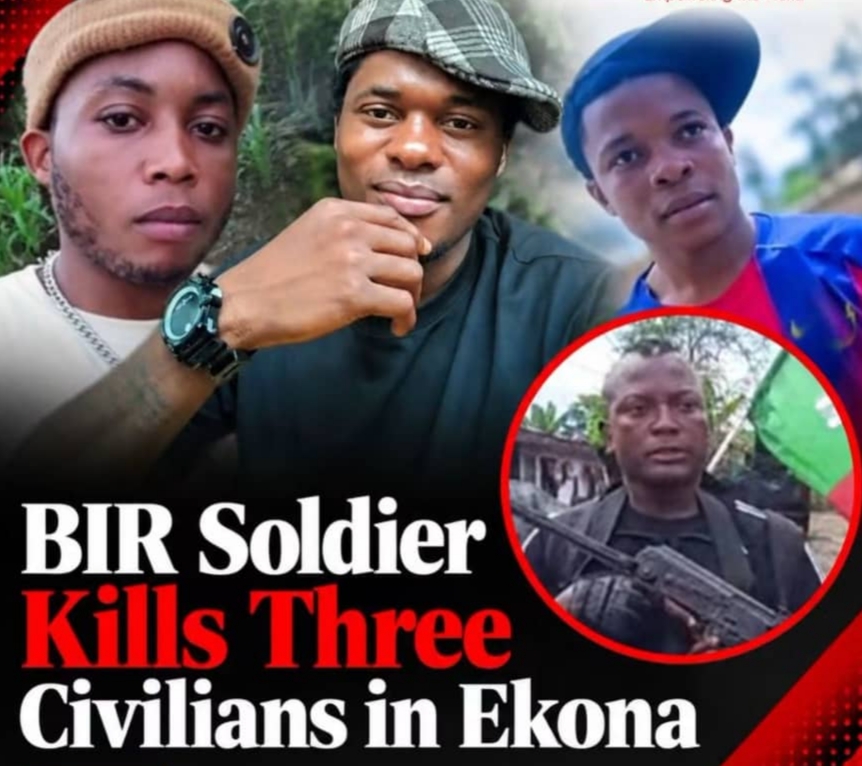
Allegations of a deadly operation in Electric Line revive questions about accountability, civilian protection and the role of state-linked armed actors
By Timothy Enongene
Associate Editor-in-chief, The Independentist News.
As Amazon associate this site earns from qualifying purchases
Get books on statecraft by Martin Mungwa from Amazon
https://www.amazon.com/s?k=Book+by+Martin+mungwa&i=specialty-aps&srs=121082092011&crid=31ZNM3LO2LYZ&sprefix=book+by+martin+mungwa%2Cspecialty-aps%2C356&linkCode=ll2&tag=njokings-20&linkId=79b1484654c612f3da7eb8be87eef3d9&language=en_US&ref_=as_li_ss_tl
EKONA – September 20, 2026 — Fresh allegations of violence against civilians in Ekona have again placed the conduct of armed actors operating in the former British Southern Cameroons under scrutiny. Residents of Ekona’s Electric Line neighborhood report that three civilians were killed after armed men entered the area, fired weapons and raided homes.
Some residents allege that the armed group was led by Ewume John Eko, widely known as Moja Moja, a controversial Cameroonian soldier and traditional ruler whose conduct has previously attracted allegations of serious human-rights abuses. The Independentist News has not independently verified the identities of the three reported victims, the precise sequence of events, or the allegation that Moja Moja personally led the operation. Those facts require urgent independent verification. But the allegation cannot simply be dismissed as occurring in a historical vacuum.
A RECORD THAT DEMANDS SCRUTINY
Moja Moja has previously served in Cameroon’s Rapid Intervention Battalion, commonly known by its French acronym BIR. His conduct has been documented far beyond Ambazonian political circles. The United States Department of State, in its 2023 human-rights report on Cameroon, stated that multiple organizations had reported that Moja Moja continued to abuse civilians whom he accused of supporting separatists in the Southwest Region.
The report described publicly circulated videos in which he was alleged to have abused civilians and referenced previous complaints seeking action against him. The World Organisation Against Torture and the Centre for Human Rights and Democracy in Africa had gone further in 2022, saying they had documented multiple alleged acts of torture and other forms of ill-treatment attributed to him. Those organizations called on Cameroonian authorities to investigate and hold those responsible accountable.
In 2024, Moja Moja was removed from the BIR and transferred to the regular infantry. He was subsequently taken to Yaoundé after making controversial public allegations concerning an alleged military coup plot. That history does not establish his responsibility for what residents now say happened in Ekona. But it does make the allegations serious enough to require more than silence.
THE CENTRAL QUESTION: WHO WAS OPERATING IN EKONA?
The immediate task should be factual. Who were the armed men? Under whose authority were they operating? What units, if any, were represented? Were state-issued weapons, vehicles or communications systems involved? Was Moja Moja present? Who are the reported victims? And what evidence exists from eyewitnesses, photographs, videos, telephone records or other sources capable of establishing what occurred? These are not minor details.
They determine whether the reported killings were criminal acts by individuals, an unauthorized armed operation, an operation involving members of the security services, or something else entirely. Until those questions are answered, sweeping conclusions should be resisted. But so should indifference.
WHY MOJA MOJA’S STATUS MATTERS
If an individual with a documented history inside Cameroon’s security establishment is found to have participated in an armed operation against civilians, the issue extends beyond the actions of one man. It raises questions about command responsibility, discipline, weapons control, oversight and accountability. A state cannot credibly distance itself from abuses committed by serving personnel simply by describing those actions as personal misconduct if state authority, equipment, access or institutional protection facilitated them.
Conversely, evidence would still be required before assigning responsibility to senior officials or concluding that an operation had been ordered by the central government. At present, there is no independently verified evidence establishing that Cameroon’s central government ordered the reported Electric Line killings. That distinction matters. Accountability requires evidence. But evidence requires investigation.
THE DANGER OF COMMUNALIZING A POLITICAL CONFLICT
The Ekona allegations also raise another sensitive question. Throughout the conflict in the Northwest and Southwest regions, political violence has repeatedly intersected with local identity, ethnicity, village loyalties and competing narratives of belonging. That creates an obvious danger. A political conflict can gradually be reframed as a conflict between communities. Once that happens, neighbors may begin to view one another through the logic of collective guilt.That would be disastrous.
The dispute commonly called the Anglophone crisis did not begin as an ethnic conflict between ordinary communities. Its modern phase emerged from political, constitutional, linguistic, legal and institutional grievances, including the 2016 lawyers’ and teachers’ protests and the state’s response to them. Whatever positions people hold regarding the political future of the territory, turning those grievances into communal hostility would create a conflict even harder to resolve. No community should be held collectively responsible for the conduct of an armed actor. No civilian should become a target because of ethnicity, village of origin, political opinion or perceived affiliation. And no actor—state or non-state—should be permitted to use communal tensions as cover for violence against civilians.
CIVILIANS CONTINUE TO PAY THE PRICE
This is the most important point. For years, civilians in the Northwest and Southwest have lived between competing armed forces, lockdowns, military operations, kidnappings, checkpoints, economic disruption and recurrent allegations of abuse. Human-rights reporting has documented violations attributed both to Cameroonian security forces and to separatist armed groups. That reality should prevent selective outrage. A civilian killed by a government soldier is no less dead because separatist fighters have also committed abuses. A civilian killed by an armed separatist is no less a victim because government forces have previously committed abuses. Civilian protection cannot depend upon which side is accused. That principle should be absolute.
EKONA NEEDS ANSWERS, NOT PROPAGANDA
The reported Electric Line killings should therefore not become another episode in which competing political camps immediately announce conclusions while basic facts remain uncertain. Ekona needs answers.
The families of the reported victims need names established, circumstances documented and responsibility determined. If Moja Moja was involved, the evidence should be made public and the relevant chain of responsibility examined. If other armed actors were responsible, that too should be established. If government personnel participated, the public deserves to know under whose command they were operating.
And if allegations circulating about particular individuals prove false, that should also be stated clearly. The purpose of investigation is not to confirm a preferred political narrative. It is to establish what happened.
ACCOUNTABILITY CANNOT REMAIN OPTIONAL
The deeper danger in prolonged conflicts is not only violence itself. It is the normalization of violence. A society eventually reaches a dangerous point when reports of civilians being shot, beaten, abducted or killed become ordinary news rather than extraordinary events demanding accountability.
The Northwest and Southwest regions have already paid too high a price for such normalization. Every credible allegation of civilian killing should trigger documentation. Every armed actor should be accountable. Every victim should have a name. Every chain of command should be capable of examination. And no uniform, political cause or institutional connection should provide immunity.
Three civilians are now reported dead in Ekona. The first responsibility is to establish whether that report is accurate. The second is to establish who killed them. And the third is the question that has remained unanswered too many times throughout this conflict: Will anyone be held accountable? That question should not disappear when the gunfire stops.
As Amazon Associate this site earns from qualifying purchases
Get books on statecraft by <artin Mungwa from Amazon
https://www.amazon.com/s?k=Book+by+Martin+mungwa&i=specialty-aps&srs=121082092011&crid=31ZNM3LO2LYZ&sprefix=book+by+martin+mungwa%2Cspecialty-aps%2C356&linkCode=ll2&tag=njokings-20&linkId=79b1484654c612f3da7eb8be87eef3d9&language=en_US&ref_=as_li_ss_tl
Timothy Enongene
Associate Editor-in-chief The Independentist News.
Share This Post:
The Government of the Federal Republic of Ambazonia (in exile) raises an alarm on alleged false-flag operations and Abduction of civilians in Ambazonia, by the Cameroon military personnel, calling for an independent and internationally supervised investigation on the situations.
Related Post
The Government of the Federal Republic of Ambazonia (in
À PARAÎTRE EN DÉCEMBRE 2026: UN AUDIT DE L’ÉCONOMIE
WHO BORROWS? WHO OWNS? WHO EXITS? Cameroon’s FCFA 250
COMING DECEMBER 2026: AN AUDIT OF PAUL BIYA’S ECONOMY
ADF KIDNAPPING AND ATTACK IN WOWO VILLAGE, Thirteen Residents
DONGA MANTUNG POPULATION RAISE ALARM ON ALLEGED KIDNAPPING, ASSAULT,