









Commentary

We are home to news on Cameroon and the CEMAC region. We are dedicated to honest and reliable reporting. We are the voice of the Cameroonian people and their fight for freedom and democracy at a time when the Yaoundé government is silencing dissent and suppressing democratic voices.

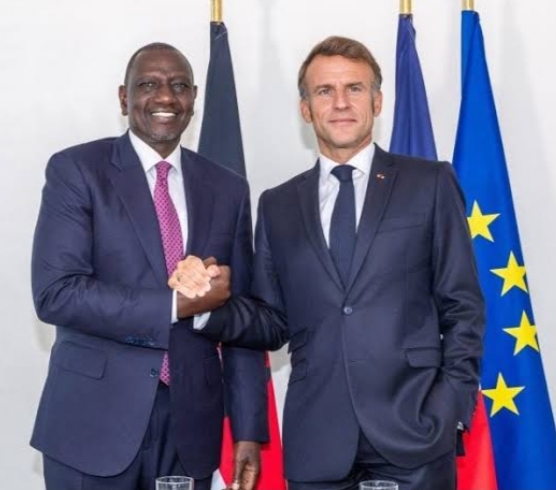
The new French roadmap is becoming increasingly clear. France is not abandoning Africa. It is changing direction, language and method. After suffering political and military setbacks in parts of Francophone Africa, Paris has expanded its engagement with major Anglophone states. Kenya, Ghana and South Africa are not necessarily members of a coordinated French bloc, but their growing relationships with Paris reveal a broader strategic repositioning. France is crossing the old colonial language barrier.
By Ali Dan Ismael, Editor-in-chief The Independentist News
Empires rarely disappear completely. Their flags come down, governors depart and colonial offices close, but their commercial networks, military relationships, diplomatic habits and inherited spheres of influence often survive.
This is the deeper reality behind the continuing relationship between Britain, France and Africa. London and Paris may compete for contracts, resources and diplomatic access, but they also understand that an uncontrolled attack on one country’s post-imperial network could eventually threaten the other’s. Each therefore has strategic reasons to tolerate—and sometimes quietly reinforce—the other’s influence across the continent. This is not friendship, nostalgia or moral solidarity. It is strategic interest.
That understanding is becoming increasingly important as the United States adopts a more transactional approach to alliances, trade, defense and access to strategic resources. Washington is less willing to subsidize European security without demanding economic and political returns. It is also competing more aggressively for African minerals, energy, military access, markets and diplomatic alignment.
Britain and France consequently face a shared danger: economic and strategic displacement. Their response is not to abandon Africa, but to modernize the machinery through which they remain influential.
Imperial Rivalry Became Strategic Accommodation
Britain and France spent centuries competing for territory, trade routes, colonies and naval supremacy. Their rivalry divided African societies between different imperial systems and imposed boundaries whose consequences remain visible today.
Modern power, however, taught them that yesterday’s enemy could become today’s indispensable partner. The Entente Cordiale did not eliminate Anglo-French rivalry. It reorganized it. London and Paris gradually concluded that cooperation could protect more of their respective interests than endless confrontation. Each retained influence in territories shaped by its language, legal traditions, commercial networks and administrative institutions. That understanding survived formal decolonization.
France maintained influence through defense agreements, currency arrangements, intelligence cooperation, commercial concessions and close relationships with governing elites. Britain relied more heavily on the Commonwealth, global finance, insurance, education, law, diplomacy, military training and London’s position as an international commercial center.
The methods differed, but the underlying objective was similar: preserve access and influence without carrying the full financial and political cost of colonial administration. Each country also had reasons not to expose the full structure of the other’s postcolonial relationships. A serious British challenge to French influence in Africa could provoke scrutiny of Britain’s own networks. A French assault on British arrangements could produce the same result. An informal principle of mutual restraint therefore developed: compete where profitable, cooperate where necessary and avoid destroying the larger system from which both powers continue to benefit.
Cameroon Reveals the Arrangement
Few places expose this strategic accommodation more clearly than Cameroon. France has long treated La République du Cameroun as part of its political, military and economic sphere. Britain, despite its former responsibility for British Southern Cameroons, has generally avoided directly challenging the territorial arrangement preferred by Yaoundé and supported by Paris.
This cannot be explained by historical ignorance. Britain knows that Southern Cameroons developed under a separate legal, educational and administrative system. It knows that the 1961 arrangement was presented as a union between two territories with distinct histories and institutions. London also knows that the federal structure through which that relationship was expressed was subsequently dismantled.
Nevertheless, Britain has largely treated the conflict as an internal matter to be resolved within the territorial framework of La République du Cameroun. Historical responsibility has repeatedly been subordinated to present-day strategic calculations. Britain values its relationship with France, NATO cooperation, European security, Commonwealth diplomacy and stability around the Gulf of Guinea. The rights of Southern Cameroons/Ambazonia may enter that calculation, but they do not determine it.
This is a hard lesson Ambazonia must understand: historical truth does not enforce itself. A compelling legal case does not automatically become foreign policy. Governments act decisively when justice, power and strategic interest become sufficiently aligned.
Britain’s reluctance to confront the consequences of the failed union should therefore not be interpreted merely as diplomatic negligence. It reflects a wider calculation about France, Europe, the Gulf of Guinea and the preservation of postcolonial relationships from which London also benefits.
To challenge France’s position too aggressively in La République du Cameroun could invite France to scrutinize or disrupt British arrangements elsewhere. Mutual restraint protects more than one country. It protects the post-imperial system itself.
America Is Changing the Calculation
The United States is placing increasing pressure on this old European settlement. Washington’s approach to Africa is becoming more openly connected to strategic minerals, energy, trade, military access, migration, technology and competition with China and Russia. American policymakers are unlikely to treat Africa merely as a collection of former European colonial spaces whose inherited privileges must be respected.
An America First policy does not necessarily recognize old imperial courtesies. The danger for Britain and France is that an economically assertive United States could bypass their historical networks, negotiate directly with African governments and corporations, and use American financial, technological and military power to capture opportunities once protected by European influence.
Ambazonia is strategically important within this competition. It lies at the intersection of the Gulf of Guinea, Central Africa, the Lake Chad security system and routes leading toward the Sahel. Its ports, resources, energy potential and regional position make it important to any major power seeking influence in Central Africa. American interest in Yaoundé will not be based primarily on affection for Paul Biya, Ferdinand Ngoh Ngoh or any possible successor. It will be driven by geography, security, resources and competitive advantage.
The same applies throughout Africa. Washington wants reliable partners, commercial access and governments prepared to limit the strategic reach of China, Russia and other competitors. America is not arriving as Africa’s liberator. It is arriving as another strategic actor.
This distinction matters. Africans dissatisfied with British or French influence must resist the temptation to assume that American competition will automatically produce African freedom. A change in the nationality of the dominant foreign partner is not necessarily a change in the structure of dependency.
America may challenge old European privileges, but it will do so in pursuit of American interests. Africa must therefore negotiate with Washington from a position of institutional competence, productive capacity and regional coordination—not desperation.
Europe’s Fear Is Economic as Well as Military
Britain and France require markets, energy, minerals, investment opportunities and international relevance. Their global influence remains greater than their individual economic weight partly because of their historical networks, military capabilities, intelligence systems and permanent seats on the United Nations Security Council. If their African networks continue to weaken, their global standing will shrink.
France has already suffered major reversals in parts of the Sahel. Military withdrawals, anti-French sentiment and competition from Russia, China, Turkey and the Gulf states have weakened the assumption that Francophone Africa will remain a permanent French sphere.
Britain faces a different form of decline. Brexit reduced its influence inside the European Union, while changing American priorities have raised questions about the limits of the “special relationship.” The Commonwealth gives Britain diplomatic reach, but it cannot conceal the gap between Britain’s imperial reputation and its present economic and military capacity. London and Paris therefore need each other more than their national pride may admit.
Britain offers financial depth, intelligence relationships, legal infrastructure and diplomatic reach. France provides European influence, military capability, nuclear power and extensive African networks. Together, they can preserve more influence than either can easily defend alone. Their governments and corporations will continue to compete. However, when the underlying European strategic order is threatened, competition can give way to solidarity.
This helps explain why the language of Anglo-French rivalry can be misleading. A British company may compete against a French company for a contract. British and French diplomats may disagree over tactics. Yet both governments can still recognize that the complete collapse of European influence in Africa would benefit neither of them. Strategic rivals can cooperate against strategic displacement.
France Is Not Retreating—It Is Repositioning
The new French roadmap is becoming increasingly clear. France is not abandoning Africa. It is changing direction, language and method. After suffering political and military setbacks in parts of Francophone Africa, Paris has expanded its engagement with major Anglophone states. Kenya, Ghana and South Africa are not necessarily members of a coordinated French bloc, but their growing relationships with Paris reveal a broader strategic repositioning. France is crossing the old colonial language barrier.
South Africa offers France something especially valuable: continental diplomatic weight, industrial capacity, military capability and influence within the African Union, BRICS and the wider Global South. A stronger relationship with Pretoria gives Paris access to political spaces that cannot be reached through its former colonies alone. Ghana provides a different strategic advantage. Its location on the Gulf of Guinea, relative political stability and position between Anglophone and Francophone West Africa make it a natural bridge. Security cooperation, investment and institutional partnerships with Ghana can help France rebuild regional influence under a more modern and politically acceptable framework.
Kenya provides an East African gateway, access to the Indian Ocean and influence within one of the continent’s most important diplomatic and commercial centers. Expanded French engagement with Nairobi demonstrates that Paris no longer intends to confine its African strategy to the territories it once colonized.
This resembles an emerging French strategic arc: South Africa provides continental influence, Kenya provides an East African and Indian Ocean platform, and Ghana provides a Gulf of Guinea bridge between Anglophone and Francophone West Africa. This should be treated as an analytical warning, not as evidence of a secret continental conspiracy. Sovereign African countries have the right to diversify their international partnerships. Cooperation with France is not automatically submission to France.
Nevertheless, the direction of travel is significant. France understands that hostility in parts of Francophone Africa cannot be allowed to become continental isolation. It is therefore moving toward countries where the burden of direct French colonial rule may be lighter and where governments may be more receptive to French investment, technology, education and defense cooperation.
Paris is also changing its vocabulary. The old language of assistance, intervention and privileged access has become politically toxic. France now speaks more frequently of sovereignty, partnership, co-investment, innovation, equality and African leadership.
The words have changed because the political market has changed. Whether the underlying relationship has genuinely changed remains to be proven. Given France’s history of colonial extraction, monetary control, political interference and military entanglement, many Africans will understandably receive this new language with suspicion. But it would be a mistake to dismiss it as meaningless public relations. Language is itself a strategic instrument. France is attempting to reposition its influence within the aspirations of a younger and more politically conscious Africa. The empire has not necessarily abandoned its interests. It has changed its presentation.
Britain’s Parallel Dilemma
Britain faces the uncomfortable reality that France is developing new relationships in territories once regarded as part of Britain’s natural diplomatic environment. London cannot prevent sovereign African states from cooperating with Paris, nor should it. However, France’s expanding relationships in Anglophone Africa reveal how rapidly old affiliations are being replaced by transactional partnerships.
Shared language does not guarantee diplomatic loyalty. Commonwealth membership does not prevent a country from developing stronger commercial or military relations with France, China, Russia, Turkey, the Gulf states or the United States.
Where British influence encounters historical resentment, legal disputes or diplomatic inertia, France may see an opening. Where France’s traditional position collapses, Britain may pursue opportunities of its own. Yet their competition does not eliminate their common interest. Britain and France can struggle over individual contracts while cooperating to preserve European access. They can disagree over tactics while opposing a strategic environment in which American, Chinese, Russian or Gulf power completely displaces them. The result is a complex relationship of competition within cooperation.
Africa must understand this complexity. It is dangerous to interpret every disagreement between foreign powers as an opportunity for liberation. Rival empires can compete over Africa while agreeing that Africa should remain economically dependent and strategically divided.
The Empire Has Changed Its Uniform
Modern exploitation rarely arrives wearing a colonial helmet. It operates through extractive contracts, foreign-controlled infrastructure, debt dependency, elite capture, unequal concessions, tax avoidance, military dependency and the export of raw materials without local transformation. It may speak English, French, American, Chinese, Russian, Turkish or Arabic. Africa’s great mistake would be to replace one foreign master with another and call the transition liberation.
The critical question is not whether an investor comes from the West, East or Global South. The question is whether the relationship increases African ownership, productive capacity, technological competence and bargaining power. Who owns the mine after the agreement is signed? Who controls the refinery or processing plant? Who owns the port, railway, energy system and commercial data? Where are the profits retained? How many Africans acquire the technical and managerial capacity to operate the industry? What remains after the oil, mineral or agricultural commodity has been removed?
A contract that exports wealth while leaving dependency behind is exploitation, regardless of the nationality of the investor. Real partnership must leave productive capacity behind. It must strengthen institutions, develop human capital, expand local ownership, transfer technology and create domestic industries capable of surviving after the foreign contractor departs. Without these safeguards, the empire has merely changed its uniform. Protecting Corrupt Systems Will Eventually Backfire
Britain and France may continue protecting their interests through governance systems weakened by corruption, secrecy, elite dependency and limited public accountability. Such arrangements can provide contracts, military access and diplomatic obedience in the short term.
In the long run, however, protecting discredited governments will jeopardize the very interests London and Paris are attempting to preserve.Foreign powers have often found it easier to negotiate with a small political elite than with an informed population. A concession approved by a president, minister or military commander can open access to strategic minerals, ports, telecommunications networks, energy assets and security facilities without meaningful legislative or public scrutiny.
Corrupt governance can therefore appear convenient to an outside power. It concentrates authority, suppresses opposition and reduces the number of actors who must be persuaded. But convenience is not stability.
An agreement that benefits foreign corporations and governing elites while impoverishing citizens accumulates political debt. Every concealed contract, unexplained military arrangement and resource concession concluded without public consent becomes a potential source of national resentment. Supporting an unpopular regime may protect a contract today while endangering an entire strategic relationship tomorrow.
The political changes witnessed across parts of the Sahel should have already delivered this warning. Populations that associate a foreign power with corruption, insecurity, economic stagnation and the protection of discredited leaders may eventually reject not only the government, but every agreement connected to its foreign sponsors.
A new government can reopen old contracts. A new parliament can investigate concealed concessions. A politically awakened population can transform yesterday’s protected investment into tomorrow’s symbol of national betrayal. Britain and France therefore face a strategic choice. They can build transparent and mutually beneficial relationships with African peoples and legitimate institutions, or they can continue protecting compromised systems that offer short-term access while generating long-term hostility. Empire may survive temporarily through secrecy. Partnership cannot.
The Warning for Ambazonia
Ambazonia must be extremely watchful. The growing French relationships with Ghana, Kenya and South Africa weaken the assumption that Anglophone Africa will naturally sympathize with Southern Cameroons/Ambazonia because of shared language or British institutional history. Strategic partnerships frequently override cultural affiliations.
If France expands its defense, investment and diplomatic relationships with influential Anglophone countries, Paris could use its growing access to reinforce the territorial framework preferred by Yaoundé. African governments that might otherwise question the conduct of La République du Cameroun could become more cautious when their security cooperation, investment projects or diplomatic relationships involve France. This does not require a formal conspiracy against Ambazonia.
The greater danger is the quiet alignment of interests. Governments do not need to denounce Ambazonian self-determination. They need only remain silent, invoke territorial integrity and discourage serious international scrutiny while the existing order survives.
Ambazonia must therefore abandon the belief that Britain will act simply because it once administered Southern Cameroons. Britain will act decisively only when its policymakers conclude that a just settlement also serves identifiable British and allied interests.
Nor should Ambazonia assume that Ghana, Kenya, South Africa or other Anglophone countries will automatically support its cause. These governments will calculate their security, economic and diplomatic interests. Ambazonia must learn to do the same.
A Strategic Doctrine for Ambazonia
Ambazonia must present itself as more than a historical injustice requiring correction. It must become a credible strategic proposition. It must demonstrate that an internationally mediated political settlement would improve Gulf of Guinea security, maritime commerce, constitutional stability, responsible resource development and regional trade.
It must show that its institutions would protect lawful investment without surrendering sovereignty, honor legitimate contracts without accepting exploitation, and cooperate with foreign partners without becoming the property of any outside power. Ambazonia also requires a deliberate African diplomatic strategy.
Ghana, Kenya and South Africa should be engaged directly. Their policymakers, universities, civil-society institutions, business communities and media establishments must understand the history and contemporary significance of the Ambazonian question before French or Yaoundé narratives become their default positions.
Britain should be engaged because of its historical responsibility. France must be addressed because of its decisive influence in Yaoundé. The United States should be engaged because of its strategic capacity. Brazil, the Caribbean, African states, the European Union and other partners should be cultivated because diplomatic dependence on one power is dangerous. The objective must not be to find a new imperial sponsor. It must be to build a coalition of converging interests.
Ambazonia must explain what it offers the international community: secure maritime corridors, responsible resource development, constitutional government, protection of lawful investment, regional stability, professional institutions and constructive relations with its neighbors. Justice must be connected to a credible proposition for peace, security and shared prosperity.
Interest Respects Strength
Britain and France understand a truth Africa too often ignores: national survival depends upon the disciplined protection of strategic interests. Their relationship demonstrates that powerful states know when rivalry must be suspended to protect what remains of their influence. America’s more transactional posture has made that calculation more urgent. Washington is increasingly demanding direct economic, military and political returns for its commitments.
France is responding by moving beyond its traditional Francophone sphere. Britain is protecting what remains of its global network. Ghana, Kenya and South Africa are diversifying their partnerships. America, China, Russia, Turkey and the Gulf states are pursuing their own interests. The strategic map of Africa is being redrawn. Ambazonia cannot afford to remain a spectator.
No foreign government will place Ambazonian justice above its own interests unless Ambazonians build the organization, credibility and leverage that make justice strategically valuable. No former colonial power will voluntarily dismantle a profitable arrangement simply because history has judged it unfair. The world does not negotiate with innocence. It negotiates with capacity.
Ambazonia must enter the international arena with more than a grievance. It needs a diplomatic doctrine, an economic plan, a security proposition, credible institutions and a compelling offer of partnership. France is adapting. Britain is calculating. America is becoming more transactional. Africa’s major states are repositioning.
Yet beneath these diplomatic maneuvers, another force is emerging. African citizens, journalists, diaspora communities and patriotic movements are gaining the ability to expose concealed agreements, identify foreign influence and challenge governments sustained through secrecy. The old empires may still close ranks, but the African peoples over whom they negotiate are no longer politically blind.
Part II will examine what happens when citizens become the counterintelligence network—when social media exposes the classical tools of recruitment, diaspora communities penetrate the walls of official secrecy, and leaders discover that the strongest protection does not come from foreign intelligence services or concrete compounds, but from a population that believes the government or movement truly belongs to them. The cafés of London and Paris may still host private conversations about Africa. They can no longer assume that Africa will remain outside the room.
Ali Dan Ismael, Editor-in-chief The Independentist News
Share This Post:
WHEN THE PEOPLE BECOME THE COUNTERINTELLIGENCE NETWORK (Part II) The Hidden Architecture of Foreign Influence How Money, Education, Professional Networks and Cultural Diplomacy Shape Political Loyalty
The Weaponization of Social Decay: Ekona and Kumba Mothers Rise Against a Narcotics Epidemic Threatening Ambazonia’s Future
Related Post
THIS DAY IN HISTORY SEPTEMBER 22, 2017: THE DAY
A President Unseen, a Country Waiting: Yaoundé’s Succession Uncertainty
BEYOND THE FLAG: THE HARDER QUESTION OF BUILDING AMBAZONIA
EKONA UNDER FIRE: THREE CIVILIANS REPORTED KILLED AS RESIDENTS
The Government of the Federal Republic of Ambazonia (in
À PARAÎTRE EN DÉCEMBRE 2026: UN AUDIT DE L’ÉCONOMIE