











Africa does not need forced unity. It needs functional unity. It does not need artificial mergers. It needs continental mobility. It does not need the erasure of nations. It needs the liberation of African opportunity. That is how Africa becomes an economic powerhouse.
By Timothy Enongene
Associate Editor-in-Chief, Independentist News
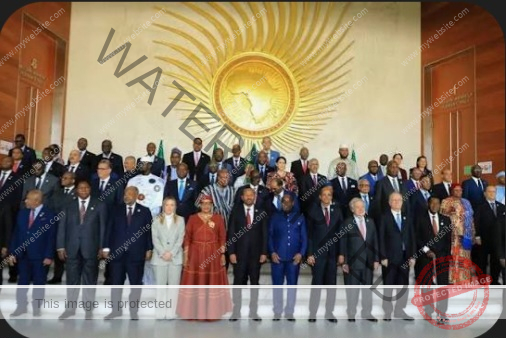
Addis Abba – July 15, 2026 -The true path to transforming Africa into a global economic powerhouse does not lie in the forced and artificial merger of distinct nations. It lies in the complete reimagining of continental cooperation. Africa must protect the foundational principles of sovereignty, borders, and territorial integrity contained in the African Union framework, while radically changing how Africans move, trade, invest, work, and build across the continent.
History has shown that forcing distinct peoples into a single centralized state under the language of unity often creates institutional decay, resentment, and, in extreme cases, conflict. Senegal and The Gambia attempted the Senegambia Confederation in the 1980s, but the arrangement collapsed because it could not overcome differences in political structure, national identity, institutional culture, and local realities. Cameroon and the Southern Cameroons, also known by many as Ambazonia, have likewise failed to build a just and durable political union under a centralized system, resulting in years of conflict, mistrust, displacement, and bloodshed.
Africa does not need forced political absorption. It needs structured economic integration. The model worth studying is not empire, annexation, or compulsory unity, but the operational logic of the European Union. Within the EU framework, large economies such as Germany coexist with smaller sovereign states such as Malta, Luxembourg, Estonia, Slovenia, and Cyprus. These countries retain their historical identities, national institutions, local laws, and political cultures, yet participate in a wider economic and regulatory space built on shared rules, negotiated obligations, and mutual benefit. Smaller states are not required to disappear into larger ones in order to participate in continental prosperity. They remain themselves while belonging to something bigger.
That is the lesson Africa must take seriously. A stronger African Union should not erase national identities or dissolve borders by force. It should make borders less economically destructive. It should allow Africans to move, work, trade, study, invest, and build across the continent without being treated as strangers in their own civilizational space. It should create continental opportunity without destroying national sovereignty.
Under this vision, Africa should move decisively toward a border-light continent driven by a single African passport, a decentralized digital Continental Identity Card, or a Unified African ID system recognized across all 55 African Union member states. Such a system would allow an Ambazonian to live in Kenya, a Ghanaian to build a company in Rwanda, a Nigerian engineer to work in Namibia, a Senegalese investor to develop property in Tanzania, and a Kenyan student to study in Botswana without being trapped by restrictive visa barriers, endless work-permit delays, or xenophobic administrative loops.
The principle should be simple and reciprocal: freedom of mobility, trade, enterprise, study, residence, and investment across Africa, balanced by full respect for the laws, customs, tax obligations, property rules, and security requirements of the host country. Continental freedom must not mean lawlessness. It must mean disciplined mobility within a rules-based African space.
This would be one of the most powerful economic reforms Africa could undertake. The continent’s greatest barrier is not only foreign exploitation; it is internal fragmentation. Africans are divided by borders they did not design, visa regimes they do not control, trade barriers that suffocate enterprise, and bureaucratic systems that make it easier for foreign capital to move across Africa than for Africans themselves to do so. A continent that restricts its own citizens while welcoming extractive foreign interests cannot become an economic powerhouse.
A Unified African ID system would help reverse this logic. It would support labor mobility, regional investment, cross-border entrepreneurship, professional licensing, student exchange, digital banking, property ownership, taxation, security screening, and lawful residence. It would also make it easier to track skills, connect African professionals to opportunity, and mobilize the continent’s human capital for productive development.
For Ambazonia, this vision is especially important. A free, productive, and well-governed Ambazonia should not be isolated. It should be deeply connected to the wider African economy: trading through the Gulf of Guinea, partnering with Nigeria, linking with Central and West Africa, participating in continental logistics, exporting skills and services, and welcoming lawful African enterprise. Its sovereignty should not become a wall. It should become a platform for contribution.
The future Africa should therefore not be built on the fear that small nations will be swallowed by large ones. It should be built on the confidence that small nations can thrive when continental rules protect equality, sovereignty, movement, trade, and opportunity. Malta does not need to become Germany in order to benefit from Europe. Estonia does not lose its identity because it participates in a wider European economic space. In the same way, Ambazonia should not have to disappear into another state in order to belong to Africa.
The African Union must become more than a ceremonial body of summits, communiqués, and elite diplomacy. It must become an economic engine that reduces internal barriers, protects African mobility, harmonizes standards, enables investment, strengthens continental infrastructure, promotes productive citizenship, and gives Africans practical rights across the continent. The AU should not imitate Europe blindly, but it should learn from one of Europe’s strongest achievements: the ability to turn historic rivalry into structured economic cooperation without requiring every nation to surrender its name, identity, or institutions.
The contract for a new Africa should be clear. Keep the distinct countries. Respect local laws. Protect sovereignty. Open mobility. Expand trade. Build continental infrastructure. Recognize African credentials. Defend property rights. Stop treating Africans as foreigners in Africa. Create a shared economic space where talent, capital, enterprise, and ideas can move faster than poverty, corruption, and conflict.
By keeping our distinct countries while opening our economies through a trusted continental identity and mobility system, Africa can finally begin to dismantle its internal barriers, protect its natural wealth from external exploitation, and build an undivided economic future for its children.
Africa does not need forced unity. It needs functional unity. It does not need artificial mergers. It needs continental mobility. It does not need the erasure of nations. It needs the liberation of African opportunity. That is how Africa becomes an economic powerhouse.
Timothy Enongene
Associate Editor-in-Chief, Independentist News




Leave feedback about this