








Sports Commentary

We are home to news on Cameroon and the CEMAC region. We are dedicated to honest and reliable reporting. We are the voice of the Cameroonian people and their fight for freedom and democracy at a time when the Yaoundé government is silencing dissent and suppressing democratic voices.

The 2026 World Cup has become one of the most Pan-African tournaments in history, not only because more African teams qualified, but because African teams have forced the world to take them seriously. Africa has risen. Africa is performing. Africa is transforming the global game. And the world is finally paying attention.
By M. C. Folo The Independentist News contributor
The World Cup has finally become a stage of African awareness. For decades, Africa entered the tournament carrying two burdens. The first was under-representation: too few places for a continent of 54 nations. The second was underestimation: a lazy global narrative that described African teams as talented, emotional, and entertaining, but somehow tactically immature.
The 2026 expansion corrected part of the first burden. Africa’s allocation rose to nine direct qualification places, with an additional route through the intercontinental playoff system. FIFA’s own competition information confirms the expanded African pathway and playoff structure for the 2026 tournament.
But what African teams have done with that opportunity has challenged the second burden even more powerfully. This is no longer a story of isolated African brilliance. It is a continental statement. Africa did not come merely to participate. Africa came to compete, disturb, and reshape the expectations of global football.
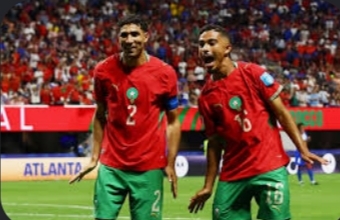
Morocco has again carried itself like a standard-bearer of African excellence. After its historic 2022 run, Morocco’s continued strength in 2026 has shown that African success is no longer accidental or sentimental. It is organized, tactical, disciplined, and repeatable. Morocco’s progress to the quarterfinal stage confirms that African football can stand not only on passion, but on structure and elite competitive intelligence.
Senegal also made history with a ruthless 5–0 victory over Iraq. That result was more than a scoreline. It marked the first time an African team scored five goals in a World Cup match, a performance that announced Senegal’s attacking power and Africa’s growing confidence on the biggest stage.
Across the tournament, African teams have shown that the old vocabulary is obsolete. The world can no longer speak of African football as merely physical, raw, or emotional. The modern African team is tactically literate. It can defend in compact blocks, press intelligently, transition at speed, manage difficult moments, and punish elite opponents. The players are global. The coaches are more sophisticated. The federations, despite their weaknesses, are learning. The diaspora has strengthened the talent pool. The continent’s football identity has matured.
This matters because football is never just football.It is culture. It is confidence. It is soft power. It is how nations and continents announce themselves to the world without filing a diplomatic note.
African players already shape Europe’s biggest leagues. African music, fashion, language, dance, and youth culture already influence global popular culture. African diaspora communities energize stadiums from Paris to London, New York, Toronto, Lisbon, Brussels, and beyond. The World Cup is simply catching up with a reality already visible in the streets, studios, clubs, and cities of the world: Africa is no longer peripheral to global culture.
Africa is a center of gravity.
The politics of representation also matters. The expanded World Cup was not charity. It was a correction. A continent with Africa’s population, footballing passion, cultural footprint, and talent base was long underrepresented. The 2026 format did not give Africa too much. It revealed that Africa had been given too little for too long.
That is why every African victory carries meaning beyond the field. When an African side frustrates a traditional giant, it challenges old assumptions. When an African team advances from a difficult group, it challenges old hierarchies. When African players dominate the tempo, defend with intelligence, and attack with confidence, they are not merely winning matches. They are rewriting perception. This is the deeper meaning of Africa’s World Cup ascendancy.
For generations, African nations were told to wait, develop, learn, mature, and accept their place in the global order. But football now offers a different image: African athletes standing shoulder to shoulder with the world’s best, not as guests, but as equals.
The lesson is powerful for the whole continent. Talent must be organized. Passion must be disciplined. Representation must be used. Opportunity must be converted into performance. Africa’s football rise shows what happens when access, preparation, confidence, and talent meet on a global stage.
The 2026 World Cup has therefore become one of the most Pan-African tournaments in history, not only because more African teams qualified, but because African teams have forced the world to take them seriously. Africa has risen. Africa is performing. Africa is transforming the global game. And the world is finally paying attention.
M. C. Folo The Independentist News contributor
Share This Post:
Climate Change and Coastal Resilience: Why Africa Must Redesign Its Coastline for the Storms of Tomorrow Part (III)
As Yaoundé Weakens, Ambazonia Must Respond with Discipline, Not Emotion
Related Post
PROPHECY, POLITICS, AND THE AMBAZONIAN QUESTION (PART III) Why
WHEN YAOUNDÉ’S ALLIES SUDDENLY ENDORSE AYUK TABE: SOLIDARITY OR
THE SECOND RETURN: FROM THE PAIN OF SEPARATION TO
WHEN THE REGULATOR BENDS: WHAT THE VISION 4 AFFAIR
PROPHECY, POLITICS, AND THE AMBAZONIAN QUESTION (PART II) :
IF SOMALILAND MATTERS TO WASHINGTON, WHY NOT SOUTHERN CAMEROONS?