









News commentary

We are home to news on Cameroon and the CEMAC region. We are dedicated to honest and reliable reporting. We are the voice of the Cameroonian people and their fight for freedom and democracy at a time when the Yaoundé government is silencing dissent and suppressing democratic voices.

If South Africa truly believes that “I am because we are,” then it must prove that “we” includes the African migrant, the Ghanaian worker, the Nigerian trader, the Malawian laborer, the Zimbabwean refugee, and every African whose humanity cannot be erased by a passport.
By Ali Dan Ismael Editor-in-chief The Independentist News
A Diplomatic Postponement with Moral Meaning
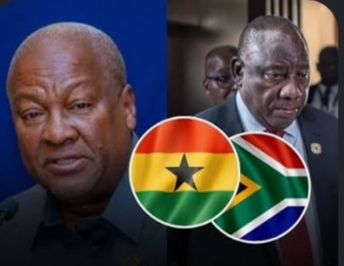
Ghana’s decision to postpone the planned state visit of South African President Cyril Ramaphosa is more than a routine diplomatic adjustment. It is a moral statement. At the center of the controversy is a painful contradiction: a country that once benefited from Africa’s sacrifices in the struggle against apartheid is now witnessing fellow Africans being harassed, threatened, and forced to flee its territory.
The Immediate Cause: Xenophobic Hostility
The immediate cause is the resurgence of xenophobic hostility in South Africa. Recent reports indicate that Ghana has begun repatriating citizens after anti-immigrant protests, threats against foreign nationals, and viral incidents that shocked many Ghanaians at home and abroad. One of the most widely discussed cases involved Emmanuel Asamoah, a Ghanaian citizen who was reportedly harassed in South Africa and later repatriated to Ghana amid fears for his safety.
Why Ramaphosa’s Visit Could Not Proceed
This is why Ramaphosa’s visit could not proceed as though nothing had happened. A state visit is a ceremony of friendship. It carries flags, speeches, handshakes, photographs, and declarations of brotherhood. But brotherhood cannot be performed on red carpets while citizens of the host country are being threatened in the visiting president’s country. Ghana’s postponement was therefore not an insult to South Africa. It was a reminder that African solidarity must be real, not ceremonial.
Ghana’s Place in the Anti-Apartheid Struggle
The historical irony is impossible to ignore. Ghana was one of the earliest and loudest African voices against colonialism and apartheid. Under Kwame Nkrumah, Ghana helped shape the language of African liberation and gave moral force to the idea that the freedom of one African people was incomplete without the freedom of all African peoples. South Africa’s liberation struggle was never South Africa’s burden alone. It was carried by many African nations that paid diplomatic, political, and economic costs to isolate apartheid and defend the humanity of black South Africans.
The Painful Betrayal of African Solidarity
That is why today’s xenophobia cuts so deeply. The tragedy is not only that foreigners are being blamed for unemployment, crime, poverty, and pressure on public services. The deeper tragedy is that African migrants have become convenient scapegoats for failures of governance, economic exclusion, and social inequality. South Africa’s own history should have taught the world that dehumanization begins when people are reduced to labels. Today, words such as “foreigner,” “illegal,” and “outsider” are being used by mobs and political opportunists in ways that echo the logic of exclusion South Africans themselves once suffered under apartheid.
Ubuntu and the Moral Contradiction
The contradiction becomes even sharper when measured against South Africa’s own moral language of Ubuntu. Ubuntu, rooted in the Nguni/Bantu traditions of Southern Africa and commonly associated with Zulu and Xhosa thought, teaches that human beings become fully human through one another. It is often expressed as, “I am because we are.” It is a philosophy of human dignity, shared responsibility, hospitality, and moral community. If Ubuntu means anything, it must mean that the African stranger is not disposable, the migrant is not subhuman, and the foreigner is not an enemy merely because he or she was born across a border.
Where Is Ubuntu When Africans Are Being Chased Out?
So the question must be asked plainly: where is Ubuntu when Africans are being chased out? Where is Ubuntu when Ghanaians, Nigerians, Malawians, Zimbabweans, Mozambicans, and other Africans are threatened in the land Mandela helped free? Where is Ubuntu when political opportunists use poverty and unemployment to turn the poor against the poor? If Ubuntu is invoked in speeches while African migrants are hunted in streets, insulted in communities, and forced to return home in fear, then Ubuntu has been reduced from a moral philosophy to diplomatic decoration.
The Betrayal Is Not Ubuntu, but Its Misuse
The problem is not Ubuntu itself. Ubuntu is not the deception. Ubuntu is a genuine African moral philosophy. The deception begins when leaders praise Ubuntu publicly but fail to defend the African dignity Ubuntu demands in practice. The betrayal is not in the word. The betrayal is in the gap between the word and the conduct of the society that claims it.
The Responsibility of the South African State
President Ramaphosa has condemned vigilante violence and emphasized that immigration enforcement is the responsibility of the state, not mobs. That is important, but it is not enough. South Africa must do more than issue statements. It must protect foreign nationals, prosecute attackers, restrain inflammatory politics, and separate legitimate immigration management from xenophobic hatred. No serious state can allow private groups to decide who belongs, who works, who trades, or who must leave.
Xenophobia Cannot Solve South Africa’s Problems
South Africa also has real domestic problems. Unemployment, inequality, crime, housing pressure, and weak public services are not imaginary. But migrants did not create South Africa’s structural crisis. To blame Africans from Ghana, Nigeria, Malawi, Mozambique, Zimbabwe, or elsewhere is to misdiagnose the disease. Xenophobia may produce emotional satisfaction for the angry, but it cannot create jobs, repair schools, improve policing, build industries, or restore public trust. Anti-migrant politics is not development policy. It is a dangerous distraction.
Building Productive Communities as the Real Answer
The deeper answer for Africa is not merely to condemn xenophobia, but to build economies that reduce desperation. Africans must begin strengthening the productive assets of their own communities: farms, skills, small businesses, cooperatives, schools, clinics, markets, infrastructure, technology, and local industries. That is the only realistic way to escape desperation without destroying the economic lifelines that immigrant communities often create to solve local problems. No community can build lasting dignity by relying only on handouts from richer communities or waiting endlessly for government rescue. Opportunity expands when people invest in the foundations of production, enterprise, and self-reliance. When communities strengthen their own productive base, they create jobs, reduce migration pressure, build confidence, and weaken the politics of resentment that turns poor people against one another.
Ghana’s Message to South Africa
For Ghana, the postponement of Ramaphosa’s visit sends a necessary message: friendship between states must include protection for citizens. African diplomacy cannot be reduced to summit speeches while ordinary Africans are abandoned in the streets. If South Africa wants to lead the African agenda, it must first prove that Africans are safe within South Africa.
Pan-Africanism Must Become Practice
For the rest of Africa, the lesson is broader. Pan-Africanism cannot survive as nostalgia. It cannot live only in references to Nkrumah, Mandela, the ANC, liberation movements, and anti-colonial history. It must become a living ethic of governance. African states must protect their citizens abroad, treat foreign Africans with dignity at home, and reject the politics of scapegoating.
The Ambazonian Lesson
For Ambazonia, the lesson is especially important. A future republic must never build nationalism on hatred of outsiders. A serious state has the right to regulate immigration, protect jobs, secure borders, enforce labor laws, and defend public order. But those functions must be carried out through law, courts, institutions, and human dignity — never through mobs, humiliation, ethnic hatred, or violence.
Liberation Alone Does Not Guarantee Justice
The South African case is therefore a warning. Liberation alone does not guarantee justice. A country can defeat apartheid and still struggle with the moral discipline required to build a humane society. Ghana’s postponement of Ramaphosa’s visit should not be seen merely as diplomatic embarrassment. It should be seen as Africa holding up a mirror to South Africa and asking a painful question: after all that Africa did to help defeat apartheid, how can Africans now be made to feel unsafe in the land Mandela helped free?
Ubuntu Must Become a Discipline of Public Life
The answer will not come from speeches. It will come from protection, accountability, and a renewed commitment to the simple truth that African dignity cannot stop at national borders. Ubuntu must not be a slogan for conferences, speeches, and diplomatic ceremonies. It must be a discipline of public life. If South Africa truly believes that “I am because we are,” then it must prove that “we” includes the African migrant, the Ghanaian worker, the Nigerian trader, the Malawian laborer, the Zimbabwean refugee, and every African whose humanity cannot be erased by a passport.
Ali Dan Ismael Editor-in-chief The Independentist News
Share This Post:
From Egypt–Argentina 2026, to Cameroon–England 1990: Lessons in Tenacity
How The Gambia Remains Independent Within Senegal: Lessons for Ambazonia
Related Post
THE CARETAKER PRESIDENCY: PAUL BIYA, FRANCE, AND CAMEROON’S UNFINISHED
THE ADF–ATANGA NJI FILES: WHAT THE WITNESSES SAY AND
OCTOBER 1 IS COMING: PREPARE FOR THE ANNIVERSARY, NOT
CRTV MUST EXPLAIN ITSELF: WHEN A STATE CONTROLS THE
A chat with Adelle Nazarian of The Western Journal:
THE LESSON OF HAITI: WHEN A NEIGHBOUR HELPED A