











Ambazonia’s future will not be determined by the rise or decline of any single power. It will be determined by the strength of its institutions, the quality of its leadership, the productivity of its economy, and the confidence with which it engages the international community.
By Ali Dan Ismael
Editor-in-chief The Independentist News
A World in Transition
For more than seventy years, the international system was largely defined by Western leadership. The United States and its European allies shaped global security, trade, finance, diplomacy, and international institutions. While disagreements certainly existed, the transatlantic alliance remained the cornerstone of the post-Second World War order. Today, that world is changing.
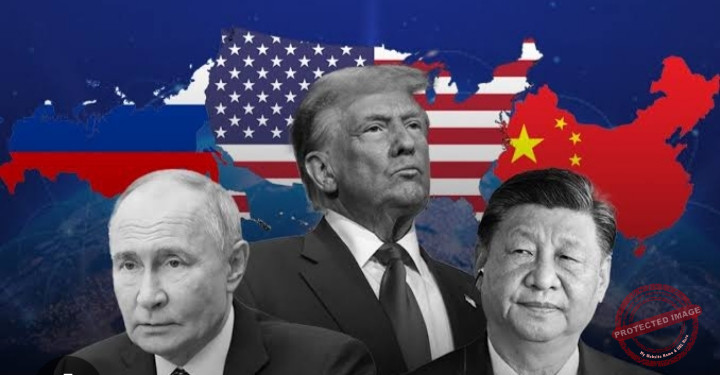
Strategic disagreements between the United States and Europe, debates over NATO’s future, competition with China, Russia’s renewed assertiveness, shifting energy politics, and the rise of influential regional powers are reshaping the global balance of power. The emerging international order is no longer dominated by a single geopolitical center. It is becoming increasingly multipolar. For emerging nations, this is not merely international news. It is a strategic reality.
The End of Assumptions
The changing relationship among Western allies should not be interpreted as the collapse of the West. Rather, it marks the end of assumptions that have guided international politics for decades. Countries can no longer assume that alliances will remain permanent, that foreign policy priorities will remain constant, or that economic relationships will be immune from geopolitical competition. The lesson is simple: every nation must prepare for greater uncertainty.
What This Means for Ambazonia
For Ambazonia, the changing global order presents both challenges and opportunities. A future republic cannot afford to build its diplomacy around dependence on any single country or political bloc. Instead, it must pursue a foreign policy rooted in national interest, constitutional governance, and strategic flexibility.
The Republic should seek constructive relations with the United States, the European Union, the United Kingdom, the African Union, Nigeria, China, India, Japan, the Gulf states, and every nation willing to engage on the basis of mutual respect. Friendship should be broad. Dependence should be avoided.
Institutions Matter More Than Alliances
History demonstrates that countries attract international respect not because of who their friends are, but because of the quality of their institutions. Strong courts inspire investor confidence. Transparent governance attracts international partners. Professional public administration creates stability. Economic competitiveness generates influence. Democratic legitimacy strengthens diplomatic credibility. The world’s most successful small nations have earned respect through competence rather than size. Ambazonia must aspire to do the same.
Economic Diplomacy Is the New Frontier
In the twenty-first century, influence increasingly follows investment rather than ideology. Countries compete to attract technology, capital, innovation, manufacturing, and highly skilled talent. Investors are less concerned with political slogans than with predictable regulations, secure property rights, reliable infrastructure, and an independent judiciary. The strongest foreign policy begins with a strong domestic economy. For Ambazonia, economic diplomacy should become one of the principal pillars of national strategy.
Strategic Neutrality in a Multipolar World
The emerging global order requires wisdom rather than emotion. Strategic neutrality does not mean indifference. It means preserving the freedom to cooperate widely while maintaining full control over national decision-making.
Ambazonia should avoid becoming entangled in ideological rivalries among major powers. Instead, it should engage every partner on the basis of shared interests, peaceful cooperation, and sustainable development. A nation that preserves its strategic independence is better positioned to seize opportunities wherever they arise.
Preparing for Tomorrow
The world Ambazonia hopes to join is changing rapidly. New technologies are transforming economies. Supply chains are being reorganized. Artificial intelligence is reshaping industries. Competition for critical minerals, energy, and innovation is intensifying. These changes demand foresight rather than reaction.
They require governments capable of anticipating global trends instead of merely responding to crises. That is why national planning, institutional excellence, and long-term strategic thinking are no longer optional. They are essential.
A Republic Ready for the Future
The changing West does not signal the decline of international cooperation. Rather, it signals the emergence of a more competitive and more complex world. For Ambazonia, this is not a cause for anxiety. It is an invitation to prepare.
Ambazonia’s future will not be determined by the rise or decline of any single power. It will be determined by the strength of its institutions, the quality of its leadership, the productivity of its economy, and the confidence with which it engages the international community.
The age of certainty is giving way to the age of strategy. The West is changing. The world is changing.Ambazonia must be ready.
Ali Dan Ismael
Editor-in-chief The Independentist News





Leave feedback about this