









News commentary

We are home to news on Cameroon and the CEMAC region. We are dedicated to honest and reliable reporting. We are the voice of the Cameroonian people and their fight for freedom and democracy at a time when the Yaoundé government is silencing dissent and suppressing democratic voices.

The emerging global order does not require Africa to isolate itself from the world. On the contrary, Africa must remain engaged internationally. However, future relationships should be based on partnership rather than dependency. Cooperation should strengthen African capacity rather than replace it. Foreign investment should support African development rather than merely extract African resources. The era of permanent reliance on external actors must give way to an era of mutual respect and shared interests.
By Ali Dan Ismael Editor-in-Chief The Independentist News
The End of the Old Order
The post-G7 world presents Africa with a reality that can no longer be ignored. The era in which the continent could rely on foreign donors, external security guarantees, and international institutions to compensate for its internal weaknesses is rapidly drawing to a close. The signals coming from Washington, Paris, Brussels, and other Western capitals are unmistakable: every nation will increasingly be expected to carry its own weight.
The tensions exposed during the recent G7 Summit, particularly between the United States and its European allies, reflect a broader transformation in international relations. The assumptions that governed the post-Cold War era are being challenged. The world is becoming more transactional, more competitive, and increasingly driven by national interests.
The Illusion of Sovereignty Without Independence
For decades, African leaders spoke the language of sovereignty while operating within systems heavily dependent on external financing and support. Governments looked abroad for development funding. Regional organizations depended on foreign contributions to sustain their operations. Security arrangements often relied on external military assistance. Yet sovereignty cannot flourish where dependency dominates.
Political independence achieved in the twentieth century was an important milestone, but political independence without economic autonomy remains incomplete. Nations that cannot finance their own priorities will inevitably find those priorities shaped by others.
The Hidden Cost of Dependency
The changing international environment should not be viewed as a crisis but as a historic opportunity. The gradual retreat of the old order forces African nations to confront questions that have been postponed for far too long. How can a continent rich in natural resources remain dependent on external aid. How can institutions claim strategic autonomy while relying on foreign funding for survival? How can nations speak of independence while depending on external powers to secure their borders and maintain stability? The answers lie not in finding new patrons but in building new capacities.
The AES Challenge to the Status Quo
The experience of the Alliance of Sahel States (AES) has demonstrated that increasing numbers of Africans are questioning old assumptions. Whether one agrees with every policy adopted by Mali, Burkina Faso, and Niger is beside the point.
What matters is that they have reopened the debate about sovereignty, self-reliance, and the right of African states to define their own paths. They have challenged a system that too often rewarded dependency while discouraging genuine autonomy.
For the first time in decades, African leaders are openly asking whether foreign military presence, donor-driven governance models, and externally financed institutions have truly delivered the promised results.
Building Economic Independence
Africa’s future will not be secured in foreign capitals. It will be secured in African factories, African farms, African universities, African research centers, and African institutions capable of financing and sustaining themselves.
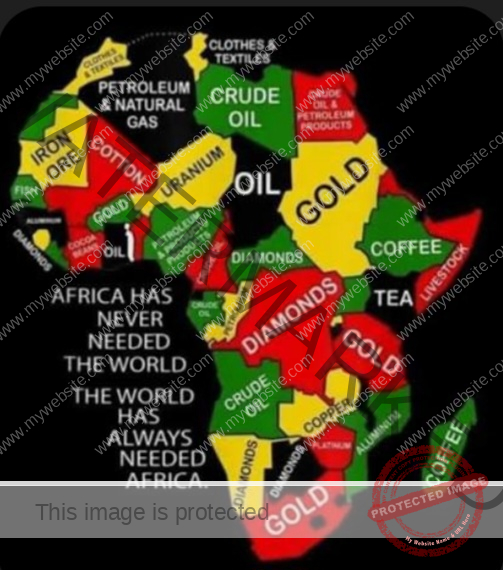
The continent must move beyond exporting raw materials and importing finished products. It must move beyond aid dependency and embrace productive economies capable of generating wealth from within.
Industrialization, agricultural modernization, technological innovation, and regional trade integration must become the pillars of a new African development model.
Financing African Institutions
The African Union itself must undergo a fundamental transformation. An organization that depends significantly on external financing cannot fully exercise strategic independence.
If Africa is serious about continental integration and African solutions to African problems, then African states must be prepared to finance the institutions that represent them.Political sovereignty requires financial sovereignty.
The same principle applies to regional economic communities, development banks, and peacekeeping structures. African institutions must be funded primarily by Africans if they are to serve African interests without external influence.
Security Without Foreign Guardians
The same applies to security. For too long, African governments have outsourced critical aspects of national and regional security to external actors. The future demands stronger African defense industries, enhanced intelligence cooperation, and regional security frameworks designed and funded by Africans themselves. Cooperation with external partners should continue, but it must be based on mutual interest rather than dependency. No continent can claim strategic autonomy while relying indefinitely on foreign powers to guarantee its security.
Leadership and Accountability
Equally important, African leaders must recognize that sovereignty begins with accountability. No amount of foreign interference can explain away corruption, mismanagement, poor governance, or the failure to invest in human development. The age of responsibility demands a new political culture—one in which leaders are accountable to their citizens rather than external benefactors and where national development is driven by long-term vision rather than short-term political survival. The responsibility for Africa’s future rests first and foremost with Africans themselves.
From Dependency to Partnership
The emerging global order does not require Africa to isolate itself from the world. On the contrary, Africa must remain engaged internationally. However, future relationships should be based on partnership rather than dependency. Cooperation should strengthen African capacity rather than replace it. Foreign investment should support African development rather than merely extract African resources. The era of permanent reliance on external actors must give way to an era of mutual respect and shared interests.
Africa’s Historic Opportunity
The world is entering a more competitive and less forgiving era. Great powers are increasingly prioritizing their own interests. International partnerships are becoming more transactional. Resources are becoming more contested. In such an environment, nations that cannot stand on their own feet will find themselves increasingly vulnerable.
Yet this moment also presents Africa with a historic opportunity to redefine its place in the world. The decline of dependency creates space for genuine sovereignty. The retreat of external patrons creates incentives for self-reliance. What appears to be a challenge today may ultimately become the foundation of a stronger and more independent continent.
The Age of Responsibility Has Begun
For Africa, the message is clear. The future belongs to those who build, produce, innovate, and govern effectively. It belongs to nations capable of transforming sovereignty from a slogan into a lived reality. The old era of dependency is fading. The age of responsibility has begun. The question is no longer whether Africa is ready for it. The question is whether Africa is willing to embrace it.
— Ali Dan Ismael Editor-in-Chief The Independentist News
Share This Post:
Beyond Waiting: Connecting with God Through Responsibility
NAVIGATING THE NIGERIAN POLITICAL LABYRINTH: The Strategic Realignment of Peter Obi and the Rise of a New Political Consciousness
Related Post
AMBAZONIA’S WAR- IS BIGGER THAN YAOUNDÉ: BRITAIN, FRANCE AND
THE DAY SEPTEMBER 22 1961: — WHAT AMBAZONIA CAN
TRUMP’S “SUPER INTELLIGENCE” ERA: WHAT IT REALLY MEANS —
Why Is Ambazonia More Powerful Than many Imagine.
THIS DAY IN HISTORY SEPTEMBER 22, 2017: THE DAY
A President Unseen, a Country Waiting: Yaoundé’s Succession Uncertainty