










Commentary

We are home to news on Cameroon and the CEMAC region. We are dedicated to honest and reliable reporting. We are the voice of the Cameroonian people and their fight for freedom and democracy at a time when the Yaoundé government is silencing dissent and suppressing democratic voices.

Such a vision requires investment, planning, and political will. But above all, it requires the belief that our natural advantages were meant to serve our people rather than remain dormant. The Atlantic Ocean has always been there. The deep waters have always been there. The opportunity has always been there. The challenge before us is whether we will finally seize it. The ports are not merely about ships and cargo. They are about jobs, prosperity, dignity, and the future economic destiny of a people.
By Timothy Enongene.Associate Editor-in-Chief, The Independentist New
The Sea That Was Never Allowed to Serve Its People
Nature was generous to Ambazonia. Stretching along the Atlantic Ocean, our coastline possesses some of the greatest economic assets any nation could hope for. The deep waters of Victoria, the historic commercial waterways of Tiko, and our strategic location in the Gulf of Guinea should have made our homeland one of the principal maritime gateways of Central Africa.
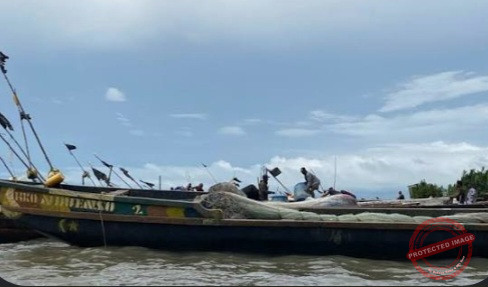
Yet today, visitors to Victoria and Tiko encounter a very different reality. Instead of bustling ports, container terminals, and thriving commercial activity, they find largely underutilized waterfronts, struggling fishing communities, and untapped economic potential
This raises an important question: how did a territory blessed with such natural maritime advantages fail to develop major ports capable of transforming the regional economy?
The Concentration of Maritime Power
For decades, economic activity has been concentrated around Douala, which remains Cameroon’s principal commercial port. As a result, nearly all imports and exports destined for the territory of Southern Cameroons have been routed through infrastructure controlled elsewhere. This concentration of maritime commerce has produced winners and losers.
Customs revenues are collected elsewhere. Employment opportunities associated with shipping, logistics, customs clearing, warehousing, and maritime services are generated elsewhere. Investment in supporting infrastructure follows the same pattern. Meanwhile, communities in Victoria and Tiko have watched opportunities pass them by.
Supporters of greater economic autonomy argue that this pattern was not simply the result of market forces. They contend that successive governments deliberately prioritized Douala while postponing or abandoning major maritime projects that could have transformed the economy of Southern Cameroons. Whether by design or neglect, the result has been the same: decades of unrealized potential.
Why Victoria Matters
Among maritime experts, Victoria’s greatest advantage is well known. Its naturally deep coastal waters provide conditions that many ports around the world spend billions of dollars attempting to create artificially through dredging and expansion projects. This deep-water access allows larger vessels to dock more efficiently, reduces maintenance costs, and creates opportunities for international shipping lines seeking competitive alternatives.
Many observers therefore believe that a modern Victoria Port could become a significant commercial hub not only for Southern Cameroons but for the wider Gulf of Guinea region. The question is no longer whether the natural advantages exist. The question is why those advantages have remained largely undeveloped.
The Human Cost
Behind every abandoned infrastructure project lies a human story. The absence of major port development has implications far beyond shipping statistics. Thousands of potential jobs in transportation, logistics, customs services, warehousing, engineering, construction, and international trade have never materialized.
Businesses face higher transportation costs as goods travel long distances through congested corridors before reaching local markets. Consumers ultimately pay more for basic commodities. Young people seeking employment are often forced to migrate elsewhere in search of opportunities that could have existed at home. These costs are not always visible, but they are real.
Beyond Politics: An Economic Question
Regardless of political affiliation, one fact is difficult to dispute: nations prosper when they maximize their natural advantages. Singapore embraced its strategic location and became one of the world’s leading maritime powers. Dubai transformed itself into a global logistics hub. Panama leveraged its geographic position to become indispensable to international commerce. The lesson is simple. Geography can be either a blessing or a wasted opportunity.
For Southern Cameroons, the ports of Limbe and Tiko represent more than infrastructure projects. They symbolize the possibility of economic self-reliance, regional competitiveness, and long-term prosperity.
Looking Toward the Future
The future of Ambazonia’s coastline should not be defined by what was neglected in the past. Instead, it should be guided by a clear vision of what is possible. A modern deep-water port in Limbe, supported by industrial zones in Tiko and linked to efficient transportation networks, could transform the region into a major commercial gateway for West and Central Africa.
Such a vision requires investment, planning, and political will. But above all, it requires the belief that our natural advantages were meant to serve our people rather than remain dormant. The Atlantic Ocean has always been there. The deep waters have always been there. The opportunity has always been there. The challenge before us is whether we will finally seize it. The ports are not merely about ships and cargo. They are about jobs, prosperity, dignity, and the future economic destiny of a people.
Timothy Enongene.Associate Editor-in-Chief, The Independentist New
Share This Post:
THE MARTINEZ ZOGO HORROR: ANATOMY OF A COMPLACENT, TERROR-DRIVEN REGIME
THE MELONI DOCTRINE AND THE AMBAZONIAN QUESTION: CAN EUROPEAN NATIONALISM BECOME AN ALLY OF AFRICAN SELF-DETERMINATION?
Related Post
SPIRITUAL CHOKE POINT, Guidance, Gatekeeping, and the Recovery of
WHEN INDEPENDENCE BECOMES STATECRAFT: What Scotland, Wales and Ireland’s
Dr. Martin Mungwa publishes Southern Cameroons 2050 : why
Adelle Nazarian of the Western Journal calls on the
NKAMOUNA, WASHINGTON, AND THE NEW POLITICS OF AFRICA’S STRATEGIC
When Conflict Becomes an Economy The Political Economy of