










Commentary

We are home to news on Cameroon and the CEMAC region. We are dedicated to honest and reliable reporting. We are the voice of the Cameroonian people and their fight for freedom and democracy at a time when the Yaoundé government is silencing dissent and suppressing democratic voices.

The Yaoundé doves incident will likely be remembered not because of the Archbishop’s speech, but because of what happened after the speech ended. Political systems survive on carefully controlled images. But occasionally reality interrupts the performance.
By Timothy Enongene Associate Editor-in-Chief, The Independentist News
When Political Theatre Meets Reality
There are moments in history when symbolism collapses under the weight of truth. Moments when carefully staged political spectacles unravel so publicly that even nature itself appears unwilling to cooperate. That is precisely what unfolded in Yaoundé during a highly publicized peace ceremony led by Jean Mbarga, the Metropolitan Archbishop of Yaoundé.
What was intended to become a powerful national image of unity and peace instead transformed into an unforgettable metaphor for a regime many critics believe has lost both moral legitimacy and spiritual credibility. The scene has since become known among many observers as “The Doves Joke.”
The Ceremony of Peace
The event followed a familiar script. With the conflict in Southern Cameroons (Ambazonia) continuing to generate suffering, displacement, fear, and political tension, establishment figures in Yaoundé sought a symbolic moment capable of projecting calm, stability, and spiritual authority.
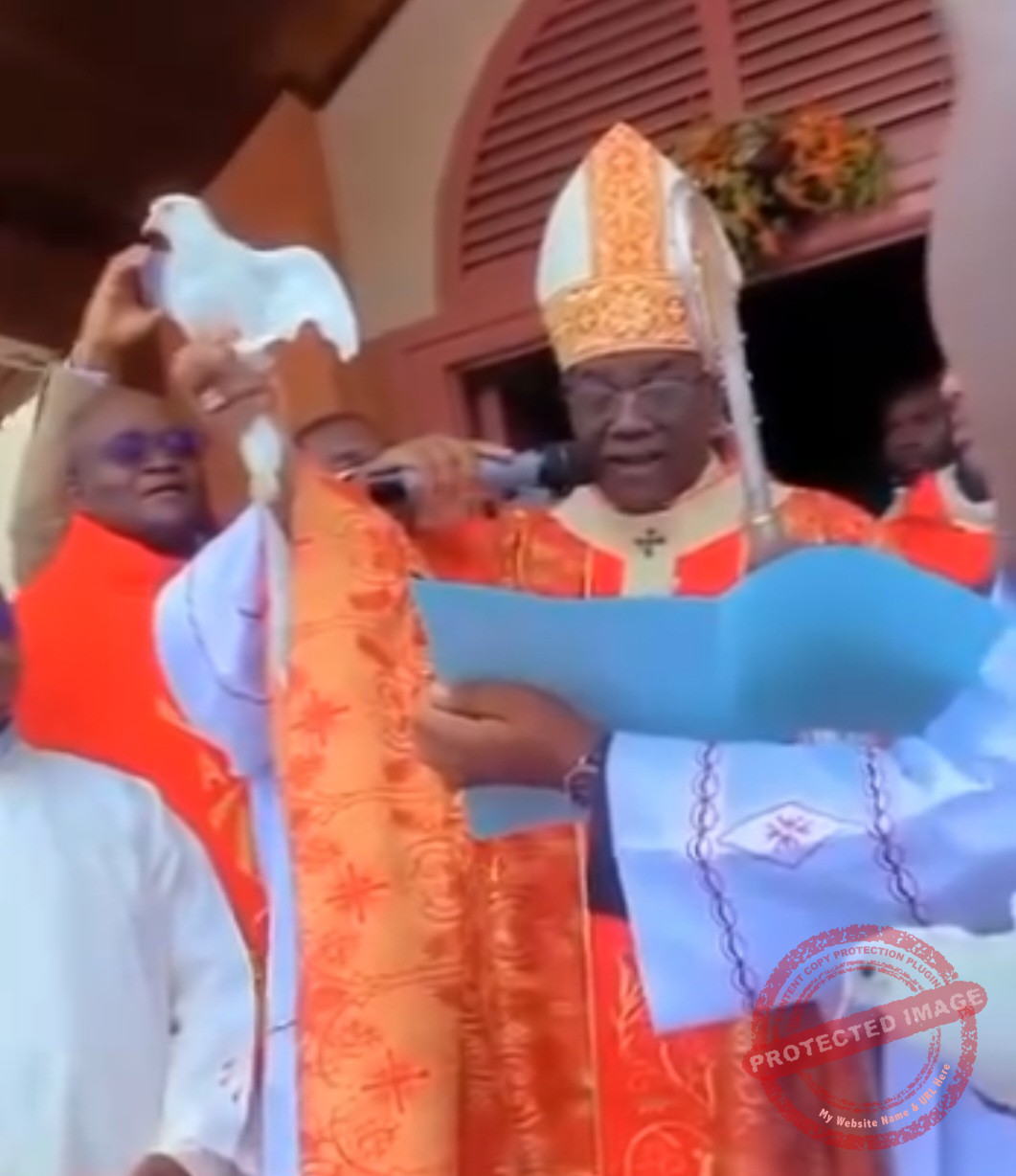
Archbishop Jean Mbarga stood before the cameras holding two white doves. In Christian symbolism, the white dove represents peace, purity, divine presence, and the Holy Spirit itself. The visual message was obvious: peace under the protection of heaven. The Archbishop delivered prayers and public remarks calling for reconciliation and peace. Then came the climactic moment.
The birds would be released into the sky. The cameras rolled. The crowd watched. And then everything collapsed. When the Doves Refused The first dove did not soar. Instead, it hesitated awkwardly and failed to fly away as expected. The second dove did the same. What was designed to become a majestic spiritual image instantly transformed into public embarrassment. The symbolism was impossible to ignore. The birds simply refused to cooperate with the script. And in a country where symbolism carries enormous cultural and spiritual meaning, many ordinary citizens interpreted the moment as something far greater than an accident.
The Public Interpretation
For many viewers, the failed release represented more than an unfortunate ceremonial mishap. It became a metaphor. A visual commentary on the contradiction between official calls for peace and the lived reality experienced by millions affected by political violence, arrests, military operations, displacement, and repression.People asked uncomfortable questions: Can there be genuine peace without justice? Can religious symbolism substitute for political accountability? Can spiritual authority remain credible when it appears too closely aligned with state power? The failed dove release became powerful precisely because it was unscripted. No speech could control it. No press release could fully erase it.And no political spin could prevent the public from attaching meaning to the image.
The Crisis of Moral Authority
Critics have increasingly accused segments of the religious establishment in Cameroon of becoming too politically comfortable with state authority. For many disillusioned citizens, the issue is not religion itself.It is proximity to power. Throughout history, religious institutions have often faced difficult choices during periods of political crisis: stand beside the suffering,remain neutral, or align themselves with the ruling establishment in the name of stability. The controversy surrounding Archbishop Jean Mbarga reflects this broader tension.
To critics, public ceremonies calling for peace ring hollow when deeper questions of justice, accountability, constitutional legitimacy, and political violence remain unresolved. In such circumstances, symbolism without structural change begins to feel performative. And the public notices. The Dangerous Illusion of Cosmetic Peace
One of the central lessons of the Yaoundé dove incident is that peace cannot simply be staged for cameras. True peace requires legitimacy. It requires trust. It requires justice. And above all, it requires that ordinary people believe institutions genuinely represent moral truth rather than political convenience. Without those foundations, peace ceremonies risk becoming public relations exercises disconnected from reality on the ground. That is why the failed Doves incident resonated so deeply with many citizens. The image unintentionally captured a national contradiction: a state attempting to project peace while many communities continue experiencing fear, grief, division, and political uncertainty.
A Symbol That Will Not Disappear
The irony of the moment is almost literary. A ceremony designed to demonstrate divine harmony instead produced one of the most politically symbolic images of the year. The doves did not attack. They did not create chaos. They simply refused to participate. And sometimes, quiet refusal carries a more powerful impact than open rebellion.
Final reflection
The Yaoundé dove incident will likely be remembered not because of the Archbishop’s speech, but because of what happened after the speech ended. Political systems survive on carefully controlled images. But occasionally reality interrupts the performance. For many Cameroonians and Ambazonians watching that day, the failed flight of the doves symbolized something larger than one ceremony. It symbolized a growing crisis of confidence. A crisis in political legitimacy. A crisis in moral authority. And perhaps most importantly, a growing public belief that peace without justice is merely theatre dressed in white robes and released before cameras hoping the birds will fly.
Timothy Enongene Associate Editor-in-Chief, The Independentist News
Share This Post:
FRANCE FINALLY BURIES THE BLACK CODE. WHEN WILL THE WORLD CONFRONT THE COLONIAL QUESTION OF AMBAZONIA?
The Chop Broke Pot Republic: How the Destruction of Ambazonia Became an Albatross Around Yaoundé’s Neck
Related Post
Dr. Martin Mungwa shares the mile stone of the
DION NGUTE’S DIALOGUE NARRATIVE: AMBAZONIA AND LRC ARE NOT
AMBA WARRIOR (Hon Che) ADDRESSES A MESSAGE TO ERIC
An Ambazonian Patriot writes to the editor from home
Dr. DAVID MAKONGO: CALLS FOR DIALOGUE WITH AYUK TABE,
QUEBEC VOTED FOR INDEPENDENCE AS AN OPTION, WHY WAS