










Commentary

We are home to news on Cameroon and the CEMAC region. We are dedicated to honest and reliable reporting. We are the voice of the Cameroonian people and their fight for freedom and democracy at a time when the Yaoundé government is silencing dissent and suppressing democratic voices.

Trump unsettles elites not merely because of his personality. He unsettles them because he represents unpredictability inside the most powerful nation on Earth. For decades, Western governments relied upon: predictable American foreign policy, stable alliance systems, global free trade, and institutional diplomacy. Trump disrupted all of that.
By Dr. Martin S. Mungwa, F.ASCE The Independentist News contributor.
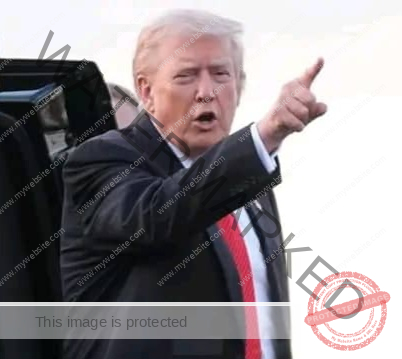
Love him or hate him, one reality has become impossible for the political establishment across Europe, Canada, and parts of the Western alliance to ignore: When Donald Trump speaks, governments react.
From Ottawa to Brussels to London, Trump’s political return has reintroduced something many Western elites had grown uncomfortable with: raw geopolitical pressure backed by American economic and military power.
For decades, much of the Western political class believed the post-Cold War order was permanent:
globalization, technocratic governance, open borders, bureaucratic integration, and supranational institutions.
Then Trump arrived. And suddenly the entire system began shaking. Nations First. Trump’s message is brutally simple: Nations matter. Borders matter. Manufacturing matters. Energy independence matters. Military strength matters.
Sovereignty matters. To supporters, this sounds like common sense. To many establishment leaders across Europe, it sounds dangerous.
Why? Because much of modern Western governance increasingly shifted power away from nation-states and toward large bureaucratic systems like the European Union. Trump challenges that model directly.
The Builder vs. The Bureaucrat
Many politicians misunderstand Trump because they misunderstand his background. Trump did not emerge from academia or bureaucracy. He emerged from construction, leverage, negotiation, branding, and real-world asset development. Before politics, he built: towers, hotels, resorts, licensing systems, entertainment brands, and large-scale infrastructure projects. Builders think differently. They think in terms of: leverage, cash flow, survivability, negotiation pressure, debt structures, and long-term asset value. Most politicians manage systems. Trump thinks in terms of constructing systems. That difference explains much of his political philosophy.
Feed the Goose
One principle explains Trump’s worldview better than almost anything else: If you do not feed your goose, it cannot lay golden eggs. Factories matter.
Industry matters. Infrastructure matters. Agriculture matters. Energy matters. Innovation matters. These are the productive geese that create national wealth.
For decades, many Western governments prioritized: financialization over production,
bureaucracy over industry, debt expansion over asset creation, and consumption over regeneration. Trump’s argument is simple: A civilization cannot endlessly consume productive capacity while destroying the systems that generate prosperity.
That philosophy closely aligns with the Feed the Goose framework developed by Robert D. Jones and Dr. Martin S. Mungwa, which argues that sustainable prosperity comes from strengthening productive systems rather than endlessly extracting from them.
America Fed Everyone Else’s Goose
At the center of Trump’s worldview lies a controversial argument: For decades, America fed other nations’ geese while starving its own. China expanded through: American consumers, American capital, American technology, and outsourced American manufacturing.
Europe maintained industrial protections while relying heavily on American military protection through NATO. Meanwhile: factories closed,
supply chains moved overseas, industrial towns collapsed, and strategic dependency increased.
Trump’s supporters believe America became the engine powering everyone else’s prosperity while weakening its own productive foundations. That is why his message resonates in industrial America. To many voters, Trump is not merely talking about tariffs. He is talking about survival.
Why Europe Is Nervous
Few figures symbolize this tension more than Ursula von der Leyen. Under her leadership, the European Commission expanded centralized authority across: digital governance, AI regulation,
climate rules, energy systems, and online speech oversight. Supporters call it coordination. Critics call it bureaucratic overreach. Trump’s movement empowers those critics. That is why many European elites react nervously to his political resurgence. Because Trump’s rise strengthens nationalist and sovereignty-based movements across the West.
Canada Felt the Shock Too
Trump also disrupted assumptions inside Canada. For years, many Canadian leaders viewed North American economic integration as permanently stable. Trump shattered that assumption through: tariff threats, trade renegotiations, border pressure,
and energy disputes. More importantly, he demonstrated that the United States was willing to use economic leverage aggressively — even against allies. That changed the psychology of the Western alliance.
Brexit and the Return of Sovereignty
Trump’s rise also reinforced nationalist currents already growing in the United Kingdom. Brexit was not simply about trade. It reflected growing resistance to centralized supranational governance. Both Brexit and Trump represented revolts against technocratic globalization. Both terrified large parts of the political establishment. And both proved that ordinary voters could still overturn elite consensus.
The Real Fear
Trump unsettles elites not merely because of his personality. He unsettles them because he represents unpredictability inside the most powerful nation on Earth. For decades, Western governments relied upon: predictable American foreign policy, stable alliance systems, global free trade, and institutional diplomacy. Trump disrupted all of that. He questioned: NATO burden-sharing, EU trade practices, multinational bureaucracies,
intelligence institutions, and sections of America’s permanent governing apparatus. To supporters, this was accountability. To critics, it was destabilization.
The Bigger Question
The deeper issue may not be Trump himself. The deeper issue is whether Western societies still remember how wealth is created. Civilizations do not survive by endlessly consuming inherited prosperity. They survive by regenerating productive capacity faster than they deplete it. Trump’s supporters believe America stopped feeding its own goose.
Now they believe Trump wants to reverse that trend by: rebuilding manufacturing, restoring energy dominance, strengthening infrastructure, protecting strategic industries, and reducing dependency on foreign supply chains. To supporters, this is regenerative economic nationalism. To critics, it is dangerous protectionism.
But regardless of where history ultimately lands, one thing is undeniable: Trump forced the Western world to confront questions many political establishments hoped would never be asked.
Dr. Martin S. Mungwa The Independentist News Contributor
Share This Post:
Even the Doves Refused the Performance: Yaoundé’s Peace Theatre Meets Reality
The Enduring Legacy of George Floyd: Six Years Later, the Global Fight for Racial Justice Continues
Related Post
Dr. DAVID MAKONGO: CALLS FOR DIALOGUE WITH AYUK TABE,
QUEBEC VOTED FOR INDEPENDENCE AS AN OPTION, WHY WAS
PROPHECY, POLITICS, AND THE AMBAZONIAN QUESTION (PART III) Why
WHEN YAOUNDÉ’S ALLIES SUDDENLY ENDORSE AYUK TABE: SOLIDARITY OR
THE SECOND RETURN: FROM THE PAIN OF SEPARATION TO
WHEN THE REGULATOR BENDS: WHAT THE VISION 4 AFFAIR