








Commentary

We are home to news on Cameroon and the CEMAC region. We are dedicated to honest and reliable reporting. We are the voice of the Cameroonian people and their fight for freedom and democracy at a time when the Yaoundé government is silencing dissent and suppressing democratic voices.

History is unforgiving toward movements that lose operational control. The road ahead demands: unity, discipline, civilian protection, command responsibility, and strategic restraint. Because wars are not remembered only by who fought them. They are remembered by how they were fought.
By Timothy Enongene Guest Editor-in-Chief, The Independentist News.
BAMENDA – 21 May 2026 – The Ambazonian war of Independence has entered a New Phase
As the conflict in the North West and South West territories enters a prolonged and dangerous stalemate, armed actors operating within Southern Cameroons (Ambazonia) now face a defining historical moment. Years of confrontation have fundamentally altered the political and security landscape across many rural areas. State authority in several zones has weakened, military pressure remains constant, and civilian populations continue carrying the heaviest burden of the war. Yet history repeatedly shows that surviving a conflict militarily is not the same as winning it politically.
Armed movements often reach a stage where battlefield resilience alone becomes insufficient. At that point, operational discipline, political coherence, civilian protection, and strategic legitimacy become more important than symbolic victories. This is the crossroads now confronting the armed wings of the Ambazonian resistance.
The Burden of Calling Oneself a National Army
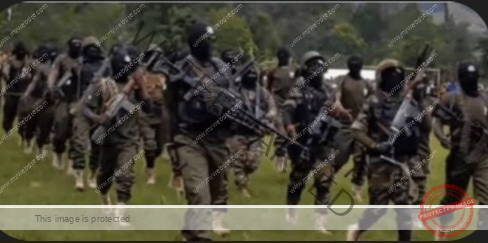
Many armed factions aligned with the Ambazonian cause frequently describe themselves as a national army. But history imposes serious obligations on any force seeking such recognition. A true national army is not defined merely by weapons or territorial influence. It is defined by discipline, restraint, command structure, strategic clarity, and respect for civilian populations.
The moment an irregular fighter takes up arms under a political cause, that individual assumes responsibilities extending far beyond personal survival or local influence. An army that seeks international legitimacy must behave like a disciplined institution — not a loose network of armed groups operating without operational standards.
The Danger of Social Exposure
One of the greatest vulnerabilities confronting guerrilla movements is the gradual erosion of operational discipline through social exposure. In prolonged conflicts, fighters can become psychologically tempted by normalcy: social gatherings, festivals, funerals, public celebrations, village disputes, and local political rivalries. But asymmetric warfare punishes predictability. Every unnecessary public appearance increases exposure to surveillance, informants, drone monitoring, electronic tracing, infiltration, and retaliatory operations.
More importantly, the militarisation of civilian social spaces places ordinary communities at grave risk. Whenever armed actors become deeply embedded inside civilian gatherings, villages themselves become vulnerable to raids, crossfire, collective punishment, and retaliatory violence. That dynamic destroys the separation between combatant and non-combatant populations.
The Strategic Trap of Localisation
Another major threat confronting armed movements is fragmentation into localised power structures. History demonstrates that liberation struggles weaken when fighters stop viewing themselves as part of a unified political objective and begin functioning primarily as isolated local actors. At that stage: regional rivalries emerge, command structures weaken, indiscipline spreads, local taxation disputes escalate, and public legitimacy deteriorates.
Movements that lose strategic unity often degenerate into fragmented armed ecosystems rather than coherent political resistance structures. This is why operational focus becomes essential. Every operation, every intelligence network, every logistical channel, and every political action must remain connected to a broader strategic objective rather than personal, local, or factional interests.
The Civilian Population Must Never Become the Battlefield. Perhaps the most important principle in modern armed conflict is the protection of civilians. Under customary international humanitarian law and the principles associated with the Geneva Conventions, armed actors are expected to maintain clear distinctions between combatants and civilian populations. That principle exists for a reason.
When armed groups operate too closely within civilian environments, villagers inevitably absorb the consequences: retaliatory raids, arbitrary arrests, displacement, property destruction, and civilian casualties. The people cannot become human shields for military strategy. Any movement seeking political legitimacy must understand that protecting civilians is not merely a humanitarian obligation — it is also a strategic necessity. Once civilian populations begin associating armed actors with instability, coercion, or permanent insecurity, long-term support erodes rapidly.
The International Dimension of Conduct
In modern conflicts, wars are no longer fought only on battlefields. They are fought in: media narratives, diplomatic spaces, international courts, humanitarian reports, and global public opinion. This means conduct matters. Discipline matters. Perception matters. Any action perceived as violating humanitarian norms can severely damage international credibility, regardless of military success on the ground. This applies to all parties in the conflict. For armed movements especially, international legitimacy often depends less on battlefield strength and more on whether they are viewed as disciplined political actors capable of governing responsibly.
The Psychology of Endless War
One of the greatest dangers in prolonged insurgencies is psychological drift. As conflicts continue year after year, fighters can gradually lose sight of the original political objective and become trapped inside the logic of permanent warfare itself. War then stops being a means toward political resolution and becomes an identity, an economy, or a fragmented survival system. That is the moment movements begin collapsing internally. Operational discipline therefore requires more than military coordination. It requires psychological clarity. The mission must remain political, not merely militarised.
The Final Mandate
The conflict in Southern Cameroons has already consumed thousands of lives, displaced communities, fractured families, and traumatised an entire generation. At this stage, every armed actor faces a defining moral and historical choice. Will the struggle evolve into a disciplined political movement capable of sustaining legitimacy and protecting civilians? Or will fragmentation, indiscipline, and endless retaliation gradually consume the very cause being defended? History is unforgiving toward movements that lose operational control. The road ahead demands: unity, discipline, civilian protection, command responsibility, and strategic restraint. Because wars are not remembered only by who fought them. They are remembered by how they were fought.
Timothy Enongene Guest Editor-in-Chief, The Independentist News.
Share This Post:
The Fate of the Judas : Why Yaoundé’s Collaborators and Political Middlemen Rarely Escape History’s Judgment
Silencing the Witnesses : The Pattern of Assassinations, Disappearances, and Unanswered Questions in Cameroon’s Political History
Related Post
WHEN YAOUNDÉ’S ALLIES SUDDENLY ENDORSE AYUK TABE: SOLIDARITY OR
THE SECOND RETURN: FROM THE PAIN OF SEPARATION TO
WHEN THE REGULATOR BENDS: WHAT THE VISION 4 AFFAIR
PROPHECY, POLITICS, AND THE AMBAZONIAN QUESTION (PART II) :
IF SOMALILAND MATTERS TO WASHINGTON, WHY NOT SOUTHERN CAMEROONS?
A CALL FOR GENERATIONAL RENEWAL: From Individual Leadership to