









News commentary

We are home to news on Cameroon and the CEMAC region. We are dedicated to honest and reliable reporting. We are the voice of the Cameroonian people and their fight for freedom and democracy at a time when the Yaoundé government is silencing dissent and suppressing democratic voices.

Four days passed before a statement was issued. But the consequences of those four days will last far longer. Because in modern conflict, it is not only actions that define a state—it is how it explains them. And when explanation follows delay, and delay follows death, the burden of proof shifts. Not to those who question—but to those who waited before speaking.
By Timothy Enongene, Guest Editor-in-Chief, The Independentist News
2 May 2026
The Silence Before the Statement
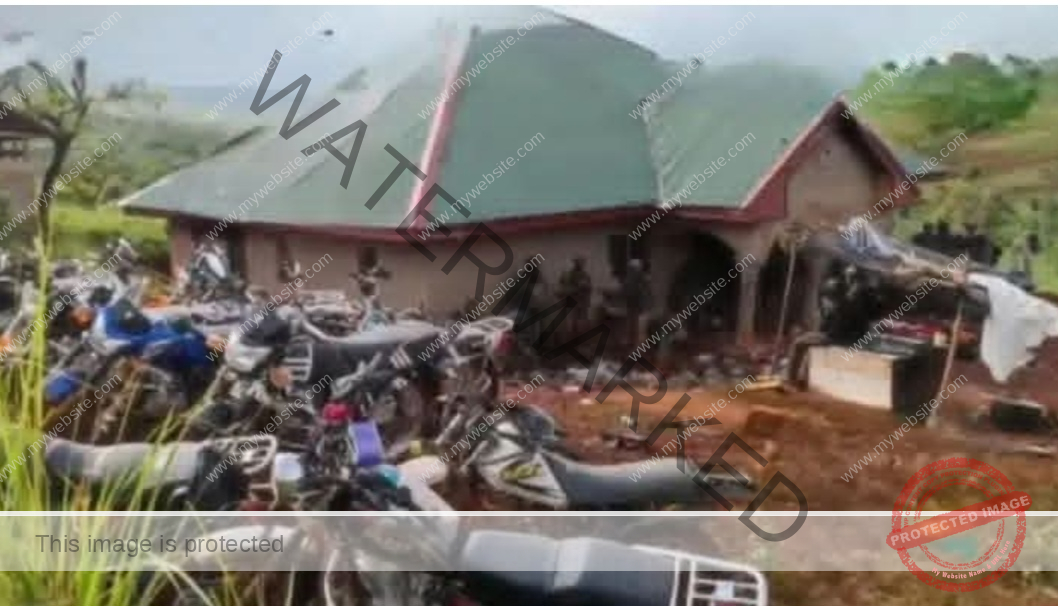
For ninety-six hours, the guns fell silent—but the truth did not. In Ndzerem-Nyam, in the hills of Bui, civilians lay dead. Families counted bodies. Communities whispered names. The world waited. And in Yaoundé, the state said nothing. Not because it did not know. But because it was deciding what version of the truth to release.
Four Days of Calculation
It took exactly four days for the regime of Paul Biya to respond to reports of mass civilian killings in Ndzerem-Nyam. Four days. In any functioning state, such a delay would trigger urgency, accountability, and transparency. In this system, it triggered calculation. Because silence, in this case, was not absence. It was preparation. Preparation for a narrative.
When the First Narrative Failed
The initial expectation was familiar: that local structures—community associations, diaspora voices, and fragmented information channels—would absorb the shock and produce a convenient explanation. That explanation did not hold. Contradictions emerged. Local accounts resisted alignment. The narrative refused to settle. And so, when the state finally spoke, it reverted to its most reliable fallback: those killed were “armed fighters.” It is a claim heard before. It is a claim deployed often. And it is a claim that demands scrutiny—because of what it permits.
Redefining the Dead
When a state labels the dead as combatants without transparent verification, it does more than defend itself. It rewrites the rules of engagement. Under international humanitarian law—particularly the principles embedded in the Geneva Conventions—two obligations remain non-negotiable: distinction and proportionality. Civilians and combatants must be clearly differentiated. Civilian harm must not be excessive relative to military objectives. These are not optional standards. They are the minimum threshold of lawful conduct. If even a fraction of those killed in Ndzerem-Nyam were non-combatants—as multiple local accounts suggest—then the justification collapses under its own weight. And a far more serious question emerges: was this an operation—or an abandonment of restraint?
Weaponizing Suspicion
But the most insidious element is not the bullets. It is the narrative that follows them. By suggesting that civilians “called” the military into their own community, the state introduces a corrosive idea: that the enemy may not only be external—but next door. This is not communication. This is psychological engineering. It fractures trust. It seeds paranoia. It turns communities inward against themselves. And in conflicts where control cannot be secured through force alone, fragmentation becomes strategy.
A Pattern Too Familiar to Ignore
Ndzerem-Nyam does not stand alone. It fits a pattern: reports of civilian harm emerge, initial silence follows, confusion spreads across local channels, a delayed official statement reframes the victims, and the cycle resets. Each iteration tests a simple assumption: that time will dilute outrage, that ambiguity will weaken accountability, and that distance will protect power. But patterns, once visible, are difficult to erase.
What the Delay Reveals
The four-day delay was not just a communication failure. It was a window. A window into how a system responds when confronted with potential atrocity: not with urgency, but with hesitation; not with clarity, but with calibration; not with accountability, but with narrative control. And in that window, something more consequential becomes visible: a state that does not immediately defend life, but first defends its version of events.
The Question Before the World
The issue is no longer confined to Ndzerem-Nyam. It is broader. It is structural. And it is urgent. Can a state investigate itself credibly under these conditions? Or does the pattern itself necessitate external scrutiny? Because where civilian deaths are alleged, where narratives shift, and where delays obscure clarity, one principle must prevail: verification cannot remain internal.
What Must Happen Next
If the international system is to retain any meaning, then Ndzerem-Nyam cannot dissolve into silence. At minimum, three steps are unavoidable: an independent, internationally supervised investigation; access for neutral human rights observers on the ground; and transparent identification of victims and circumstances of death. Anything less risks normalizing a dangerous precedent: that delay, denial, and narrative control are sufficient responses to civilian loss of life.
No More Waiting
Four days passed before a statement was issued. But the consequences of those four days will last far longer. Because in modern conflict, it is not only actions that define a state—it is how it explains them. And when explanation follows delay, and delay follows death, the burden of proof shifts. Not to those who question—but to those who waited before speaking.
Timothy Enongene, Guest Editor-in-Chief, The Independentist News
Share This Post:
The Year of Action: Why the Yaoundé War Strategy Is Failing. A Conflict That Has Moved Beyond Containment
The Debt of Empire: A Question for Paris and London
Related Post
IS THE WORLD LISTENING: THREE DAYS FOUR FRONTLINES, ASA
SEPTEMBER 24, 1965, THIS DAY IN HISTORY: From Equal
AMBAZONIA’S WAR- IS BIGGER THAN YAOUNDÉ: BRITAIN, FRANCE AND
THE DAY SEPTEMBER 22 1961: — WHAT AMBAZONIA CAN
TRUMP’S “SUPER INTELLIGENCE” ERA: WHAT IT REALLY MEANS —
Why Is Ambazonia More Powerful Than many Imagine.