











The issue is no longer whether reforms can fix the system. The issue is whether the system was ever meant to include us. The answer is now evident. Ambazonia does not belong in a structure where sovereignty is filtered, leadership is pre-approved, and succession is designed to exclude. And that is why we are not part of French Cameroon.
By Ali Dan Ismael
Editor-in-Chief, The Independentistnews
April 2026
There must be no more ambiguity. We are not part of French Cameroon. And more importantly, we must clearly explain why. What is unfolding today in Yaoundé is not democracy. It is not sovereignty. It is not even internal succession. It is external orchestration.
The political structure governing Yaoundé did not emerge organically from its people. It was shaped, calibrated, and preserved through external influence—primarily from France. At the centre of this reality lies a historical instrument too often ignored: the December 26, 1959 Accords. These accords did not simply mark a transition. They established a framework in which France retained decisive influence over the political orientation of the state. That framework has never disappeared. It has merely evolved.
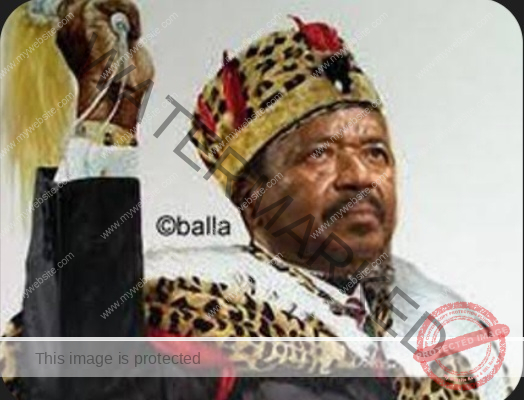
The rise of Paul Biya itself must be understood within this context. His accession was not an isolated domestic event. It occurred within a system already conditioned to align with French strategic interests. Now, as succession looms again, the mechanism is no longer hidden. It is visible, structured, and deliberate.
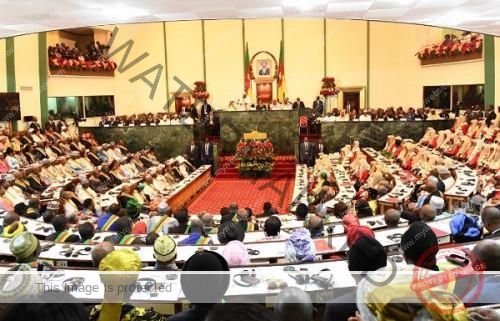
Consider the present configuration of power. The office of Prime Minister is currently held by an Anglophone. In any genuine constitutional order, such a position would stand within a credible line of succession or, at minimum, reflect national inclusivity. Instead, what we see is the opposite. The pathway of succession is being effectively redirected away from that office and anchored elsewhere—toward a Francophone-controlled Senate structure. This is not accidental. It is design.
What is being constructed is the Chieftaincy of Etoudi—a system where leadership is not determined by open constitutional competition, but filtered through political acceptability shaped by external and internal power interests. In such a system, the presence of an Anglophone Prime Minister is not a step toward inclusion. It is a symbolic ceiling. It marks the highest point an Anglophone can reach—and the point beyond which they are structurally prevented from advancing.
Let us be clear: any candidate emerging from this system must pass through French scrutiny. Within such a framework, no candidate outside the accepted geopolitical alignment can succeed, no independent political direction can emerge, and no genuine plurality can survive. Most critically, no Anglophone—no Ambazonian—can ever rise to ultimate leadership within a system that quietly but effectively disqualifies them at the decisive moment of succession.
This is the point many fail to grasp. Our issue is not merely marginalisation. It is incompatibility. We are being told to belong to a political system whose direction is externally influenced, whose leadership is pre-filtered, and whose structure was never designed to accommodate us as equals. This is not a union. This is absorption into a controlled architecture.
When a people cannot influence leadership, when their participation is structurally blocked at the highest level, and when even the symbolic inclusion of an Anglophone Prime Minister does not translate into real succession rights, then the conclusion is not emotional. It is legal, political, and rational: self-determination becomes not a demand, but a necessity.
The issue is no longer whether reforms can fix the system. The issue is whether the system was ever meant to include us. The answer is now evident. Ambazonia does not belong in a structure where sovereignty is filtered, leadership is pre-approved, and succession is designed to exclude. And that is why we are not part of French Cameroon.
Ali Dan Ismael
Editor-in-Chief, The Independentistnews






Leave feedback about this