








Geo-strategic commentary

We are home to news on Cameroon and the CEMAC region. We are dedicated to honest and reliable reporting. We are the voice of the Cameroonian people and their fight for freedom and democracy at a time when the Yaoundé government is silencing dissent and suppressing democratic voices.

If Africa hopes to avoid being repeatedly drawn into the turbulence of great-power rivalries, it must pursue strategic autonomy with greater urgency. That autonomy begins with strengthening continental resilience: building integrated supply chains, expanding intra-African trade, and investing in energy independence.
By Lester Maddox
The Independentist Guest Writer, Oakland County, California
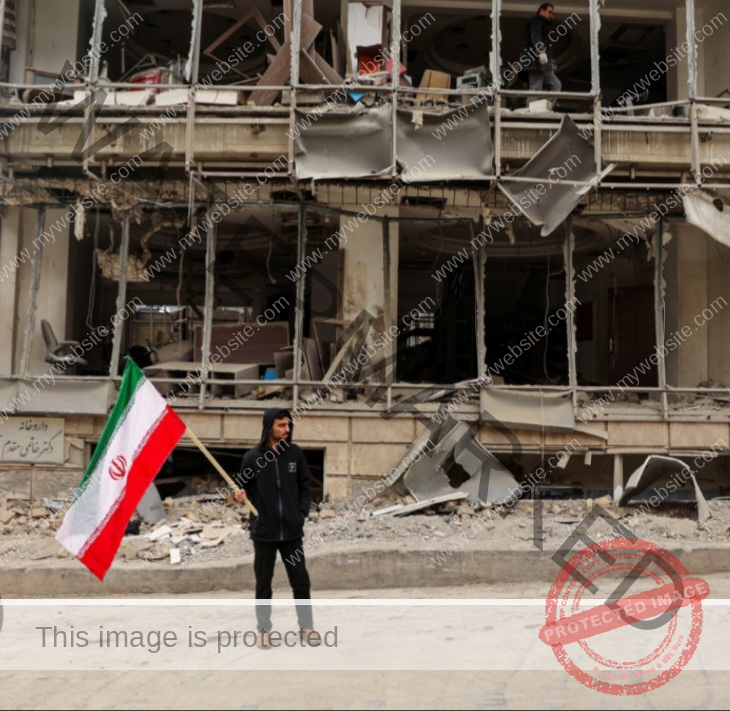
TELAVIV – March 6, 2026 – As the drums of war echo between the United States, Israel, and Iran, the African continent once again finds itself at a familiar and precarious crossroads. The old proverb remains instructive: when elephants dance, it is the grass that suffers. From an African perspective, this is not merely a Middle Eastern confrontation or a distant ideological dispute. It represents a geopolitical shockwave whose effects could ripple across global food supply chains, energy markets, and fragile regional economies. For a continent still grappling with the lingering consequences of Cold War proxy conflicts and colonial rivalries, the mobilization of major powers should serve as a sober reminder of how quickly distant wars can reshape African realities.
The question, then, is unavoidable: where is Pan-Africanism in this hour of global tension? At present, it appears largely absent from the highest tables of international mediation. Too often, African governments find themselves pressured to align with external powers based on security partnerships, development financing, or economic dependencies. This moment exposes a deeper structural challenge — the absence of a unified African foreign policy capable of articulating shared continental interests. While powerful actors in Washington, Tehran, and Tel Aviv navigate complex strategic calculations, Africa risks remaining a chorus of fragmented voices, vulnerable to the same “divide-and-rule” dynamics that shaped much of the twentieth century. The frequently invoked “rules-based international order” often appears inconsistent in practice, reinforcing perceptions that global rules are applied selectively depending on geopolitical interests.
If Africa hopes to avoid being repeatedly drawn into the turbulence of great-power rivalries, it must pursue strategic autonomy with greater urgency. That autonomy begins with strengthening continental resilience: building integrated supply chains, expanding intra-African trade, and investing in energy independence. The vision of Pan-Africanism in the twenty-first century must extend beyond rhetoric toward practical economic and diplomatic cooperation. Africa must learn to trade more with itself, support regional security frameworks that prioritize African solutions, and carefully guard against becoming a staging ground for foreign military infrastructure or proxy conflicts.
In places such as the Midland, Savannah, and Atlantic zones of the Federal Republic of Ambazonia, the local consequences of geopolitical entanglement are already visible. Communities caught in long-running conflicts often find themselves navigating forces far beyond their control — regional politics, international alliances, and external economic interests. Their experience illustrates a broader lesson for the continent: when African voices are absent from the global negotiating table, African communities often bear the consequences.
The lesson of history is clear. When the world’s major powers confront one another, neutrality without strategy becomes vulnerability. Africa does not need to choose sides in every global dispute, but it must learn to speak with clarity, coherence, and confidence about its own interests. Until the African Union and its member states develop a stronger collective diplomatic voice — at the United Nations, in global economic forums, and within regional institutions — the continent risks remaining what it has too often been in past eras of geopolitical rivalry: collateral ground for conflicts it did not start and cannot control.
In a world edging toward renewed great-power competition, silence is not neutrality. It is exposure.
Lester Maddox
The Independentist Guest Writer, Oakland County, California
Share This Post:
The Unbroken Path: Why Dr. Samuel Ikome Sako Remains a Central Figure in the Ambazonian Struggle
Mounting Debt and Mounting Questions – Cameroon’s Fiscal Crossroads
Related Post
IS THE WORLD LISTENING: THREE DAYS FOUR FRONTLINES, ASA
SEPTEMBER 24, 1965, THIS DAY IN HISTORY: From Equal
AMBAZONIA’S WAR- IS BIGGER THAN YAOUNDÉ: BRITAIN, FRANCE AND
THE DAY SEPTEMBER 22 1961: — WHAT AMBAZONIA CAN
TRUMP’S “SUPER INTELLIGENCE” ERA: WHAT IT REALLY MEANS —
Why Is Ambazonia More Powerful Than many Imagine.