









News commentary

We are home to news on Cameroon and the CEMAC region. We are dedicated to honest and reliable reporting. We are the voice of the Cameroonian people and their fight for freedom and democracy at a time when the Yaoundé government is silencing dissent and suppressing democratic voices.

History does not judge societies by whether disagreements occur — disagreements are inevitable. It judges them by how responsibly those disagreements are managed.
Compiled by: Carl Sanders
Guest Contributor, The Independentistnews
Soho, London
February 28, 2026
Proposed submission to: International Human Rights Monitors, Diaspora Accountability Networks, and the Traditional Councils of Bafut and Mankon
PREAMBLE: THE DOCTRINE OF CIVIC ACCOUNTABILITY
For nearly a decade, communities across the Midland Zone have endured instability, loss, and profound uncertainty. At such a delicate historical moment, rhetoric that inflames internal tensions carries consequences far beyond political theater.
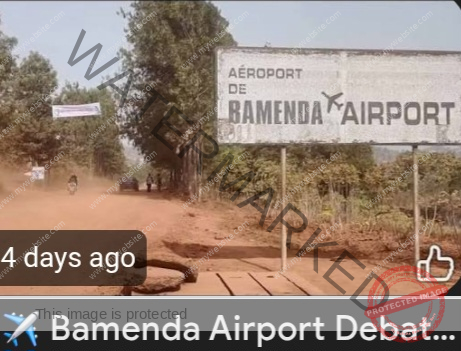
The recent controversy surrounding the naming of the Bamenda Airport has exposed how quickly symbolic disputes can evolve into identity-based polarization. What might have been a matter of public consultation and regional pride has instead risked becoming a catalyst for unnecessary friction between Bafut and Mankon. When influential actors amplify narratives that frame such matters as zero-sum ethnic contests, the social fabric weakens.
In response, what is proposed here is not a blacklist, nor an instrument of retaliation, but a civic documentation initiative — a public registry grounded in evidence, transparency, and lawful accountability.
THE REGISTRY IN PRACTICE
The Mezam County Public Registry would function as a structured record of publicly verifiable actions and statements made by political actors, officials, or influential elites whose rhetoric or conduct contributes to division.
Documentation would begin with the accurate identification of the individual concerned — including their verified name, official title, and current role within government, political parties, commissions, or administrative structures. Precision is essential. Accountability cannot rest on rumor.
Second, the registry would carefully describe the specific statements or actions that are alleged to have fueled tension. This may include recorded public interviews, speeches, published articles, or documented communications relating to the airport naming dispute or other divisive narratives.
Third, each entry would be supported by verifiable evidence. Only publicly available material — such as state media interviews, official releases, authenticated recordings, or confirmed meeting records — would be considered admissible. Anonymous allegations or unverified voice notes would not meet the threshold of credibility. The integrity of the registry depends on discipline.
Fourth, the institutional affiliations of the individual would be clearly noted. Whether the person holds party membership, a ministerial appointment, advisory status, or commission participation is relevant to understanding the context in which their statements were made.
Finally, the registry would assess documented impact. Have their words led to measurable community tension? Have youth mobilizations or protests been directly linked to inflammatory rhetoric? Has inter-community dialogue deteriorated following their intervention? These questions must be examined carefully and supported with evidence. The objective is not to inflame but to illuminate.
WHY THIS MATTERS
In divided societies, symbolic disputes are often amplified at moments of political vulnerability. When public figures elevate identity contests over substantive governance issues — economic decline, infrastructure stagnation, resource management, or youth unemployment — communities risk being diverted from structural realities.
Mezam County, with its rich cultural institutions and traditional leadership structures, has historically demonstrated resilience rooted in dialogue and customary wisdom. The Grassfields tradition consistently teaches that internal discord weakens collective strength. When communities fracture, external interests gain leverage.
The controversy over the airport’s naming must not become a proxy battleground for political ambition. The long-term cost of such polarization would exceed any short-term symbolic gain. This proposed registry is grounded in one principle: public memory is a form of peaceful power.
Political actors must understand that their words do not evaporate. They shape perceptions, mobilize sentiments, and sometimes ignite consequences far beyond intention. Documentation is not punishment; it is democratic oversight.
For Mezam to preserve unity and dignity, civic engagement must be disciplined, lawful, and evidence-based. Traditional councils, diaspora networks, youth leaders, and civil society observers all share responsibility for fostering dialogue rather than division.
History does not judge societies by whether disagreements occur — disagreements are inevitable. It judges them by how responsibly those disagreements are managed.
The path forward for Mezam County lies not in rivalry, but in restraint; not in accusation, but in accountable transparency; not in fragmentation, but in collective wisdom.
Carl Sanders
Guest Contributor, The Independentistnews
Soho, London
Share This Post:
The Airport Question and the Higher Calling of Unity
A Structured Rebuttal to Roland Fru’s “Only UN Legal Path” Doctrine
Related Post
IS THE WORLD LISTENING: THREE DAYS FOUR FRONTLINES, ASA
SEPTEMBER 24, 1965, THIS DAY IN HISTORY: From Equal
AMBAZONIA’S WAR- IS BIGGER THAN YAOUNDÉ: BRITAIN, FRANCE AND
THE DAY SEPTEMBER 22 1961: — WHAT AMBAZONIA CAN
TRUMP’S “SUPER INTELLIGENCE” ERA: WHAT IT REALLY MEANS —
Why Is Ambazonia More Powerful Than many Imagine.