










Commentary

We are home to news on Cameroon and the CEMAC region. We are dedicated to honest and reliable reporting. We are the voice of the Cameroonian people and their fight for freedom and democracy at a time when the Yaoundé government is silencing dissent and suppressing democratic voices.

The future of any self-determination project will depend less on battlefield optics and more on whether ordinary citizens feel protected, respected, and heard. The truth, ultimately, will not be shaped by rhetoric alone — but by conduct.
By Carl Sanders
Guest Contributor, The Independentistnews
Soho, London
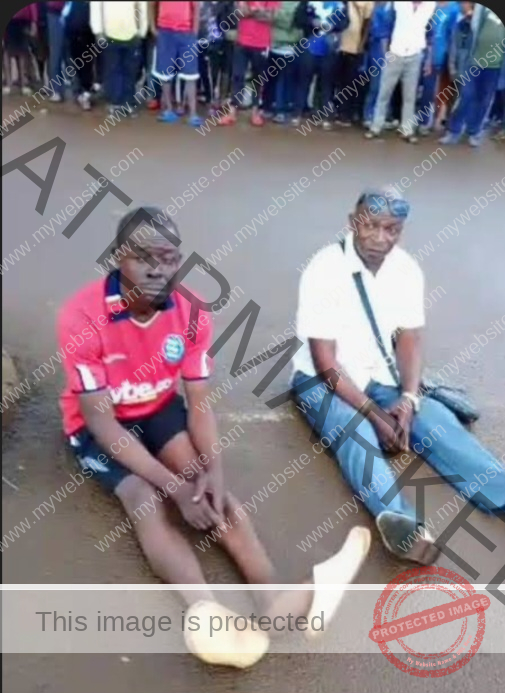
GUZANG – February 27, 2026 – The public killing of Mbanyamsig Hanson Ndi and Njogho Cletus Aburo at Guzang Market Square on October 4, 2023, marked a deeply troubling moment for the Midland Zone. Whatever the competing narratives surrounding their deaths, the spectacle of violence in a crowded civilian marketplace sent shockwaves through the community and far beyond.
For many observers, the incident symbolized a dangerous shift: the normalization of public executions within a struggle that originally framed itself as a fight for dignity and self-determination. Regardless of justification offered by those responsible, such acts risk handing the government in Yaoundé a powerful propaganda tool. When armed factions execute civilians in public spaces, it strengthens the state’s argument that the crisis is driven by “terrorist” actors rather than by legitimate political grievances.
The broader concern is not a single incident but a pattern. In Guzang and surrounding communities, allegations of internal violence, targeted killings, kidnappings, and forced levies have contributed to growing fear among civilians. Reports that fighters have turned their weapons against rival factions or independent voices deepen the perception of fragmentation within the resistance.
The killing of thirteen fighters in Guzang during internal clashes — men who were widely regarded by locals as committed to the cause — further exposed divisions that weaken the broader movement. When internal disputes are settled with bullets rather than dialogue, the result is not strategic strength but public disillusionment.
Similarly, the death of figures such as “Cha-Cha” in Bui, under circumstances that many still question, feeds a narrative of distrust. Whether these events reflect rivalry, criminal infiltration, poor command control, or deliberate manipulation, the effect is the same: erosion of civilian confidence.
Perhaps most damaging is the reported expansion of kidnapping and ransom practices targeting traders, teachers, and small business owners. When ordinary citizens begin to associate the struggle with economic coercion rather than protection, the moral foundation of the movement weakens. The population becomes trapped between state security operations and armed factions claiming to defend them.
This dynamic inadvertently serves the interests of the state. The government can point to such incidents as justification for continued militarization and international support for its security posture. In that sense, internal excesses — whether intentional or not — risk advancing the very structures the movement opposes.
The contrast between selective accountability in state-related cases, such as the sentencing connected to the Ngarbuh massacre, and the apparent impunity surrounding market-square killings only deepens the tragedy. Justice that appears uneven — whether from state institutions or non-state actors — reinforces cycles of grievance and retaliation.
Conclusion: Protecting the Moral Core
No liberation struggle can survive if it loses the trust of its own people. Violence against civilians, public executions, and economic coercion do not strengthen a cause; they corrode it.
If the Midland Zone — and Ambazonia more broadly — is to preserve its claim to moral legitimacy, it must confront internal breakdowns with transparency, accountability, and reform. Armed actors operating in the name of liberation must be subject to discipline and civilian oversight.
History reminds us that movements succeed not only by opposing injustice, but by embodying the justice they seek to establish. The future of any self-determination project will depend less on battlefield optics and more on whether ordinary citizens feel protected, respected, and heard. The truth, ultimately, will not be shaped by rhetoric alone — but by conduct.
Carl Sanders
Guest Contributor, The Independentistnews
Share This Post:
The Oath of a Clean Struggle: A Public Commitment to Integrity and Accountability
The Logistics of Betrayal: Why the ADF Has Become Yaoundé’s Most Effective Instrument
Related Post
IS THE WORLD LISTENING: THREE DAYS FOUR FRONTLINES, ASA
SEPTEMBER 24, 1965, THIS DAY IN HISTORY: From Equal
AMBAZONIA’S WAR- IS BIGGER THAN YAOUNDÉ: BRITAIN, FRANCE AND
THE DAY SEPTEMBER 22 1961: — WHAT AMBAZONIA CAN
TRUMP’S “SUPER INTELLIGENCE” ERA: WHAT IT REALLY MEANS —
Why Is Ambazonia More Powerful Than many Imagine.