









Editorial commentary

We are home to news on Cameroon and the CEMAC region. We are dedicated to honest and reliable reporting. We are the voice of the Cameroonian people and their fight for freedom and democracy at a time when the Yaoundé government is silencing dissent and suppressing democratic voices.

Road safety is a matter of governance, engineering, enforcement, and responsibility. Until systems protect citizens instead of political interests, roads will continue to kill. Neglect Eventually Comes for Everyone. Neglect kills slowly—then suddenly.
And eventually, it spares no one. The question remains: Will reform come before the next funeral—or only after it?
By The Independentistnews Technical Desk
Another Tragedy on Cameroon’s Deadliest Highway
Another life lost. Another official convoy reduced to wreckage. Another family thrown into mourning. And once again, the nation is expected to grieve quietly, move on quickly, and forget why these tragedies keep happening.
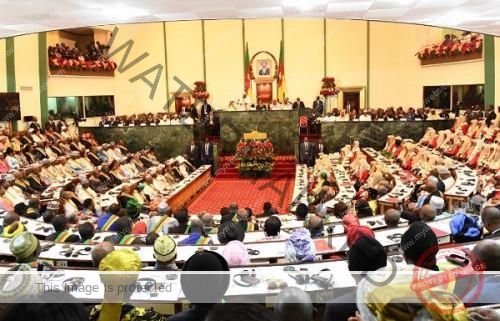
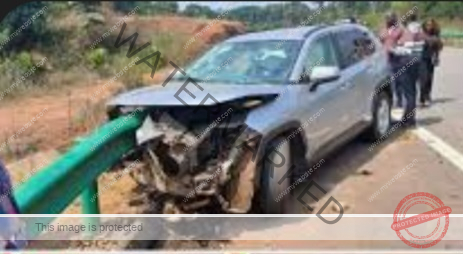
Deputy Faustine Fotso lost her life on the Douala–Yaoundé highway after her vehicle reportedly lost control and violently crashed into a roadside barrier. She died instantly. Her driver’s condition remains uncertain. The shock is real. The grief is real. But so is the pattern. And until this pattern is confronted, such tragedies will continue.
Road Deaths Are Not Accidents — They Are Governance Failures
Road deaths in Cameroon are rarely mere accidents. They are the predictable result of systemic neglect. For decades, legislators have passed budgets without demanding accountability for road safety. Administrative authorities tolerate weak enforcement, corruption in driver licensing, and ineffective vehicle control systems.
Engineering standards are ignored when contracts are awarded based on loyalty rather than competence. Road projects are celebrated with ribbon-cutting ceremonies, yet essential safety features are missing: poor drainage, missing or defective signage, dangerous shoulders, inadequate lighting, poorly designed curves, and little maintenance. The result is a national road network functioning as corridors of death.
Missing Signage, Drivers Left on Their Own
On many roads, signage is absent, faded, or poorly positioned. Speed limit signs are missing, dangerous curves are unmarked, road markings disappear, and lighting is almost nonexistent.
At night or in rain, drivers travel nearly blind. Hazards appear without warning.
Even careful drivers can be trapped.
Poor Driver Education and a Driving Code That Barely Exists in Practice
Driver training remains weak, and road rules are poorly respected. Many drivers obtain licenses without proper training or rigorous testing. Defensive driving, safe following distances, and hazard awareness are poorly understood.
Speeding, reckless overtaking, and vehicle overloading are common. When bad roads, poorly maintained vehicles, and poorly trained drivers meet, accidents become predictable.
No Punitive Measures: Impunity Fuels Road Chaos
Even where rules exist, enforcement often lacks real consequences. In functioning systems, serious traffic violations lead to strong penalties: license suspension, heavy fines, vehicle impoundment, and prosecution where lives are endangered. Yet on many roads, impunity prevails. Offenders learn they can speed, overload vehicles, and drive dangerously without lasting consequences. Controls are occasional and sometimes negotiable. Without real punishment, there is no deterrence. And without deterrence, there is no discipline on the roads.
Contracts Serving Power, Not the Public
Road contracts often lack transparency. Oversight is weak and quality compromised. Roads deteriorate quickly after commissioning.
Citizens pay through taxes—and then with their lives.
When Administration Replaces Engineering
Another failure lies beneath many roads: the absence or misuse of geotechnical studies.
When soil bearing capacity falls below about 2,000 pounds per square foot — approximately 95.8 kPa —, this indicates weak soil requiring stabilization, enhanced drainage, or even bridges or overpasses.
Yet these solutions are often ignored. Roads deform, causing vehicles to lose control.
The absence of independent technical inspection worsens the problem. The cost is paid in human lives.
Imported Rolling Coffins: The Used-Car Crisis
Many vehicles on African roads are second-hand imports, often worn out before being repainted and sold in African markets. Poor maintenance leaves brakes, suspensions, steering systems, and tires in dangerous condition. Combined with unsafe roads, these vehicles become lethal traps.
Maintenance Neglect: The Silent Killer
Defective vehicles continue to operate. When mechanical failure meets poor road design, disaster becomes inevitable.
A Broken Insurance System That Abandons Victims. An ineffective motor insurance system compounds the problem. Accident victims often face delayed or denied compensation, leaving families financially devastated. The system neither protects citizens nor encourages safer behavior.
No Reliable Data and No Accident Investigation System
Another critical gap is the absence of systematic accident data collection. Without reliable data, authorities cannot identify dangerous zones, major causes, or effective solutions. In many countries, serious accidents trigger independent technical investigations. Yet there is practically no independent accident investigation department conducting scientific analyses of road crashes.
Causes remain unclear, lessons are not learned, and mistakes repeat. Without investigations and data, improvement is impossible.
Building an Insurance System Based on Data
An effective insurance system must rely on reliable data to adjust premiums, reward safe drivers, penalize risky behavior, and finance safety improvements. Without accurate statistics, premiums become arbitrary, good drivers subsidize bad ones, and there is no incentive for improvement.
No One Is Immune to Bad Roads
Road danger does not discriminate. For most citizens, risk is daily reality. The Forgotten Victims Without Headlines Thousands of ordinary citizens die on these roads each year without headlines or official mourning. Their lives become statistics.
Yet they mattered equally.
Questions the Nation Must Ask
How many more deaths before road safety becomes a national priority? How many tragedies before real enforcement, engineering discipline, and transparency become standard? Silence is no longer acceptable.
A Clear Call for Accountability
Road safety is a matter of governance, engineering, enforcement, and responsibility. Until systems protect citizens instead of political interests, roads will continue to kill. Neglect Eventually Comes for Everyone. Neglect kills slowly—then suddenly.
And eventually, it spares no one. The question remains: Will reform come before the next funeral—or only after it?
The Independentistnews Technical Desk
Share This Post:
Beyond Sarajevo — Economic Rivalry, Empire, and the Lessons for Ambazonia
Facts Over fear- Diapora security lies on Law. Not alarm
Related Post
IS THE WORLD LISTENING: THREE DAYS FOUR FRONTLINES, ASA
SEPTEMBER 24, 1965, THIS DAY IN HISTORY: From Equal
AMBAZONIA’S WAR- IS BIGGER THAN YAOUNDÉ: BRITAIN, FRANCE AND
THE DAY SEPTEMBER 22 1961: — WHAT AMBAZONIA CAN
TRUMP’S “SUPER INTELLIGENCE” ERA: WHAT IT REALLY MEANS —
Why Is Ambazonia More Powerful Than many Imagine.