










Commentary

We are home to news on Cameroon and the CEMAC region. We are dedicated to honest and reliable reporting. We are the voice of the Cameroonian people and their fight for freedom and democracy at a time when the Yaoundé government is silencing dissent and suppressing democratic voices.

By M. C. Folo The Independentistnews contributor
History must be remembered – but not be repeated
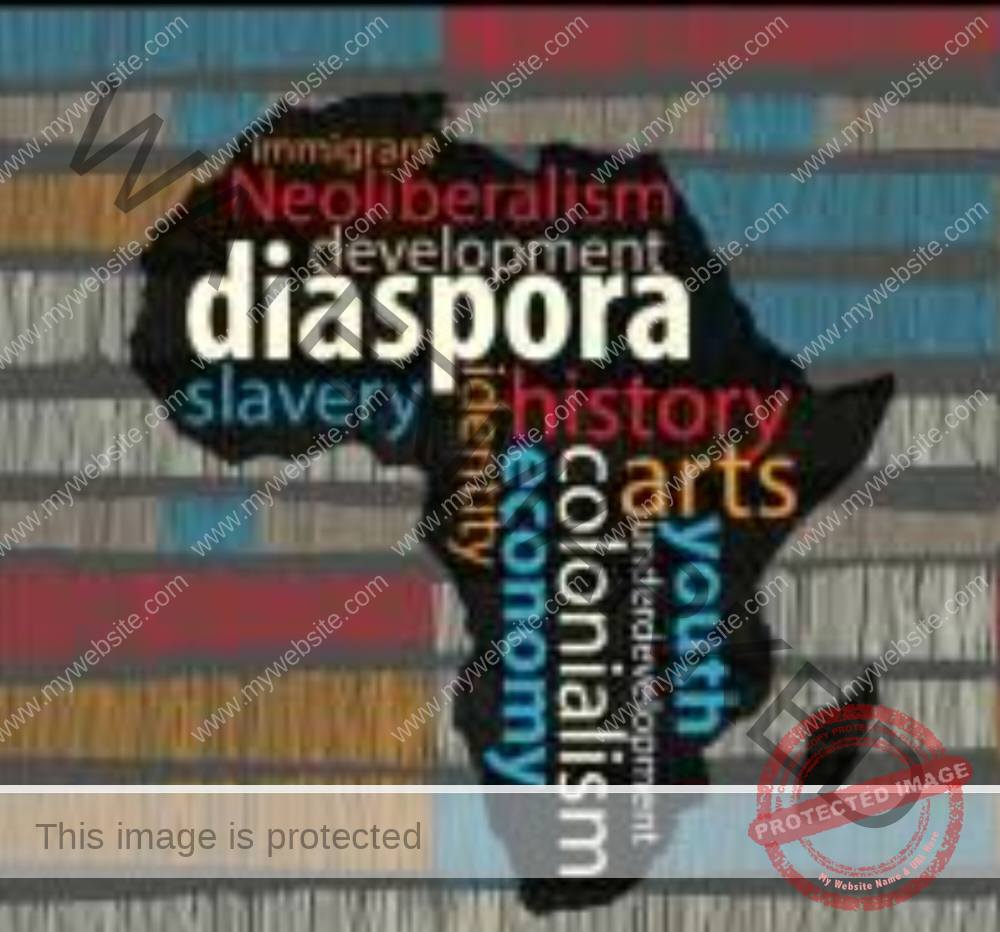
Africa is right to condemn slavery. Right to challenge colonialism. Right to expose how conquest reshaped its institutions, extracted wealth, and disrupted trajectories of knowledge and innovation. These realities are neither exaggerated nor obsolete. Their consequences remain visible in fragile states, distorted borders, monocrop economies, and education systems still influenced by structures originally built to serve colonial administrations. But truth, when repeated without transformation, can become ritual. And ritual, when mistaken for strategy, risks becoming a trap.
From Grievance to Reconstruction
Across the continent, we have refined the language of grievance, sometimes more successfully than the practice of reconstruction. We criticize colonial education systems yet often preserve their structures and incentives. We condemn extractive capitalism while sometimes reproducing its habits through rent-seeking elites, speculative consumption, and economies that export raw value while importing finished dependence.
In confronting historical injustice, we sometimes postpone the equally difficult task of building systems that reflect present realities and future ambitions. The result is a paradox. Africa generates powerful critiques of global inequality, yet remains underrepresented in shaping global solutions. Diagnosis is strong; design remains uneven.
Education: Africa’s Most Urgent Reform
This contradiction is especially visible in education. From Dakar to Dar es Salaam, from Yaoundé to Nairobi, many schools still reward memorization over problem-solving and certification over competence. Students may learn distant histories in detail yet graduate without practical preparation to solve problems in agriculture, logistics, energy, healthcare, or industrial development at home. Degrees increase, but productivity often struggles to keep pace.
Education, as inherited, was not primarily designed to develop Africa. It was built to administer colonies. Reforming African education therefore requires more than symbolic gestures. It calls for structural adjustment. Curricula should address local economic needs while remaining globally competitive. Engineering students should graduate having built and tested solutions, not only passed examinations. Economics programs should study informal markets, regional trade, and industrial policy alongside classical Western theories. African history should extend beyond suffering into governance, innovation, and institutional success.
Most importantly, education must reward usefulness. Countries that transformed themselves—South Korea, Singapore, Vietnam—did not wait for perfect global fairness. They used education strategically to solve national challenges and then expanded outward. Africa can draw lessons from such experiences while adapting them to local realities.
Escaping the Extractive Economy Trap
Yet education alone cannot overcome economic systems still shaped by colonial patterns. Many African economies remain structured around exporting raw materials while importing finished goods, technology, and sometimes even food. This pattern reflects a continuation of extractive models, reinforced by global market inequalities but also by domestic policy limitations.
Complaining about unfair markets may be justified. Competing without preparation is a choice. African countries therefore face the challenge of shifting from commodity dependence toward value creation. This includes supporting manufacturing and agro-processing, encouraging regional supply chains, and negotiating partnerships that transfer technology and build local ownership rather than perpetuate dependency.
Confronting Domestic Responsibility
Such change also requires confronting uncomfortable domestic realities. Corruption cannot be blamed entirely on colonial history; it is also sustained by present decisions. Weak institutions are not inevitable; they persist when accountability is absent. Leaders educated at public expense who govern for private gain cannot attribute all failures to past empires.
At the same time, reform does not require copying Western capitalism wholesale. The global economic system remains unequal and often protects established advantages. But changing that balance requires leverage, not lamentation.
Africa’s Real Leverage: Unity and Coordination
Africa’s leverage lies in its people, markets, resources, and potential for collective action. A continent of 1.4 billion people does not lack opportunity; it often lacks coordination. Regional integration must move beyond speeches toward infrastructure: shared power grids, rail networks, affordable air connectivity, digital payment systems, and collaborative research institutions. Trade within Africa should not be more difficult than trade with distant partners. Knowledge produced in Accra should circulate across the continent as easily as knowledge produced in global centers.
From Protest Politics to Production Politics
Above all, Africa must complement the politics of protest with the politics of production. Remembering history remains necessary. But completing the argument history began requires demonstrating competence—institutions that function, economies that grow inclusively, and ideas that move outward rather than constantly being imported.
The world rarely changes out of guilt. It responds to coherence, strength, and results. Africa therefore owes itself more than moral clarity. It owes itself a strategy. When critique is matched with construction—when schools produce builders, economies reward innovation, and politics serve the future rather than the past—the global conversation will shift. Not because the system suddenly becomes fair, but because Africa becomes formidable.
The Pathway Forward
History explains where wounds were inflicted. It cannot replace the responsibility of deciding where the continent goes next.
M. C. Folo
Share This Post:
Divide, Rule, Repeat: The Strategic Fragmentation of Ambazonia
Technocracy Without Legitimacy: Why Cosmetic Appointments Cannot Mask Political Reality
Related Post
IS THE WORLD LISTENING: THREE DAYS FOUR FRONTLINES, ASA
SEPTEMBER 24, 1965, THIS DAY IN HISTORY: From Equal
AMBAZONIA’S WAR- IS BIGGER THAN YAOUNDÉ: BRITAIN, FRANCE AND
THE DAY SEPTEMBER 22 1961: — WHAT AMBAZONIA CAN
TRUMP’S “SUPER INTELLIGENCE” ERA: WHAT IT REALLY MEANS —
Why Is Ambazonia More Powerful Than many Imagine.