












A genuine, independent international inquiry would almost certainly uncover the same structure: state-engineered violence, proxy militias, integrated DDR elements, and narrative manipulation designed to resemble ethnic conflict.
By Timothy Enongene
Guest Editor-in-Chief, The Independentist News
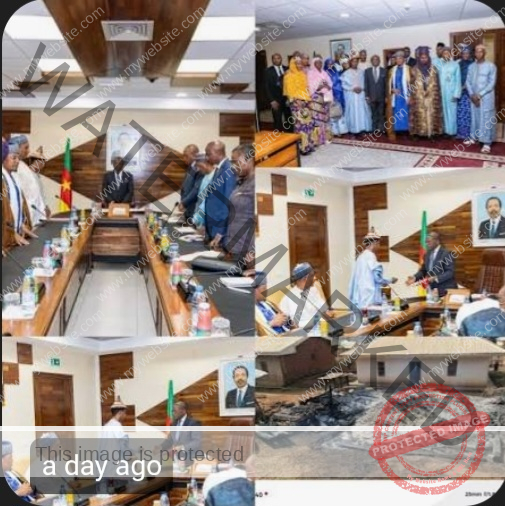
The recent meeting between Prime Minister Joseph Dion Ngute and a delegation of the Mbororo community on January nineteen, two thousand twenty-six, was not an act of reconciliation—it was political theater. Framed publicly as a response to the “barbaric” massacre in Gidado, the meeting served a deeper and more calculated purpose: to advance a long-running strategy of narrative manipulation.
At its core, that strategy seeks to rebrand a war of independence into a series of fragmented ethnic conflicts—transforming a vertical conflict between a state and a people into horizontal violence between communities.
The Strategy of Rebranding
Since late two thousand sixteen, the conflict in the North-West and South-West regions has been a direct confrontation between the Cameroonian security forces and the Ambazonian State Army. The political character of this war has always been clear: it is a struggle over sovereignty, self-determination, and state legitimacy.
But as international pressure for dialogue and mediation grows, the Biya regime has shifted tactics. Atrocities such as those in Gidado and Egbekaw are no longer framed as state violence; they are recast as “intercommunal land disputes,” “farmer-herder clashes,” or “local ethnic conflicts.”
This reframing serves a strategic function. It dissolves political responsibility and replaces it with social chaos. The world is encouraged to see neighbor-against-neighbor violence, not state-against-population repression.
A Pattern of Deception: From Zelevet to Ngarbuh
This tactic is not new. It follows a familiar playbook built on denial, deflection, and delayed admission. In two thousand fifteen, after video evidence emerged of soldiers executing two women and two children in Zelevet, the government’s initial response was outright denial. The atrocity was dismissed as fabricated and falsely relocated to another country. Only after forensic investigations by international institutions confirmed the location and perpetrators did the state retreat from its denial.
The same pattern repeated in Ngarbuh in two thousand twenty. Initial government statements blamed “accidental fuel explosions” and local actors. Only sustained international pressure forced a partial admission of military responsibility. The reflex is consistent: deny first, deflect blame, accuse others, and concede only when exposure becomes unavoidable.
The Egbekaw Prelude: Massacre as Message
The massacre in Egbekaw on November six, two thousand twenty-three, revealed the symbolic dimension of this violence. Occurring on the anniversary of President Paul Biya’s rise to power, the timing was not accidental.
Official narratives attempted to externalize responsibility, inventing foreign attackers and implausible origins. Yet the political symbolism was unmistakable: violence synchronized with political milestones, designed not only to kill but to communicate power. In this system, massacres are not only acts of terror—they are instruments of messaging.
The Expansion of Militias and the DDR Factor
Central to this architecture of violence is the use of expanded proxy forces. Evidence increasingly points to the integration of former combatants processed through Disarmament, Demobilization, and Reintegration centers into covert paramilitary structures.
These groups provide the regime with two strategic advantages: Deniability — Atrocities can be framed as “community violence.” Narrative Control — Blame is redirected toward the Ambazonian resistance through state media and orchestrated publications. Violence becomes outsourced, while responsibility remains hidden.
The Biya Doctrine in Motion
The Gidado massacre of January fourteen, two thousand twenty-six, is not an isolated event. It is an operational expression of this doctrine. By engineering conflict between communities, the state manufactures a condition of generalized fear—a “war of all against all.”
Even international observers have previously warned of the regime’s importation of tactics resembling insurgent terror strategies into this conflict space. The objective is simple: to contaminate a political struggle with ethnic chaos until its original purpose becomes unrecognizable.
Shielding Against Negotiation
This strategy ultimately serves one goal: avoiding political settlement. If the conflict is defined as “intercommunal,” there is no political entity to negotiate with. No liberation movement. No self-determination claim. No national question. Only chaos, fragmentation, and social collapse. As long as this narrative holds, mediation becomes impossible and repression continues without accountability.
Conclusion: A Call for Independent Investigation
History has already exposed this pattern. Zelevet and Ngarbuh were not revealed by state transparency but by independent investigation. Gidado will be no different. A genuine, independent international inquiry would almost certainly uncover the same structure: state-engineered violence, proxy militias, integrated DDR elements, and narrative manipulation designed to resemble ethnic conflict.
If the international community fails to demand such investigations, the killings will continue—rebranded, repackaged, and repeated. For the people of Gidado and Ngarbuh, the enemy is not their neighbor. It is a system of power that finds greater value in manufactured chaos than in genuine peace.
Timothy Enongene
Guest Editor-in-Chief,



Leave feedback about this