










Commentary

We are home to news on Cameroon and the CEMAC region. We are dedicated to honest and reliable reporting. We are the voice of the Cameroonian people and their fight for freedom and democracy at a time when the Yaoundé government is silencing dissent and suppressing democratic voices.

The economic crisis of Cameroon is not inevitable. It is the outcome of choices—bureaucracy over production, debt over discipline, repression over trust.
By The Independentistnews Economic desk
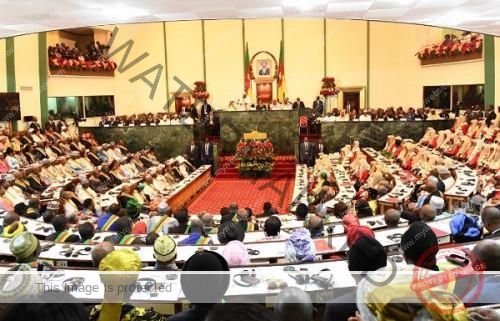
YAOUNDE January 2026 – The 2026 finance law of Cameroon reads like a warning label for any nation that mistakes borrowing for development. More than one-third of the state budget is financed by debt, while public investment remains marginal and innovation starved. In plain terms, the country is working to service yesterday’s loans rather than to build tomorrow’s productivity. This is not merely a fiscal imbalance; it is a structural failure rooted in governance, trust, and priorities. For Ambazonia, this diagnosis matters profoundly—not because we seek to reform Yaoundé’s model, but because we must avoid reproducing it.
Debt Without Development Is Decline
A state that devotes over a quarter of its budget to debt repayment has already surrendered its future. Growth targets are set on paper, inflation ceilings are proclaimed, and deficit ratios are advertised to satisfy convergence criteria—but none of these create wealth. Wealth is created by production, not projections. The Yaoundé approach remains bureaucratic: rearranging budget lines, tightening procedures, and intensifying control over citizens and land, while leaving the productive base untouched. This is governance by paperwork, not by purpose. Ambazonia must internalize the lesson early: no sovereign future can be built on debt-led survivalism.
Industrialisation Requires Trust, Not Repression
The failure to industrialise is not due to lack of ideas. It is due to an environment hostile to risk, justice, and enterprise. Investors—local or foreign—do not fear hard work; they fear predation. Where courts are uncertain, property insecure, and policy arbitrary, capital will flee or hide. Ambazonia’s opportunity lies precisely here. A post-conflict Ambazonian state must anchor its economy on credible justice, predictable rules, protection of property, and a clear separation between revenue collection and repression. Without these, industrial policy becomes a slogan.
Diaspora Capital: Ambazonia’s Strategic Asset
One of the most revealing truths about the Cameroonian economy is not the absence of money, but its absence from circulation. Savings are buried, externalised, or immobilised by fear. Meanwhile, the diaspora—millions strong—remains willing but unconvinced. For Ambazonia, the implication is decisive. Our diaspora is not only numerous; it is politically conscious and already mobilised. What it lacks is a sovereign, credible vehicle for investment. Not charity. Not remittances. Investment. A sovereign Ambazonia can convert diaspora commitment into industrial equity, infrastructure bonds, agro-processing capital, and post-war reconstruction finance. This is how nations leapfrog aid dependency.
Land Is Not a Weapon—It Is Capital
Perhaps the most dangerous habit inherited from Yaoundé is the use of land as a tool of intimidation rather than empowerment. When land titles are rare, expensive, or arbitrary, farmers remain poor and finance remains impossible. Ambazonia must invert this logic. Land security—rooted in customary recognition and modern registration—can bring rural populations into the financial system, unlock credit for agriculture and housing, prevent elite land capture, and fuel local government revenues. Land reform, done transparently, is one of the fastest paths to inclusive growth.
From Importers to Producers: The Industrial Shortcut
Industrialisation does not begin with heavy factories; it begins with assembly, processing, and substitution. When a country imports millions of finished goods annually, it already has the market needed for local production. Ambazonia’s task is simple in principle: reward production more than importation, convert traders into manufacturers, and align tax, energy, and land policy with local value creation. This is how jobs are created quickly, skills transferred, and confidence restored.
The Ambazonian Choice
The economic crisis of Cameroon is not inevitable. It is the outcome of choices—bureaucracy over production, debt over discipline, repression over trust. Ambazonia stands at a different threshold. Our future economy must be sovereign before it is solvent, productive before it is compliant, just before it is attractive, and grounded in land, people, and diaspora capital. The lesson is clear: without legitimacy, there is no development; without justice, there is no investment; without production, there is no future. Ambazonia must build differently—or not at all.
The Independentistnews Economic desk
Share This Post:
Cameroon’s DGRE Scandal: Evidence of a Criminalised Intelligence Apparatus, A Human-Rights Investigative Commentary
Freedom First, Unity later: Why Pan-Africanism Fails Without Ambazonia
Related Post
The Unfinished Questions of 1961: What the U.N. Records
Neither in 10-15 Years Nor in Six Centuries: Why
A DIRECT CHALLENGE TO THE MOVEMENT: ANSWERING THE 10-15
A “Natural Death” After Ten Years? How Dion Ngute’s
The Illusion of a ‘Natural Death’: Why Yaoundé’s Playbook
AN AMBAZONIAN RESPONSE TO, Navy Captain Cyrille Serge Atonfack