








Editorial commentary

We are home to news on Cameroon and the CEMAC region. We are dedicated to honest and reliable reporting. We are the voice of the Cameroonian people and their fight for freedom and democracy at a time when the Yaoundé government is silencing dissent and suppressing democratic voices.

The activities attributed to Nkonda Titus underscore a broader problem: modern conflicts are increasingly shaped by transnational digital actors who operate beyond the immediate reach of affected populations. When such activity occurs from democratic jurisdictions, it raises legitimate legal and moral questions.
By Timothy Engonene
Guest Editor-in-Chief, The Independentistnews
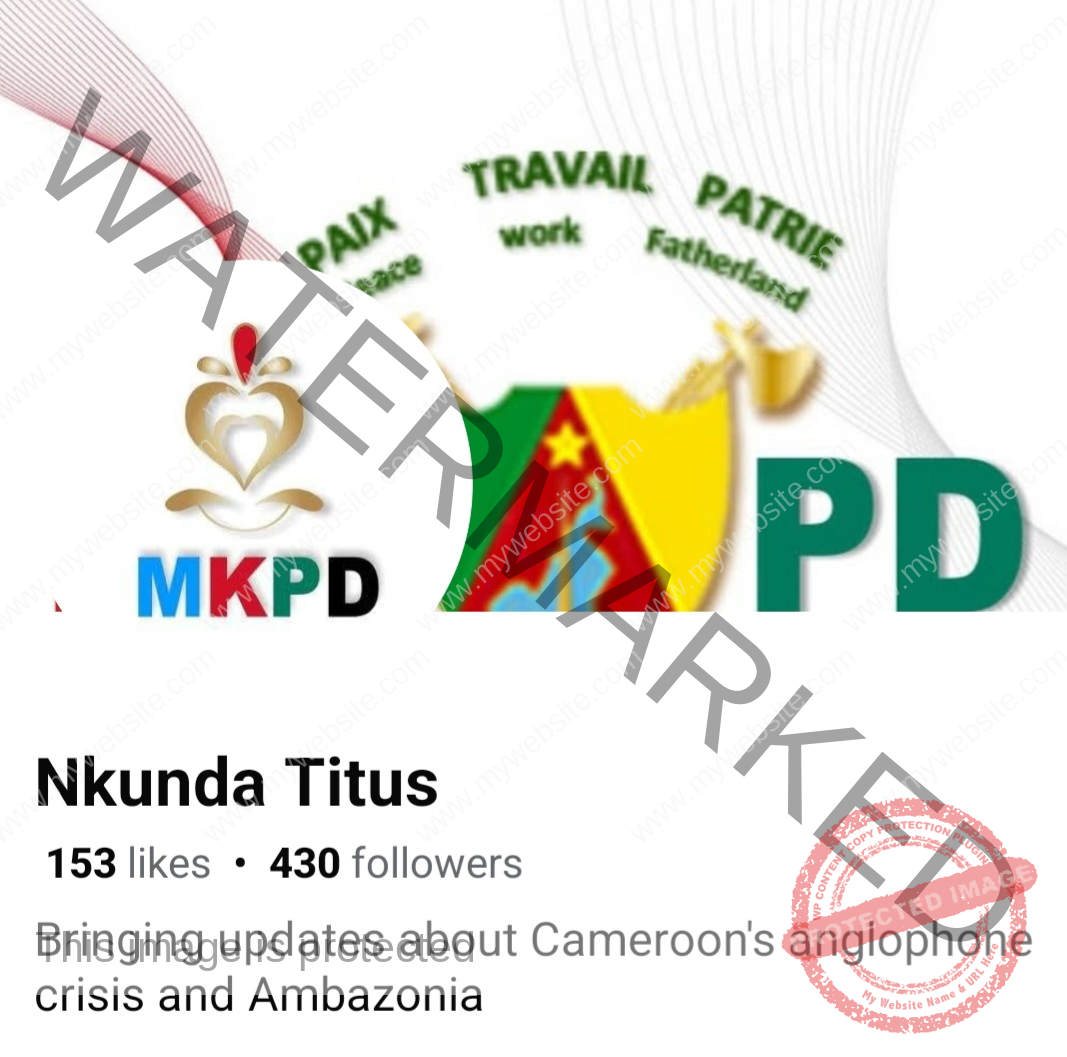
YAOUNDE 19 January 2026 – As of January 2026, the digital front of the Ambazonian War of Independence remains highly contested, shaped not only by armed actors on the ground but also by influential online figures operating abroad. One of the most controversial among them is Nkonda Titus, widely known as MKPD (My Kontri Pipo Dem). Operating from the United Kingdom, Titus has built a substantial online following and positioned himself as a dominant narrator of events related to the conflict.
Supporters portray him as a citizen journalist filling an information vacuum. Critics, however, argue that his activities go beyond commentary and amount to sustained propaganda that consistently aligns with the interests and narratives of the Paul Biya government. This article examines those allegations, the patterns cited by critics, and the broader implications for accountability in digital warfare.
Allegations of State-Aligned Propaganda
Observers of the conflict have repeatedly raised concerns that Nkonda Titus’s platforms function as informal distribution channels for Cameroonian state narratives. In particular, critics point to a recurring pattern in which MKPD appears to publish graphic images or videos from major incidents before official statements are released, often framing events in a way that immediately discredits the Ambazonian independence movement.
Notable cases frequently cited include:
Florence Ayafor (September 2019): Footage of the killing of the Pinyin prison warden first circulated rapidly on MKPD-affiliated channels, accompanied by commentary that attributed collective responsibility to the independence movement.
Comfort Tumasang (August 2020): Video material from Muyuka was first and widely disseminated through MKPD platforms and later echoed by official government rhetoric justifying intensified military operations.
Mother Francisca International Bilingual Academy, Kumba (24 October 2020): Following the killing of schoolchildren, MKPD was the first to flood social media with graphic imagery at a moment when facts were still emerging, contributing to an immediate and emotionally charged international narrative.
Ngarbuh (February 2020) and Gidado: In both cases, MKPD was still the first to break the news, and critics argue that his framing deflected or diluted state responsibility while reinforcing a security-focused interpretation favorable to Yaoundé.
While correlation does not in itself prove coordination, the consistency of alignment has led human-rights advocates to question whether MKPD operates independently or as part of a broader psychological operations ecosystem.
The Bamenda Taxi Colour Controversy
One episode that continues to divide opinion is the Bamenda taxi colour change from yellow to blue and white. Separatist leader Cho Lucas Ayaba publicly promoted the policy as a symbolic assertion of autonomy. Nkonda Titus later claimed to have conceived or designed the policy himself.
Critics argue that this episode exemplifies a deliberate “divide-and-damage” tactic. The policy, once enforced by armed groups, reportedly led to attacks on civilian taxi drivers, the burning of vehicles, and significant economic hardship. Whether or not Nkonda Titus originated the idea, the episode highlights how poorly conceived or manipulated symbolic actions can fracture civilian support and deepen suffering—outcomes that ultimately undermine the stated goals of the independence struggle.
Digital Accusations and Real-World Consequences
Perhaps the most serious concern raised by MKPD’s critics is the alleged link between his online accusations and subsequent state action. The case of Atam Neluse Bah, a member of the Ambazonian diaspora based in Belgium, is frequently cited.
On 24 December 2025, Atam Neluse Bah was detained at Douala International Airport upon arrival in Cameroon and transferred to the Police Judiciaire facility in Yaoundé. Prior to his arrest, Nkonda Titus had published a video accusing him of financing separatist activities. No publicly verifiable evidence was presented to support the claim. As of early 2026, Atam Neluse Bah remains in detention.
While responsibility for detention lies with state authorities, the case raises troubling questions about the role of unverified digital accusations in triggering arrests, and about the ethical responsibilities of influential online actors in conflict settings.
Accountability Beyond the Battlefield
The activities attributed to Nkonda Titus underscore a broader problem: modern conflicts are increasingly shaped by transnational digital actors who operate beyond the immediate reach of affected populations. When such activity occurs from democratic jurisdictions, it raises legitimate legal and moral questions.
Human-rights advocates and civil society groups are calling for:
Independent Investigation – A fact-based inquiry into whether online activity originating from abroad has contributed to incitement, arbitrary detention, or violations of international law.
Transparency of Information Flows – Scrutiny of how sensitive images and information from conflict zones are obtained and disseminated.
Responsible Use of Digital Platforms – Ensuring that freedom of expression is not weaponized to enable harm, repression, or collective punishment.
Conclusion
The conflict in Ambazonia is sustained not only by bullets and battalions, but by narratives, images, and digital influence. Whether Nkonda Titus is best described as a propagandist, an activist, or something more troubling remains a matter requiring careful, evidence-based assessment.
What is clear is that unverified claims and emotionally charged imagery can have devastating real-world consequences. As Mark Twain observed, “A lie can travel halfway around the world while the truth is still putting on its shoes.” In protracted conflicts, that imbalance can cost lives.
Holding all actors—state, non-state, and digital—to standards of accountability is not an act of partisanship. It is a prerequisite for justice, de-escalation, and any credible path toward peace.
By Timothy Engonene Guest Editor-in-Chief
Share This Post:
Comrade Agbor Derrec, from Oslo Norway, writes to the editor of The Independentistnews in appreciation to the article “why Ambazonia is a war of Independence not a war of liberation.
Cassava, Diabetes, and Viral Health Claims: What the Science Actually Says
Related Post
A “Natural Death” After Ten Years? How Dion Ngute’s
The Illusion of a ‘Natural Death’: Why Yaoundé’s Playbook
AN AMBAZONIAN RESPONSE TO, Navy Captain Cyrille Serge Atonfack
IS THE WORLD LISTENING: THREE DAYS FOUR FRONTLINES, ASA
SEPTEMBER 24, 1965, THIS DAY IN HISTORY: From Equal
AMBAZONIA’S WAR- IS BIGGER THAN YAOUNDÉ: BRITAIN, FRANCE AND