











The Gidado killings follow the same pattern seen in the February 2020 Ngarbuh massacre. First, the state places a vulnerable minority in the path of violence — using them as informants, buffers, or proxy actors in a counter-insurgency war. Second, when retaliation or attack comes, the security forces supposedly deployed to protect them are conspicuously absent.
By Timothy Enongene
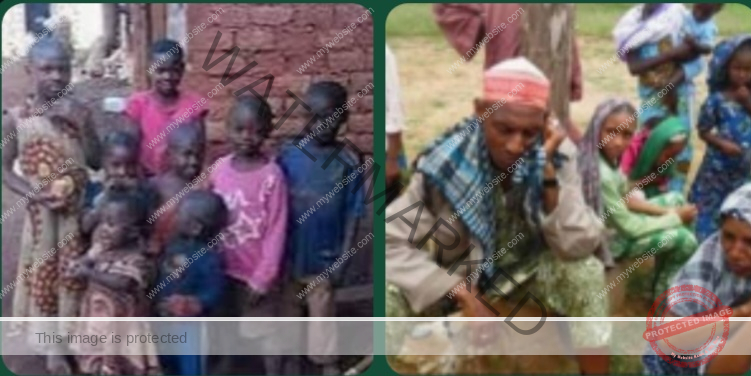
The dawn of January 14, 2026, brought a familiar and sickening scene to the highlands of the North West Region: the smell of charred timber and fresh blood. In Gidado village, near Ntumbaw, fourteen members of the Mbororo community — including seven children and six women — were killed in their sleep. As images of their lifeless bodies spread, the Biya regime reverted to its standard choreography of denial, deflection, and blame-shifting. But for those who know Cameroon’s history, Gidado is not an isolated atrocity. It is part of a long-running method of rule.
The Script of State-Sponsored Neglect
The Gidado killings follow the same pattern seen in the February 2020 Ngarbuh massacre. First, the state places a vulnerable minority in the path of violence — using them as informants, buffers, or proxy actors in a counter-insurgency war. Second, when retaliation or attack comes, the security forces supposedly deployed to protect them are conspicuously absent. Finally, after the blood has been spilled, the state exploits the tragedy for political messaging while providing little or no real protection to survivors.
This is not collateral damage. It is state-sponsored neglect. By instrumentalizing the Mbororo in its war against Ambazonian separatists while simultaneously failing to secure their communities, the regime creates conditions in which civilian death becomes inevitable. In this system, a dead civilian is often more useful to Yaoundé’s international narrative than a living, protected one.
A Pedigree of Violence: From the Bassa to the Bamiléké
To understand why the Mbororo are being sacrificed today, one must look to the foundations of the Cameroonian state. The Biya regime is the ideological heir of both the Ahidjo government and the French colonial counter-insurgency apparatus, which perfected governance through repression, fragmentation, and fear.
In the 1950s and early 1960s, the Bassa were targeted during the UPC rebellion. Villages were burned, populations were herded into “regroupment camps,” and communities were dismantled to isolate insurgents by destroying their social fabric. In the 1970s, the Bamiléké endured a similar campaign of collective punishment, as scorched-earth tactics were used to crush any population viewed as politically threatening.
The tools deployed then — massacres, disappearances, forced displacement, and the manipulation of ethnic tensions — are the same ones now visible in the North West and South West. Only the victims have changed. The objective remains constant: the preservation of centralized power through the controlled destruction of “disposable” communities.
The Strategic Abandonment of the Mbororo
The Mbororo of 2026 are caught in a carefully engineered trap. For years, the regime has encouraged and armed Mbororo self-defense groups, turning them into informal extensions of the state’s counter-insurgency strategy. This was never about protecting Mbororo lives. It was about outsourcing violence while preserving deniability.
When the military fails to intervene in attacks like the Gidado massacre, that absence is not accidental. It reinforces dependence. The Mbororo are pushed to rely on a state that repeatedly fails them, even as it uses their vulnerability to justify militarization and propaganda. It is a cycle in which insecurity is manufactured, not solved.
Conclusion: Blood on Yaoundé’s Hands
The Gidado massacre should not be framed as an intelligence failure or a lapse in security. It is a predictable outcome of a system that governs through abandonment and fear.
From the Bassa forests of the 1950s to the Bamiléké highlands of the 1970s, and now to the Mbororo pastures of Ntumbaw, the pattern is unchanged. This regime does not protect its people — it manages their deaths.
The fourteen lives lost in Gidado were not taken because the state was powerless. They were taken because, in this political order, their deaths were more useful than their lives. Until the international community recognizes that the Biya regime itself is the primary engine of insecurity, the echoes of Ngarbuh will continue to haunt the valleys of the Southern Cameroons — marking the graves of children whose only crime was being born under a government that treats its citizens as expendable.
Timothy Enongene





Leave feedback about this