







Editorial commentary

We are home to news on Cameroon and the CEMAC region. We are dedicated to honest and reliable reporting. We are the voice of the Cameroonian people and their fight for freedom and democracy at a time when the Yaoundé government is silencing dissent and suppressing democratic voices.

In the face of such documented horrors — massacres, kidnappings, burnings, mass closures — the person who holds the title of Secretary of State for Basic Education becomes more than a functionary.Yet Dr Kilo Viviane Asheri has remained silent.
By The Independentist Editorial Desk
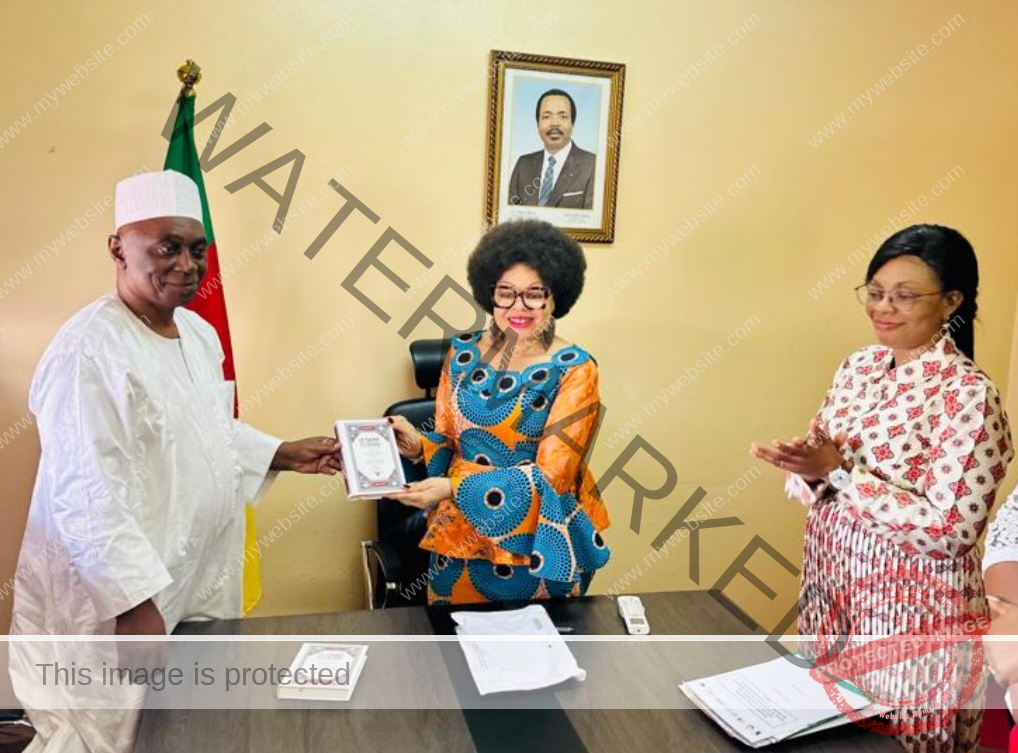
Dr Kilo Viviane Asheri is often presented as a proud Nso woman — a scholar, artist, communicator, and mother — whose work in theatre and youth development has showcased the creativity and resilience of the people of Ambazonia. With a doctorate from the University of Leeds and service in international organizations such as UNAIDS and UNESCO, she represents the excellence of individuals who have overcome every barrier placed before them.
Yet behind this narrative of accomplishment lies a silent truth. Since 2018 she has served as Secretary of State for Basic Education in the regime of Paul Biya at the very moment when Ambazonian schools and communities have been targeted in a brutal campaign of repression. While children are hunted, displaced and killed, she is presented to the world as evidence that Anglophones are included and respected.
When Schools Became Killing Fields — Some Documented Incidents
24 October 2020, Mother Francisca International Bilingual Academy, Kumba (South-West region): men in civilian clothing stormed the school on motorcycles, entered a classroom and opened fire on pupils. Seven children (aged 12 to 14) were killed and 13 others injured. This attack remains the first major school massacre during the war.
4 November 2018, Presbyterian Secondary School, Nkwen (near Bamenda, North-West region): armed men kidnapped 79 students along with school staff, releasing the students on 7 November and the staff by 12 November. The kidnappers reportedly demanded the closure of the school as part of a wider school boycott.
March 26, 2018, Widikum High School (North-West region): armed separatists allegedly attacked the student dormitory, shooting a student. The school had earlier been ordered closed. (Protect Education Global Coalition)
4 September 2018, Melim High School (Kumbo, North-West region): a dozen armed individuals raided offices, vandalized property, causing teachers and students to flee. (Protect Education Global Coalition)
3 December 2018, a vocational training centre and private house of a teacher in Kumbo (North-West region): reportedly set on fire by state security forces after clashes with separatists. (Protect Education Global Coalition)
2018–2019 (various dates/locations): Dozens of other schools, particularly in North-West and South-West regions, were attacked — burned, looted, or closed. By late 2019, international sources estimated that around 90% of public primary schools and 77% of secondary schools in these anglophone regions were closed or non-operational due to the conflict. (Protect Education Global Coalition)
According to a 2021 report by Human Rights Watch, attacks on students, teachers, and schools between 2017 and 2021 have been “systematic and widespread,” involving killings, abductions, threats, destruction of school infrastructure, and forced shutdowns. (Human Rights Watch.)
More than 700,000 children are estimated to have been impacted by school closures, displacement, and the broader effects of the violence. NRC,United States Holocaust Memorial Museum.
The Role of the Minister of Basic Education During This Period
In the face of such documented horrors — massacres, kidnappings, burnings, mass closures — the person who holds the title of Secretary of State for Basic Education becomes more than a functionary. The position carries the moral responsibility to speak out, to protect children’s right to learn, and to safeguard Anglo-Saxon educational heritage threatened by war.
Yet Dr Kilo Viviane Asheri has remained silent. There is no record of public condemnation of the attacks. No known mobilization for displaced students. No visible effort to provide alternative education, emergency schooling, or support for victims. Instead, she remains part of the system that uses education as a tool of assimilation and control — while Ambazonian children die or roam the roads.
Her cultural credentials — theatre, youth work, community engagement — once had promise. But now they function as a mask: prestige used to deflect scrutiny, while atrocity goes unchecked.
Identity Without Responsibility
Being a proud Nso woman, a cultural leader, a mother — these identities carry weight. But when schools are bombed, children disappear, and communities are terrorized, silence is not neutrality. Silence is complicity. History will not remember job titles or degrees. It will remember choices. And for Dr Kilo Viviane Asheri, the choice she has made — or refused to make — is already part of history.
The Final Verdict
Her achievements are real. Many admire her. But in war, admiration does not feed children. When justice arrives — and it will — the question will not be how high she climbed in Yaoundé. It will be: What did she do when her own people were being erased?
As of today, the answer is silence — a silence that covers bullets, bans, burnings. A silence that shields power, not children. Ambazonia deserves educators who defend children. It deserves cultural leaders who protect identity. It deserves artists who tell the truth. Dr Kilo Viviane Asheri still has a choice. Ambazonia too has a choice. And Ambazonia has already chosen to live.
The Independentist Editorial Desk
Share This Post:
PAUL TASONG: THE MINISTER OF CORRUPTION BY RECONSTRUCTION
The Silent Architect: How Sylvester Moh Tangongho Helps Power the System Holding Ambazonia Down
Related Post
A “Natural Death” After Ten Years? How Dion Ngute’s
The Illusion of a ‘Natural Death’: Why Yaoundé’s Playbook
AN AMBAZONIAN RESPONSE TO, Navy Captain Cyrille Serge Atonfack
IS THE WORLD LISTENING: THREE DAYS FOUR FRONTLINES, ASA
SEPTEMBER 24, 1965, THIS DAY IN HISTORY: From Equal
AMBAZONIA’S WAR- IS BIGGER THAN YAOUNDÉ: BRITAIN, FRANCE AND