












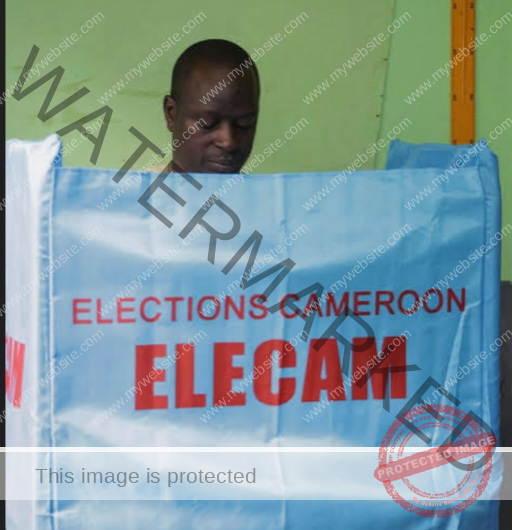
The 2025 presidential election in Cameroon presented foreign governments with a complex dilemma. Factors shaping their calibrated responses included: longstanding allegations of electoral manipulation, limited political competition, the Constitutional Council’s contested role, violent post-electoral protests
By M. C. Folo, Independentist Contributor
Abstract:This essay examines why foreign governments sometimes congratulate a political leader on their inauguration while avoiding explicit acknowledgment of their electoral victory. Using the 2025 Cameroonian presidential election as a case study, it argues that differentiated congratulatory messaging reflects a calculated balancing act: states must weigh democratic norms, geopolitical interests, and regional stability. The analysis also highlights how ambiguous signals intersect with contested sovereignty—in this case, the unresolved status of Southern Cameroons (Ambazonia)—and how international actors navigate complex political realities without explicitly endorsing controversial electoral outcomes.
Introduction
Congratulatory messages after national elections symbolically affirm political legitimacy and international acceptance. Yet when elections are disputed, foreign governments frequently deploy carefully calibrated language—congratulating a leader on assuming office rather than on winning an election.
The 2025 presidential election in Cameroon, marked by allegations of fraud, limited political competition, and violent post-electoral unrest, provides a vivid example. Several states avoided endorsing the electoral process itself. Instead, they issued messages acknowledging President Paul Biya’s inauguration, reflecting a position of diplomatic caution rather than democratic affirmation.
Understanding this behavior requires insights from democratic consolidation theory, international recognition, and strategic foreign policy frameworks. It also requires acknowledging the broader structural question: Cameroon’s political legitimacy crisis is intertwined with the unresolved decolonization of Southern Cameroons (Ambazonia), a factor that further complicates international signaling.
Democratic Consolidation and Electoral Legitimacy
Democratic legitimacy arises not only from legal procedures but from public trust in the electoral process (Schedler, 2002). When elections are formally conducted but substantively unfair—dominated by incumbency advantages, media control, or judicial capture—they fall short of the standards of consolidated democracy. In such contexts, explicit congratulations for an electoral victory can: inadvertently legitimize democratic erosion, embolden authoritarian incumbency, weaken democratic opposition movements.
Foreign governments therefore sometimes choose symbolic neutrality. Congratulating an inauguration rather than a victory allows them to acknowledge the existence of a political authority without validating the quality of the election that produced it.
Cameroon’s hybrid political system—frequently classified as competitive authoritarianism—fits squarely within this literature. The predictability of electoral outcomes, the constrained political space, and persistent allegations of institutional bias make endorsement risky for democratically committed international partners.
International Recognition Theory
The distinction between election-based congratulations and inauguration-based congratulations aligns directly with debates in international political recognition. Recognition can be: De jure, which validates a political act or democratic mandate. De facto, which acknowledges the factual holding of office without judging the legitimacy of how that office was attained. Foreign governments often choose de facto recognition in politically sensitive situations.
In the Cameroonian case:
Election congratulations would imply recognition of the democratic validity of the vote. Inauguration congratulations signal only that Biya occupies the seat of power under Cameroon’s constitutional framework.
This carefully modulated language allows states to maintain diplomatic channels while signaling discomfort with the integrity of the process. Importantly, the ambiguous recognition also mirrors the unresolved question of sovereignty surrounding Southern Cameroons (Ambazonia), where the international system continues to grapple with the implications of incomplete decolonization.
Realism, Institutionalism, and Diplomatic Pragmatism
Realist logic emphasizes national interest over normative concerns. Cameroon remains a strategically important actor in Central Africa, particularly in: counterterrorism cooperation, regional stability, energy infrastructure, peacekeeping frameworks. Foreign partners—especially the U.S., France, the U.K., and ECOWAS-adjacent states—frequently prioritize these security partnerships over democratic scrutiny.
Institutionalist perspectives further explain continuity: diplomatic relations persist because they are embedded within long-standing international norms, treaties, and institutional frameworks. Thus, congratulating an inauguration—rather than a disputed election—preserves: access to Yaoundé, cooperation on security matters, regional stability mechanisms, while maintaining a rhetorical commitment to democratic norms. This behavior does not imply acceptance of electoral legitimacy; rather, it reflects strategic ambiguity.
Non-Interference Norms and Domestic Sovereignty
African diplomatic culture places high value on the principle of non-interference. The African Union’s emphasis on sovereignty and territorial integrity makes explicit condemnation of electoral processes politically sensitive. By congratulating only the inauguration, states avoid: appearing to influence domestic politics, delegitimizing domestic opposition movements, escalating post-electoral tensions, taking sides in internal disputes.
This posture is consistent with Krasner’s (1999) notion of organized hypocrisy: states publicly affirm sovereignty norms even while privately acknowledging governance deficiencies. In Cameroon’s case, ambiguity becomes a form of diplomatic insulation.
The Case of Cameroon: Strategic Ambiguity in Practice
The 2025 presidential election in Cameroon presented foreign governments with a complex dilemma. Factors shaping their calibrated responses included: longstanding allegations of electoral manipulation, limited political competition, the Constitutional Council’s contested role, violent post-electoral protests, the enduring political crisis in the Anglophone regions, the unresolved international status of Southern Cameroons (Ambazonia).
By congratulating the inauguration rather than the election, states signaled: de facto acceptance of the constitutional outcome, non-endorsement of the democratic legitimacy of the vote, desire to maintain cooperation in security and economic sectors, respect for non-intervention norms. This diplomatic choice allowed foreign partners to acknowledge political reality while avoiding complicity in legitimizing a disputed electoral process.
Notably, the ambiguity also aligns with broader regional concerns about the long-standing crisis in Southern Cameroons (Ambazonia), where unresolved sovereignty questions continue to complicate the legitimacy of Cameroon’s political institutions.
Conclusion
The distinction between congratulating an election and congratulating an inauguration is not trivial. It reveals the interplay of democratic norms, geopolitical pragmatism, and regional stability concerns. The 2025 Cameroonian case demonstrates that: Foreign governments can recognize an office without endorsing the election that produced it. Diplomatic language becomes a strategic tool in managing contested legitimacy.
The unresolved crisis of Southern Cameroons (Ambazonia) adds a deeper structural layer to international caution.
Ultimately, differentiated congratulatory messaging reflects the ambiguous political realities of hybrid regimes. It illustrates how states navigate the tension between principle and pragmatism—acknowledging political authority while refraining from legitimizing flawed democratic processes.
M. C. Folo,







Leave feedback about this