












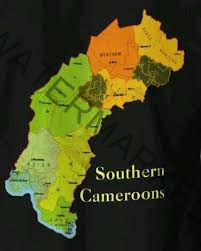
Ambazonia’s stand is not secession. It is restoration — a return to legality, dignity, and historical truth. Just as Britain’s Glorious Revolution of 1688 broke the last chain of feudal absolutism, Ambazonia’s 2017 declaration of independence marked the rebirth of freedom long denied.
By Ali Dan Ismael, Editor-in-Chief — The Independentist. Monday, November 3, 2025
History Repeats Itself in the Language of Freedom
History moves in circles. The story of Ambazonia’s struggle is not new — it follows the ancient rhythm of nations reclaiming their original identity from foreign dominance. Britain once lived that same story when she broke away from the suffocating shadow of French influence. After the Norman Conquest of 1066, England’s court, law, and language fell under French control. Yet, by the 14th century, English kings restored their language, their parliament, and their sovereignty.
That single act of self-definition changed the course of world history. It gave birth to English Common Law, parliamentary governance, and the British sense of liberty — systems that would later take root in the Southern Cameroons under British trusteeship.
Ambazonia’s British Legacy and the Betrayal of Union
Ambazonia stands today at the same turning point Britain faced seven centuries ago. Under British tutelage, the Southern Cameroons built institutions modeled after Westminster — rule of law, parliamentary order, and accountability in government.
But the 1961 “union” with La République du Cameroun, a state already shaped by Napoleonic absolutism, dismantled that legacy. It was a union without ratification, without referendum, and without consent — a political trap that led to the subjugation of one system by another.
From Enugu to Buea — The First Assertion of Self-Government
When the Southern Cameroons left Enugu in 1954 and established self-government in Buea, it was a declaration of dignity — the Magna Carta of the Cameroonian experiment. For the first time, English-speaking Africans governed themselves, managed their civil service, and legislated in their own Assembly. That foundation proved we were not a people in search of governance; we were a governed people denied recognition.
French Cameroun’s Colonial Arrogance
Since 1961, La République du Cameroun has sought to overwrite Ambazonia’s identity through linguistic, judicial, and administrative colonization.
French replaced English in administration.
The Napoleonic Code replaced the Common Law.
Decrees replaced parliamentary debate. Schools were burnt, courts abolished, journalists jailed, and villages razed — all in the name of “national unity.” But what kind of unity demands the death of identity?
Restoration, Not Rebellion
Ambazonia’s stand is not secession. It is restoration — a return to legality, dignity, and historical truth. Just as Britain’s Glorious Revolution of 1688 broke the last chain of feudal absolutism, Ambazonia’s 2017 declaration of independence marked the rebirth of freedom long denied. We are not fighting to divide a nation; we are fighting to restore the nation that was divided by deceit.
Lessons from Britain’s Path to Power
Britain became powerful the moment she refused to remain under French domination. Her greatness was built on the courage to think differently — to govern by conscience, not by decree. So too must Ambazonia build her strength on the same principles: justice, law, and freedom of thought. We do not seek empire. We seek self-rule, self-respect, and self-determination.
When France Gives Up Empires: The Louisiana Purchase and the Cameroonian Lesson
France has never been known for loyal stewardship of the territories it conquers — only for their eventual loss. History offers no better example than the Louisiana Purchase of 1803, when Napoleon Bonaparte, overwhelmed by war debts and colonial revolts, sold nearly one-third of North America to the United States for a mere 15 million dollars.
In one swift diplomatic transaction, France abandoned an empire it could not sustain — not because it was generous, but because it was short-sighted. The Louisiana territory, stretching from the Mississippi River to the Rocky Mountains, became the foundation of America’s rise as a continental power. For France, it was the epitaph of an imperial dream — and a symbol of how arrogance, miscalculation, and colonial overreach lead to decline.
The Same Diplomatic Blindness in Yaoundé
Two centuries later, the same French-bred diplomatic arrogance replays itself in Central Africa. The Republic of Cameroon, conceived in the image of French Jacobin centralism, inherited France’s worst habits: political opacity, colonial pride, and contempt for local identity. The forced union of Southern Cameroons and La République du Cameroun in 1961 was the African equivalent of France’s ill-fated Louisiana gamble — an overreach without understanding.
Like Napoleon’s administrators in Louisiana, Yaoundé’s elites underestimated the cultural and institutional independence of Ambazonia — a land built on British constitutionalism, English education, and Common Law traditions. Instead of partnership, they imposed assimilation; instead of negotiation, repression. The result has been rebellion, resistance, and international embarrassment.
French Diplomacy: Brilliant on Paper, Disastrous in Practice
From Haiti to Indochina, from Algeria to Cameroon, French diplomacy has followed one tragic pattern: Promise fraternity, deliver domination. Preach civilization, practice exploitation. Proclaim unity, ignite rebellion.
In Louisiana, it cost France an empire. In Ambazonia, it may yet cost La République du Cameroun its artificial boundaries. When the architects of assimilation misunderstand the soul of a people, the outcome is never stability — it is separation.
Ambazonia’s Strategic Parallels
The Louisiana Purchase teaches us that territories without legitimacy cannot be held forever. No decree, no army, no flag can bind a people who reject subjugation. France’s short-sighted diplomacy in 1803 empowered the United States to become the world’s leading democracy. Ambazonia’s struggle today carries the same potential: to transform the curse of French colonial arrogance into the birth of a new African democracy grounded in liberty and law. “When France loses its colonies, freedom gains a continent.”
The English Spirit, African Soul, and Ambazonian Destiny
Our identity is English in law, African in spirit, and Ambazonian in destiny. The path before us is not rebellion; it is the natural course of history. The British survived the French centuries ago by asserting who they were. Ambazonia will survive and flourish the same way — by asserting who we are.
“Britain’s greatness began the day she broke from French feudalism; Ambazonia’s freedom will begin the day she breaks forever from French Cameroun.”
Editorial Note
This essay forms part of The Independentist’s 2025 series on Post-Colonial Identity and the Fall of Françafrique, examining how history, diplomacy, and law converge in Africa’s unfinished decolonization story.
Ali Dan Ismael, Editor-in-Chief — The Independentist.






Leave feedback about this