

An act can be 100% legal but 0% legitimate if it ignores the collective trauma of the community. When a leader leans on the law to justify an insensitive act, they risk losing the very thing that makes them a leader: the trust and consent of the governed.
By Jones Njilah (Don Shaka) The Independentistnews contributor
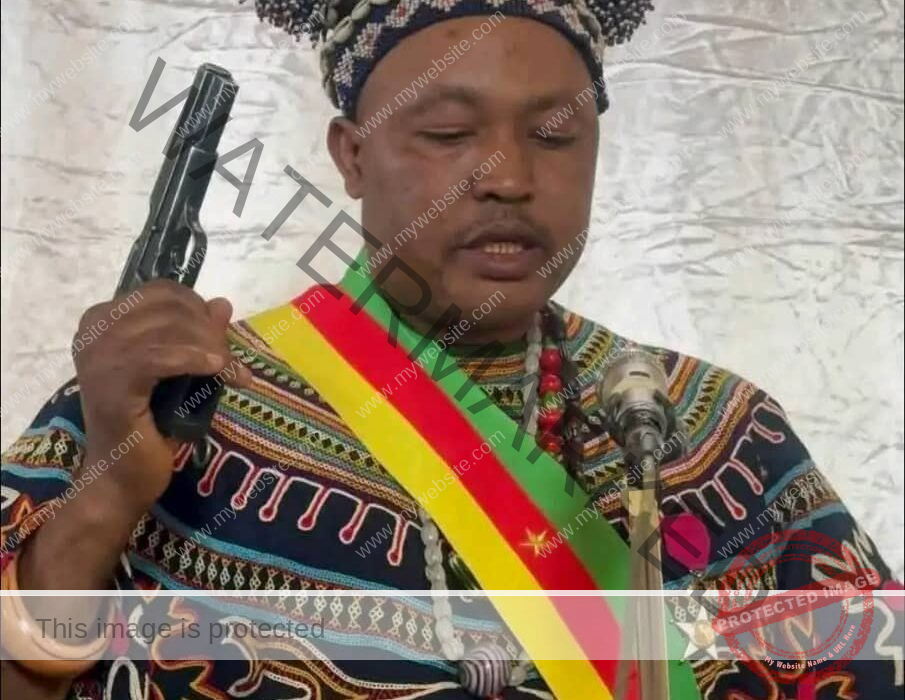
The recent oath-taking ceremony at the North West Regional Assembly has ignited a firestorm of debate. The image of His Royal Majesty, the Fon of Babungo, swearing his oath of office with a pistol in hand has left the public divided. While some defend the act as a legal right, others see it as a profound failure of leadership.
To understand this tension, we must look beyond the act itself and examine the widening gap between formal legality and moral legitimacy.
The Legal Right vs. The Moral Mandate
In a strictly technical sense, the Fon’s actions may be protected by law or traditional protocol. However, in the realm of governance, legality is merely the baseline. Legitimacy, on the other hand, is the social and moral acceptance of an action by the people. An act can be 100% legal but 0% legitimate if it ignores the collective trauma of the community. When a leader leans on the law to justify an insensitive act, they risk losing the very thing that makes them a leader: the trust and consent of the governed.
The Cruelty of Bad Timing
Leadership, above all else, is an exercise in timing. An action that might have been perceived as a harmless traditional display in the peaceful year of 2010 carries a very different meaning in 2026.
For nine years, the North West and South West Regions have been consumed by a conflict that has claimed thousands of lives, displaced millions, and turned the sound of gunfire into a source of daily terror. In this context, the gun is no longer a symbol of ancestral protection; it is a symbol of the violence that has shattered our homes. To brandish a weapon during a state function today is to ignore the “historical clock” of our people. It is a moment of symbolic tone-deafness that reopens wounds instead of healing them.
A Contradiction of Purpose
Perhaps the most striking issue is the venue itself. The North West Regional Assembly was established as a house of peace, decentralisation, and development. Its very existence is a promise to move the region away from the era of “guns blazing” and toward an era of dialogue and civilian governance. Swearing an oath with a pistol—rather than a Bible, a Quran, or a traditional peace plant like the Sanjie—creates a fundamental contradiction. It suggests that authority still flows from the barrel of a gun rather than from the sacred mandate of development. If the institution exists to foster peace, its members must project the symbols of peace.
Conclusion: The Call for Sensitive Leadership
The North West Region does not need a reminder of the power of the gun; the people have lived with that reality for nearly a decade. What they need are leaders who possess the emotional intelligence to know that the times have changed. For their institutions to be truly legitimate, they must reflect the aspirations of a population desperate for demilitarisation. True leadership in 2026 is not found in the weapon one carries, but in the courage to set the weapon aside in favour of the olive branch.
Don Shaka