

A government can survive opposition. It cannot survive sustained loss of credibility. When citizens begin to believe that public wealth can disappear more easily than political slogans, the social contract weakens. When they perceive that economic betrayal draws less visible consequence than political speech, faith in institutions declines.
By Timothy Enongene
Guest Editor-in-Chief, IndependentistNews
YAOUNDÉ – February 26, 2026 – Every justice system eventually exposes its priorities. Not in ceremonial courtrooms. Not in constitutional preambles. But in who walks free — and who does not.
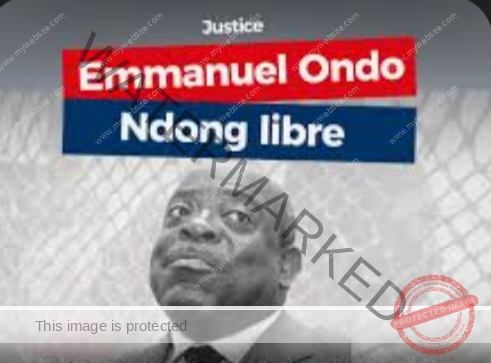
In public debate across Cameroon, the case commonly referred to as the “Ondo Ndong precedent” has become a symbol of a deeper national crisis: the perception that economic crimes against the people do not carry the same moral weight as political crimes against the state.
The case involved conviction for the embezzlement of substantial public funds — resources that citizens believe could have transformed hospitals, schools, roads, and agricultural development across multiple regions. While a prison sentence was imposed, questions surrounding restitution and full asset recovery have lingered in public consciousness.
For communities struggling with underfunded services and stalled infrastructure, that lingering doubt matters. Because corruption is not an abstract offense. It is a subtraction from the public future. Every diverted franc is a clinic not built. Every siphoned contract is a classroom unfinished. Every stolen allocation is a farmer left unsupported.
When economic crimes are perceived to conclude without full and visible restoration of public wealth, citizens begin to ask whether the system punishes betrayal of the treasury with the same vigor it punishes political dissent.
The Contrast That Fuels Distrust
At the same time, individuals prosecuted under security or political charges — including those linked to protest movements or separatist activity — have received lengthy custodial sentences. The government defends these prosecutions as lawful and necessary for national stability. Yet citizens do not view cases in isolation. They compare outcomes.
And when corruption cases involving vast sums appear to resolve with less visible consequence than political cases, a troubling perception forms: that the law fears dissent more than it fears theft. This perception does not require legal error to exist. It arises from imbalance.
Equality Before the Law — In Practice, Not Theory
Cameroon’s Constitution affirms equality before the law. The African Charter on Human and Peoples’ Rights reinforces that principle. International anti-corruption frameworks, including the United Nations Convention against Corruption, emphasize not only punishment but asset recovery. Justice must therefore achieve two things: Accountability for wrongdoing. Restoration for the public.
If citizens see imprisonment without restitution, or political severity without economic recovery, they question whether the scales are calibrated correctly. Because proportionality is not merely technical. It is moral.
The Risk of a Two-Tier System
No state can afford the perception of a two-tier justice system: One scale for those who challenge authority. Another for those who misappropriate public wealth.
Even when courts follow statutory procedures, uneven outcomes erode legitimacy. In societies already strained by conflict, that erosion accelerates distrust. The issue is not whether anti-corruption trials occur. It is whether they restore confidence.
It is not whether political prosecutions are lawful. It is whether their severity is matched by equal rigor in pursuing economic crimes that damage the entire nation.
What Is at Stake
A government can survive opposition. It cannot survive sustained loss of credibility. When citizens begin to believe that public wealth can disappear more easily than political slogans, the social contract weakens. When they perceive that economic betrayal draws less visible consequence than political speech, faith in institutions declines.
No democracy — or constitutional republic — is strengthened by that dynamic. The path to restored legitimacy is not rhetorical unity. It is demonstrable fairness: Transparent asset recovery. Consistent sentencing logic. Equal application of the law across status and affiliation.
Without that balance, corruption cases become symbols. And symbols travel faster than verdicts. History will not remember which individual was convicted. It will remember whether justice appeared balanced. Whether public wealth was restored. And whether the law protected the people as fiercely as it protected itself.
In the end, legitimacy is not defended by force.
It is defended by fairness.
Timothy Enongene
Guest Editor-in-Chief, IndependentistNews